JOURNAL OF THE SOCIETY OF COSMETIC CHEMISTS use, and for him to memorise them so that he will immediately recognise them individually and in certain simple cases when occurring in combination with each other. We might well select bergamot, lemon, lavender, bols de rose, geranium, vetivert and sandalwood from amongst our essential oil group. Hydroxycitronellal, benzyl acetate, linalool, linalyl acetate, amyl cinnamic aidehyde, phenyl ethyl alcohol, alpha ionone, musk ketone, musk ambrette, geraniol, terpineol and methyl nonyl acetaldehyde might form a fair selection from our synthetic range. Add to this one high boiling solvent in case our solids exceed the limit of solubility in our mixture and to act as a general "fixative." Benzyl benzoate may be our choice. I hope to make mention of "fixation" later in this talk. An association of ideas is the finest basis for remembering or identifying an odour. In this connection, a knowledge of chemistry or a method of extraction or manufacture leaves an unforgettable impression on the memory and opens the way to other similar appreciations. The expression "aldehydic" may mean little to a non-technical person, even although he has often smelled such products, but to have a clear picture of an aidehyde, to visualise that reactive carbonyl group, its relationship to alcohols and acids, is to retain its odour in the memory, not only for each individual aidehyde, but as a general classification. Most experienced perfumers would successfully place a new chemical in the appropriate class--alcohol, aidehyde, ketone, ester, etc. Starting with the essential oils, which are volatile products of vegetable origin, our trainee is off to an easy start. The lemon sucked at half-time, the piece of lavender head idly plucked from a convenient garden, etc. Synthetics are more difficult to associate with events or known things and one may be forced to cheat a little and associate them with essential oils, fruits or flowers. Thus one can easily connect linalool and linalyl acetate with bergamot oil and lavender, phenyl ethyl alcohol with the full note of the rose and ionone with the violet. Very many more instances may be quoted, and, as the perruiner progresses, so his field of associations widens. For instance, he will in time connect amyl cinnamic aidehyde and benzyl acetate with the odour of jasmin, hydroxycitronellal with the odour of lily of the valley and lilac, but only after he has made those associations by practical experimentation. Undoubtedly the hardest but most efficacious way of remembering your raw materials is to handle them in an intimate manner, that is seek closer contact by working as an analyst in a fine chemical laboratory, an operative in a factory producing isolates or synthetics. You will never forget the iso eugenol which refused to solidify at temperatures far below its melting-point and then does so when you put it away in disgust. Remember those inter- minable melting-points and recordings of results ? Musk ambrette 85 ø C., musk ketone 136 ø C., musk xylol 113 ø C., except when it became stubborn and reverted to its other form and melted at 105 ø C. ? Remember the way 186

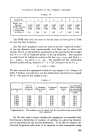
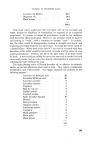
TALKING OF PERFUMES AGAIN citral and lemongrass turned your skin yellow and anisaldehyde oxidised to a white solid, and how phenyl acetaldehyde polymerised to a viscous liquid ? These and a hundred more experiences one remembers and forever associates with the appropriate odour. But to return to our selected ingredients, our perfumer-to-be, lacking the background outlined above, sets out to memorise each odour, making what association he can and by continu- ous effort perfecting his olfactory memory. From the few ingredients already mentioned he may produce a crude but identifiable range of floral or other mixtures. There are four typical floral odours which occur repeat- edly in our bouquet or fancy perfumes--rose, jasmin, lilac, muguet and, in addition, perhaps violet. The rose odour may be made basically from phenyl ethyl alcohol, geraniol and geranium oil. The latter oil was specially included in our limited range as it contains the indispensable alcohols rhodinol and citronellol and certain esters which possess the intense rose odour. The lilac impression is given by phenyl ethyl alcohol, hydroxycitron- ellal and terpineoi. The muguet by hydroxycitronellal, terpineol, phenyl ethyl alcohol and geranium, the latter used for its rhodinol notes. Jasmin is less easy to define in terms of a few selected items, but is typified by amyl cinnamic aidehyde, benzyl acetate, linalool and linalyl acetate and, perhaps, hydroxycitronellal, together with small amounts of the ever-present phenyl ethyl alcohol. Sweetening effects to any of these four basic odour types may be achieved by traces of musk ketone. Below in tabular form is shown the four floral formulae, making use of eight synthetics (or isolates) and one essential oil. Rose .Lilac Muguet Jasmin Phenyl ethyl alcohol .. 40 20 10 10 Hydroxycitronellal .. 5 35 40 5 Geraniol .... 45 - 15 - Geranium Oil .... 5 - 5 - Terpineol .... - 25 15 - Amyl cinnamic aidehyde - 5 5 35 Benzyl Acetate .. 5 5 5 40 Linalool .... - 5 - 5 Linalyl Acetate .. - 5 5 5 Musk ketone .... traces traces traces traces Violet may be built in simple fashion from alpha ionone. The formulae shown are, of course, crude and only in rough proportions. Geraniol, for instance, is given only as a representative of the rose-alcohol group. In rose it would be supplemented by citronellol and rhodinol accord- ing to type and cost. Further, many refinements and more attention to blending proportion would be necessary, but the table is helpful if only to 187
Purchased for the exclusive use of nofirst nolast (unknown)
From: SCC Media Library & Resource Center (library.scconline.org)