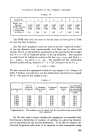
JOURNAL OF THE SOCIETY OF COSMETIC CHEMISTS when assessing the effectiveness of an acyl-alkylo!amide to consider that these substances are frequently more expensive than the commercial detergents in common use. A cyl-alkylolamide Initial After After After added foam 15 mins. 30 mins. 1 hour None ...... 120 c.c. 50 c.c. 25 c.c. -- Lauric diethanolamide .. 130 c.c. 75 c.c. 50 c.c. -- Lauric mono-ethanolamide 190 c.c. 160 c.c. 155 c.c. 130 c.cs. In fairness, it should be pointed out that these tests were carried out in distilled water and consequently do not reveal the preparation containing the lauric diethanolamide as showing such a big advantage over the untreated dodecyl benzene sulphonate preparation. If the tests are repeated in hard water, or at a higher concentration such as is used in shampooing, the per- formance of the compositions containing either of the alkylolamides is shown significantly better than that of the untreated dodecyl benzene preparation. In detail, the tests were carried out at 30 ø C. in 300 c.c. capacity standard foam cylinders. 100 c.c. of liquor were present containing .7 grams of the detergent preparation and .2 grams anhydrous sodium carbonate, and 2.5 grams of groundnut oil were added. The sodium carbonate was present to ensure a uniform alkalinity throughout the tests. Ten uniform shakes were given to the cylinders in each case and the above figures are averages of results which duplicated well. Derivatives of mono-alkylolamines and fatty acids of the C • 4/C • 8 unsatur- ated type with one or more double bonds are extremely effective emulsifying agents for the production of water-in-oil emulsions, using mineral oil. As little as 3 per cent on the oil phase of oleic mono-ethanolamide is capable of yielding a stable emulsion, even when the final ratio of water phase to oil phase is as high as 4: 1 or more. The same compounds may also be used as stabilisers for oil-in-water emulsions, when used in conjunction with water- soluble surface-active materials, such as soaps or anionic detergents. A recent novel use for the insoluble fatty acid alkylolamides of our classi- fication (b) is as dye solvents in the formulation of lipsticks* and other cosmetics. It has long been a problem to the cosmetics chemist that the halogenated fluoresceins which he wishes to incorporate in lipstick composi- tions are insoluble in all the oils or waxes normally employed (except castor oil, which shows a small solvent power). A purely physical incorporation by grinding the dyes in the form of a fine powder with the lipstick base is only partially successful, and the maximum staining power is not obtained from the dye. In order to remedy this, chemists have resorted to the use of organic solvents rather akin to cellulose lacquer solvents, which can dissolve substantial amounts of halogenated fluoresceins. These organic solvents * B.P. 719,300. 176

FATTY ACID ALKYLOLAMIDES are not such that they would normally have been welcomed for inclusion into lipstick compositions, and they have exhibited disadvantages, being in some cases slowly volatile and in others hygroscopic. Certain fatty acid alkylo- lamides are good solvents for the dyes and have a consistency such that they are easily incorporated into lipstick compositions. They are non-volatile and non-hygroscopic. Further, they would not be expected to be toxic since it would be expected that in the body they would yield on hydrolysis fatty acid and alkylolamine, the latter being oxidised to an amino acid. Practical animal-feeding tests have shown that selected acyl-alkylolamides of a high degree of purity are quite free from any apparent toxicity. The solubility of the dyes seems to be dependent upon the presence of the amide linkage, since compounds chemically closely related but devoid of this linkage do not show the solvent power to anything like the same extent. The measured solvent power, however, does vary not only with the alkylolamine residue in the molecule, but also with the fatty acid chain. Patent applica- tion has been made both here and in the U.S. in respect of the use of fatty acid alkylolamides in lipsticks for this purpose, and specially prepared alkylolamides are available in the LOI•AMINE range. A further use of the compounds in our classification (b), which are sub- stantially water insoluble and show a reasonable oil solubility, is as pigment- dispersing agents in oily media. Here again, the interest is mainly to the lipstick chemist who is faced with the problem of grinding insoluble lake colours in an oily medium to produce a uniform dispersion. It is well known that to produce a good dispersion, not only is first-class milling equipment necessary, but also the oil or mixture of oils used must be a good grinding medium. Mineral oil, which by virtue of its freedom from smell and rancidity is ideal for many cosmetic purposes, is not a good grinding medium. The incorporation, however, of significant amounts of fatty acid alkylolamides into the oil can remedy this defect. It has been shown experimentally that it is possible to prepare two lipsticks, one containing only half the amount of the same lake colour as the other, yet each as effective in use from a colour standpoint. The difference in manufacture is that in one case the lake was ground in mineral oil alone and in the other in mineral oil containing oleic mono-ethanolamide. Fatty acid alkylolamides of both classifications (a) and (b) find applica- tion as thickening or stiffening agents for preparations based on synthetic detergents or liquid soaps. They have the power to increase the viscosity of liquid compositions, or to lend greater rigidity to paste or cream prepara- tions. They show great advantage over the colloids and waxes previously used for these purposes in that, of course, they augment rather than cancel the efficiency of the detergent on which the preparation is based. Naturally, it is necessary to choose the best fatty acid alkylolamide for any specific purpose, and the amount of the more insoluble products which can be incor- 177
Purchased for the exclusive use of nofirst nolast (unknown)
From: SCC Media Library & Resource Center (library.scconline.org)