JOURNAL OF THE SOCIETY OF COSMETIC CHEMISTS A comparison between the two will soon show where the balances differ, which ingredients are excessive or deficient. In any case, we already know from experience how to compound something at least similar in odour to the sample. The compounding of the experimental sample is often tedious and time- consuming, and should be the work of a reliable junior or trainee, and in this connection the handling and blending of these samples is excellent training. Although the final production of a perfume on both laboratory and factory scale must be on a weight basis (on account of variation in specific gravities of the ingredients) it is often time-saving to work by volume where possible during earlier trials. The question of order of adding the ingredients may be important and special attention has to be given to the dissolving of solids where present. In earlier trials it is not always necessary to add the less odorous materials until the imitation reaches a reasonable standard. When one is dealing with a well-blended perfume and identification of the ingredient or even type is difficult, the previously mentioned association of ideas comes in handy. Each and every perfumer will have his or her own particular odour associations and will know the ingredients responsible for these effects. Towards the end of the evaporation life of a perfume I repeatedly meet a "cardboard" note, which is the result of a heliotropin- vanillin combination. Chrysanthemum-like odours arise from the use of phenyl acetate with certain essential oils, notably lavender. Wet bathing costumes is another of my association notes, and this inevitably means the presence of the anisyl odour grouping, e.g., anisaldehyde, anisyl alcohol or acetate. A Plasticine note invariably means the presence of amyl salicylate. One final odour which says "corduroy trousers" to me I can never describe to others and, quite frankly, I have yet completely to identify it to myself. So much for what, I must emphasise, is rarely the sincerest form of flattery. USING OUR FINISHED PERFUMES One may, of course, produce a range of perfumes and let the consumers try them out for themselves in their various preparations. This is, however, a far from satisfactory approach, satisfactory that is to either producer or consumer. I have, in a previous talk, mentioned some of the problems involved in producing perfumes for soaps, creams, lotions and powders. These are real and difficult problems indeed and call for both skill and knowledge: knowledge of both the perfumery ingredients and the final preparation. Perhaps an example of how one type of perfume must be modified for different products would be of interest. Let us select the popular lavender odour for this example. For use in toilet water, that is a preparation basically 5 per cent lavender perfume, 80 per cent alcohol and 15 per cent water, we could make a simple and effective blend as follows: 192

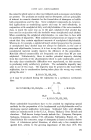
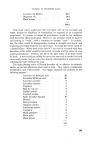
TALKING OF PERFUMES AGAIN Lavender oil 40/42 % ...... 89.5 Bergamot oil ........ 10'0 Musk ketone ........ 0.5 100.0 This toilet water would give the true fresh note of the lavender and might, despite its simplicity of formulation, be regarded as an acceptable preparation. In creams or lotions its performance would be but moderate with the initial effect fairly good. However, the perfume would be fugitive and lacking in "body", with a tendency to become "stale." In powder, too, the effect would be disappointing, lacking in strength and depth, and would lose its initial freshness in a short time. In soaps the blend would be a dismal failure. When used at the rate of 1 per cent in a normal soap base the odour of the tablet would be but faintly lavender and the odour of soap would preponderate. Further, the life of the faint odour of perfume would be short. A new technique calling for more raw materials is needed for both cream and powder, but an even more drastic reformulation is required for a satisfying lavender perfume for soap. The light pleasing notes of French lavender oil, so effective in alcoholic media, are far less efficacious when used in soap. They require considerable modification and reinforcement. One might approach the problem in the following manner: Lavender oil 40/42 per cent Lavandin 20/22 per cent Lavender concrete Lavandin concrete Terpineol .. Bois de rose oil .. Linalyl acetate .. Terpinyl acetate Spike lavender Spanish Borneol .... Bornyl acetate .. Oakmoss resoine.. Labdanum resoine Coumarin .. Musk ambrette .. Musk xylol .. Musk ketone .. 20 30 5 5 5 5 5 7 10 4 4 2 1 6 2 4 2 117 193
Purchased for the exclusive use of nofirst nolast (unknown)
From: SCC Media Library & Resource Center (library.scconline.org)