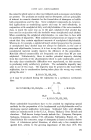
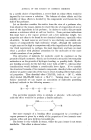
JOURNAL OF THE SOCIETY OF COSMETIC CHEMISTS in recent times become particularly important, not only as detergents in their own right, but on account of their ability to enhance the foaming characteristics of sulphated detergents in the presence of oily soiling matter. This is the subject of U.S. patent No. 2,607,740. At first, products based on the mixed fatty acids of coconut oil were considered satisfactory, but with the commercial availability of pure fractionated lauric acid it has been found that, despite the greater price of this material, it is a preferable starting point, as the effectiveness of the finished product is more than proportionately higher in relation to its higher cost. Like the sulphated fatty acid alkylolamides, such compounds as lauric diethanolamide can be used in conjunction with soap to produce effective shampoos. They show certain advantages and certain disadvantages in comparison with the sulphated products. On the credit side, they are less substantive to the hair, but on the debit side they are less effective as lime- soap dispersing agents. Nevertheless, highly satisfactory combined prepara- tions can be made, and, using soaps derived from alkylolamines, such as monoethanolamine or triethanolamine, rather than from soda or potash, clear liquid or translucent gel preparations can be formulated having great consumer appeal. Gel preparations having the consistency of soft petroleum jelly have in many ways the ideal consistency and appearance for a shampoo. Application is easy and the products are comparable in this respect with a good cream shampoo, but the transparency or translucency adds that same sales appeal that has kept transparent soap popular for so long. Gels based on soap alone were far too slowly soluble to be successful, but combinations of fatty acid alkylolamide and soap can be devised having a sufficiently rigid gel consistency, yet dissolving rapidly in warm water. Patent specifica- tions have been applied for in this connection. The products based upon C•2/C•4 fatty acids and diethanolamine find some application as emulsifying agents and are particularly effective when used in conjunction with non-ionic detergents of the type obtained by condensing ethylene oxide with alkyl phenols. Products of this kind are used in bulk for the production of all-purpose detergent liquids, horticultural sprays, etc., but they are also of interest to the cosmetics chemist as emulsifying agents. Condensates based upon diethanolamine with C•2/C•8 unsaturated fatty acids are good oil-in-water emulsifiers for mineral oil. The third group of water-soluble derivatives falling within our classifica- cation (a) are those where a simple fatty acid alkylolamide has been con- densed with ethylene oxide to give compounds corresponding to the formulas below: (2) /(CH,.CH•.O)•H R.CO.NH. (CH•.CH•.O),•H R.CO.N •(CH•.CHa. O)•H 174

FATTY ACID ALKYLOLAMIDES In this case, the hydrophilic nature of the "head" may be controlled by controlling the number of ethylene oxide molecules employed. Once again, as in all surface-active matters, it is the balance in the molecule of the hydrophilic "head" as against the hydrophobic "tail" that counts. Where the R-CO is derived from laurie acid or the mixed fatty acids of coconut oil, the compound, where the addition of ethylene oxide has been controlled so that n in the formula (2) equals 5, shows the best wetting characteristics at 25 ø C. Where, however, R-CO is derived from oleic acid, the best figures are shown where n equals 10. It must not be assumed, however, that the compounds showing the best wetting figures are necessarily the most effective for all purposes. Compounds of the type represented by formula (2) are effective emulsifying agents for a variety of purposes. The products where R-CO is derived from oleic acid and where n equals 5, are effective emulsify- ing agents for producing oil-in-water emulsions of mineral or vegetable oil extending the number of molecules of ethylene oxide in the compound diminishes the value as an emulsifying agent for these oils, but makes the compounds effective when used with kerosene or turpentine. The relatively water-insoluble compounds falling within our classification (b) are usually derived from a mono-alkylolamine such as monoethanolamine, mono-isopropanolamine or mono-isobutanolamine and a fatty acid. Whilst they are too insoluble to be used as detergents in their own right, the products derived from C•/C•4 saturated fatty acids, when used in conjunction with the sulphated or non-ionic detergents in common use, exert a most pro- nounced effect. Indeed, it is this type of material that has made possible the modern heavy-duty detergent washing powder for domestic use. Natur- ally enough, patents exist in this field. These relatively water-insoluble compounds increase not only the soil removal efficiency, but also in many cases the lathering power. In point of fact, as the figures to be quoted show, they are actually more efficient in some instances for improving the lathering power in the presence of grease than the derivatives of diethanolamine previously discussed. Their use, however, in liquid preparations is limited and must be formulated with great care, since under certain conditions, and particularly at low temperatures, they can give rise to clouding. These foam tests were carried out in the presence of oil, using an active detergent concentration representative of that used in domestic operations such as dishwashing, or the washing of fine fabrics, but rather lower than is usually employed for shampooing. In the tests 10 per cent by weight of an acyl- alkylolamide was added to a dodecyl benzene sulphonate preparation con- taining 37 per cent active matter. The resulting mixture was then diluted with water until at its final dilution the mixture cost the same per kilo as the dodecyl benzene sulphonate preparation without additions. In this way, of course, the preparations containing the acyl-alkylolamides comprised less active matter. From a commercial standpoint, however, it is important 175
Purchased for the exclusive use of nofirst nolast (unknown)
From: SCC Media Library & Resource Center (library.scconline.org)