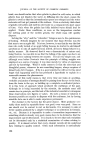
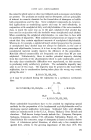
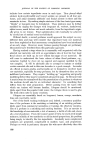
VISIBLE REGION ABSORPTIOMETRY IN COSMETIC ANALYSIS one-third as much as the ultra-violet instrument and is only one-fifteenth of the price of the infra-red equipment. This price differential is of particular importance to the small laboratories where the main concern is control, involving the estimation of substances known to be present, rather than the identification of the components of an unknown, eomple mixture. In many laboratories, considerable use is made of the even cheaper tintometer, but although this instrument is well regarded for many pro- cedures, it is by no means as versatile as the photo-electric absorptiometer, and also is prone to considerable subjective variation, making comparisons between operators and between laboratories difficult: this inherent fault of the tintometer is eliminated by the objective method of measurement employed in the absorptiometer. Practically any determination which can be made using a tintometer can be repeated on an absorptiometer, while many which are outside the scope of the former are readily achieved with the photo-electric instrument. The techniques employed in the visible region are essentially similar to those used in the ultra-violet or the infra-red, and depend in the main upon a comparison of the absorption of the unknown with the absorption of a standard prepared and estimated under exactly similar conditions--the wave-length employed having been previously determined. For a single estimation on an unknown substance it is frequently more convenient to prepare a series of solutions in which increasing quantities of a standard are added to aliquot parts of the unknown. The absorptions of these solutions, after parallel development of the colour, are then plotted against the added standard. Graph I shows the result obtained by adding increasing quantities (1 ml., 2 mls., 3 mls., and 4 mls.) of a standard solution of anhydrous lanolin in benzene (101.6 mgms. in 100 mls.) to 1 ml. portions of a solution of a lanolin-eontaining base, also in benzene. The green colour on which the estimation depends is produced by treating the solution with acetic anhydride and concentrated sulphuric acid, and its density is measured after precisely thirty minutes. The continuous variation of colour intensity with time in this estimation is an illustration of the need for a standardised procedure. The intercept at 0.232 is the absorption of the solution containing the base alone. Graph II shows the same points with the intercept adjusted to zero. From this the concentration of lanolin in the base can be readily calculated. The great merit of this method is that it does not require an extensive investigation into the factors influencing the colour formation, as the calibration curve is obtained within the experiment, under conditions which are the same for the unknown and for the standards. It does, how- ever, require that the line through the experimental points should be straight, that is that Beer's Law should apply, or the transfer of the intercept to zero will be unjustified. 179

0.4 JOURNAL OF THE SOCIETY OF COSMETIC CHEMISTS 04 0 D0 100 150 200 50 100 150 200 AclcJecl lanoJ,n L•Dms per m•llililre A•a•e•l Janolin ggms per rn[ll[l•lre GRAPH I GRAPH 2 Absorption of solutions plotted against Graph 1 with the intercept referred to concentrations of added lanolin. zero. A large number of factors can influence the colour formation: e.g., the stability of the coloured compound, the quantities of reagents used and the rates of addition, the temperature, the time of reaction and the presence of interfering substances. Of these, all but the last can be eliminated or minimised by the development and the observance of an exact technique. The interfering substances fall into two main classes: those which can produce a colour or are themselves coloured, and those which, while not producing colour, can modify the colour formed by the substance under estimation. The best safeguard against the former difficulty is tke use of adequate blanks. Ideally, the blank or comparison solution should contain everything except the test material, in which case the colours produced by the interfering substances are automatically subtracted. Failing this, it is usual to use either a sample blank in which everything is added save the chromogenic reagent, or a reagent blank which omits only the sample, the more highly coloured of the two being employed. If the chromogenic reagent is a group reagent then substances chemically related to the unknown may interfere, a difficulty which can usually only be overcome by a numerical correction, specific suppression of the interfering substances, or by more efficient separation techniques. An example of a colorimetric procedure in which nearly all of these i80
Purchased for the exclusive use of nofirst nolast (unknown)
From: SCC Media Library & Resource Center (library.scconline.org)