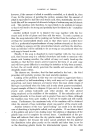
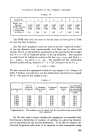
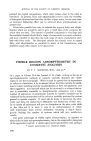
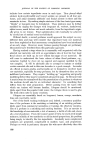
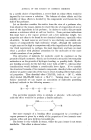
JOURNAL OF THE SOCIETY OF COSMETIC CHEMISTS 1,981,792, U.S. Pat. 1,932,180 (I.G.), U.S. Pat. 2,355,503, Can. Pat. 472,726' Brit. Pat. 523,466, U.S. Pat. 2,353,081, French Pat. 669,517 (I.G.) 693,630 751,382 751,641 780,208, etc.). These detergents are said to be extremely mild on the skin and scalp. They possess also the property of showing a compatibility with soap in a very wide range of proportions. This fact, coupled with the fact that they possess an extremely high ability to disperse lime-soaps, makes them of great interest to the cosmetic chemist for the formulation of combined soap-detergent shampoos. There has long been a belief, not without some foundation, that shampoos based purely upon sulphated detergents are more degreasing than is desirable. Attempts have been made to remedy this defect by incorporating neutral oils and fats such as lanolin. This procedure, however, has not proved entirely satisfactory in that these additives tend to reduce the lathering power of the preparation, causing the customer to use more of it, and thereby offsetting any intrinsic reduction in the degreasing power of the preparation which may have been effected. It has therefore long been felt that a formulation based on soap, but containing an adequate amount of detergent to keep lime-soaps in suspension, might prove the ideal product. The sulphated fatty acid alkylo- lamides lend themselves well to this type of formulation. All sulphated detergents possess some lime-soap dispersive power, but the efficiency of the sulphated alkylolamides is particularly high as the following figures will indicate. These tests follow substantially the I.G. Farben method and involve, in principle, the preparation of a series of mixtures containing a detergent preparation (reduced to 20 per cent active material) and a soap (90 per cent active material) in graded proportions varying from 100 per cent soap to 100 per cent detergent preparation. The mixtures are then diluted in hard water and, after standing overnight, the solutions examined for turbidity and flocculation. W ----- water clear 0 ----- opalescent C ----- cloudy F -- flocculent Parts by weight of 20 per cent active product 90 per cent active soap Active detergent consists of: (i) commercial sulphated coconut oil fatty acid monoethanolamide (CO•DANO•. "C") FC 0 1 2 3 4 5 6 7 8 9 I0 10 9 8 7 6 5 4 3 2 1 0 c c c o o o o w w 172

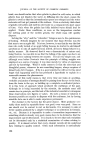
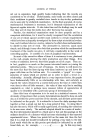
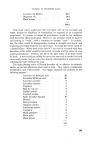
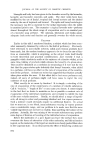
FATTY ACID ALKYLOLAMIDES (ii) commercial second- ary alkyl sulphate FC FC FC FC FC FO FO FO 0 O W (iii) commercial dodecyl benzene sulphonate FC FC FC FC FC FO FO FO FO O W In detail, the test consisted of making a 10 per cent solution of the mixture of soap and detergent in distilled water. 5 c.c. of this solution were then mixed with 45 c.c. of hard water (200 parts p.p.m. of CaO), and 5 c.c. of this dilution were further diluted with 45 c.c. of the same hard water. These last dilutions were examined next day for the condition of the lime soaps. It might at first be thought that, ideally, soap-detergent mixtures for shampoos should consist predominantly of soap, and only contain a suffici- ency of detergent to keep in suspension lime soaps produced during the washing operation. In practice, however, it is found that soap has a specific effect to reduce the degreasing power of sulphated acyl-alkylolamide deter- gent preparations, and, in consequence, mixtures containing quite high proportions of the latter are reasonably mild from a degreasing standpoint. Normally, the high lathering alkylolamides based on the C•/C•4 type fatty acids (for which the figures above are quoted) are preferred for shampoo preparations. Products based on unsaturated fatty acids of the type have, however, an even higher lime soap dispersive power, and practical tests using these in conjunction with soap have yielded excellent results for hair washing under test conditions. Particularly interesting is the success obtained with these preparations on hair which had been submitted to repeated bleaching operations over a period, or to several permanent waving treatments. The results in these cases were considerably more successful than those obtained using shampoo preparations of the more conventional types. The best-known of the second group of water-soluble fatty acid alky- lolamides falling within our classification (a) are the derivatives of fatty acids with diethanolamine. These and related compounds were the subject of the early basic patents on fatty acid alkylolamides in the U.S. To-day such are offered by a number of different firms in the U.S. under various names such as •-100, DIANOL G, ALROLSOL, etc., but they are most associated with the name NINOL*. In addition to diethanolamine, a wide range of alkylolamines, containing two or more primary alcoholic groups, may be employed and likewise a less wide, but none the less extensive, range of fatty acids may be employed. Obviously, therefore, the number of different possible combinations and in consequence the number of potential compounds is big. Many of these have achieved commercial importance for special purposes and the American range of products is to-day extensive. A range of similar products is offered over here under the name LOaA•INE. The products derived from diethanolamine and C • •/C •4 type fatty acids have * Ninol Laboratories, Chicago, U.S.A. 173
Purchased for the exclusive use of nofirst nolast (unknown)
From: SCC Media Library & Resource Center (library.scconline.org)