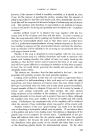
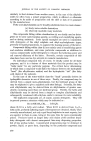
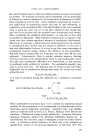
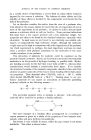
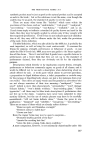
0.4 JOURNAL OF THE SOCIETY OF COSMETIC CHEMISTS 04 0 D0 100 150 200 50 100 150 200 AclcJecl lanoJ,n L•Dms per m•llililre A•a•e•l Janolin ggms per rn[ll[l•lre GRAPH I GRAPH 2 Absorption of solutions plotted against Graph 1 with the intercept referred to concentrations of added lanolin. zero. A large number of factors can influence the colour formation: e.g., the stability of the coloured compound, the quantities of reagents used and the rates of addition, the temperature, the time of reaction and the presence of interfering substances. Of these, all but the last can be eliminated or minimised by the development and the observance of an exact technique. The interfering substances fall into two main classes: those which can produce a colour or are themselves coloured, and those which, while not producing colour, can modify the colour formed by the substance under estimation. The best safeguard against the former difficulty is tke use of adequate blanks. Ideally, the blank or comparison solution should contain everything except the test material, in which case the colours produced by the interfering substances are automatically subtracted. Failing this, it is usual to use either a sample blank in which everything is added save the chromogenic reagent, or a reagent blank which omits only the sample, the more highly coloured of the two being employed. If the chromogenic reagent is a group reagent then substances chemically related to the unknown may interfere, a difficulty which can usually only be overcome by a numerical correction, specific suppression of the interfering substances, or by more efficient separation techniques. An example of a colorimetric procedure in which nearly all of these i80

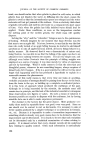
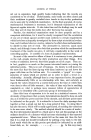
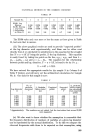
VISIBLE REGION ABSORPTIOMETRY IN COSMETIC ANALYSIS difficulties arose was found in this laboratory in the estimation of trypto- phane by means of p-dimethyl amino benzaldehyde. The method consists in the condensation of tryptophane with p-dimethyl amino benzaldehyde in 19N sulphuric acid over a period of hours this is followed by oxidation to a coloured compound with a dilute solution of sodium nitrite, and the colour is measured after a further time interval. In this determination it was found that the resultant colour was affected (a) by variations in the quantity of sodium nitrite used, (b) by the condensation time, and (c) by the time allowed to elapse before the estimation of the colour it was also found that one of the preservatives added to the product gave a colour with the reagent and, finally, that the intensity of the colour produced by a standard amount of tryptophane was controlled by the reducing properties of the system as measured by a ferricyanide titration. To overcome these difficulties, the following procedure has been adopted 1 ml. of the test substance is treated with 9 mls. of a solution containing 30 mgms. p-dimethyl amino benzaldehyde in 21.1N sulphuric acid: this mixture is allowed to stand in the dark for 16 hours (overnight), then diluted with 5 mls. of distilled water, cooled, and to it is added 1 mi. of a 0.023N solution of sodium nitrite. After standing in the dark for a further 1« hours the colour is measured on the absorptiometer, using an orange filter. By adhering to this schedule the first three variations are eliminated. Having obtained a value for the light absorption, the apparent tryptophane content is calculated from a calibration graph which shows the relationship between colour density, concentration and the reducing properties of the sample. Finally, the true tryptophane content is obtained by subtracting a constant amount which corresponds to the added preservative. This method is now in use as a routine procedure and has given concordant results over a long period. An advantage of many colorimetric methods when compared with other techniques lies in their sensitivity. For the determination of substances present only in very small concentrations few other methods can compare, and this type of determination is likely to increase in importance with the development and application of column analysis techniques of the type used by Moore and Stein 2 in their work on amino acid analyses in which they used the colorimetric ninhydrin method for the determination of the amino acid content of the fractions. Colorimetric procedures are available for many estimations which are of interest to cosmetic chemists: the average particle size of powders can be estimated turbidimetrically•,t while lanolin 5, as in the example above, lead 0, and quaternary ammonium compounds' are only a few of the substances which can be rapidly determined by colorimetric techniques. Many others could be added, but such a list would be out of place here, and enough has already been said to illustrate the usefulness of visible region absorptiometry 181
Purchased for the exclusive use of nofirst nolast (unknown)
From: SCC Media Library & Resource Center (library.scconline.org)