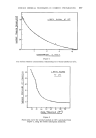
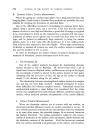
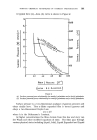
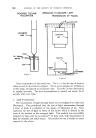
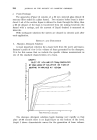
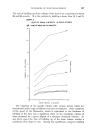
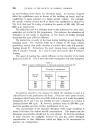
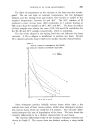
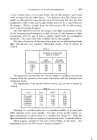
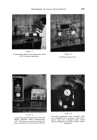
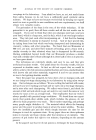
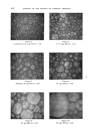
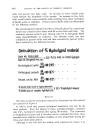
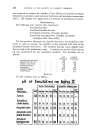
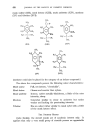
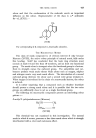
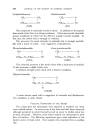
TECHNIQUES OF FOAM MEASUREMENT 395 Our apparatus consisted of a selenium photo-cell (Barrier Layer type) of 12 sq. cm. The incident light is provided by a 6-volt 36 watt bulb in a parabolic reflector, with current supplied by a 6-volt car battery. The foam cell differed from the cells previously used. It is an open cell 50 mm in diameter and 30 mm deep. We used the open cell to simulate usage conditions. Experiments showed that an airtight cell retards the collapse of the foam. As we do not shampoo our hair or brush our teeth in airtight conditions, results from closed cells will be unreal from our point of view. The foam is generated in the Mixmaster in the usual way and transferred to the cell by means of a glass tube (Figure 2). The first light transmission readings are taken as soon as possible after beating (about 20 seconds) and further readings are taken at regular intervals up to 10 minutes. With the absorbing solutions (toothpastes) the light absorbed by the cell containing the weight of toothpaste solution equivalent to the weight of foam in the cell is noted each time. DRAINAGE APPARATUS SINTERE d FUNNEL '• PLATINUM WIRE TIP $rnl GRADUATED d. Photomicrography Figure 3 A Zeiss Demoscope microscope with Zeiss photomicrographic attach- ments is used for taking the photographs. Foam is generated in the Mixmaster in the usual manner and is trans- ferred into an open cell, 3.5 cm diameter and 1 cm deep. The cell was illuminated with transmitted light from an electronic flash. Exposure time was 1/25 of a second. HP3 plates were used in the camera. The photographs were enlarged so the final magnification is x 45. The particle size counts were made on a 100 sq. cm area of the photo- graph, and the specific surface of the foam calculated. The specific surface as defined by Clark and Blackman 4 is the total surface area in sq. cm of the gas liquid interface in 1 cc of foam. It is calculated using the formula :- Specific surface: •: (xldl q- x2d• ...... ) where dl, d• etc. represent the mean diameters of the various size groups of the bubbles, and xl, x• etc. the number of bubbles assigned to each 1 sq. cm of the observed area.

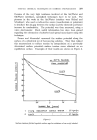
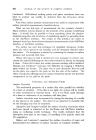
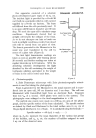
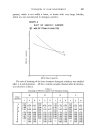
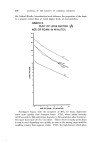
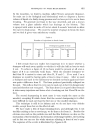
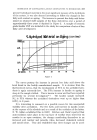
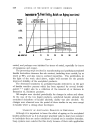
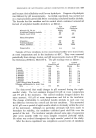
396 JOURNAL OF THE SOCIETY OF COSMETIC CHEMISTS e. Foam Drainage The apparatus (Figure 3) consists of a 30 mm sintered glass (Grade 3) mercury filter sealed in a glass funnel. Two minutes before foam is intro- duced 1 ml of the mother liquor is allowed to drain through the filter, then a 20 ml aliquot of the foam is transferred from the mixing bowl into the funnel with a syringe, and the amount of liquid drained is measured at intervals. With toothpaste solutions the sinters are cleaned in chromic acid after each application. RESULTS AND DISCUSSIO• 1. Shampoo Detergent Solutions A most important criterion for a foam both from the user's and manu- facturer's point of view is the volume of foam generated by the shampoo. It is for this reason that we include the specific volume measurement as one of the standard characteristics of a foam. GRAPH I PlOT Of VOLUME Of foam PRODUCED v/ •o BY ONE GRAM OF SOLUTION S TIME Of • BEATING IN MINUTES AT 720rpm 't o o • • TIME OF BEATING IN SECONDS The shampoo detergent solutions begin foaming very rapidly so that after 15-30 seconds there is no liquid layer at the bottom of the bowl. Graph I shows characteristic curves for the generation of foam volume.
Purchased for the exclusive use of nofirst nolast (unknown)
From: SCC Media Library & Resource Center (library.scconline.org)