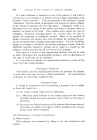
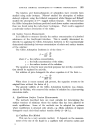
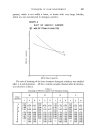
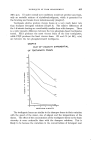
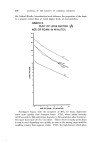
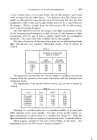
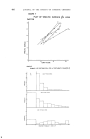
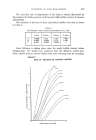
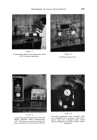
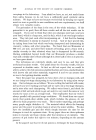
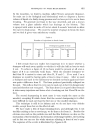
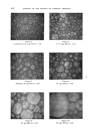
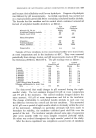
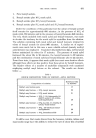
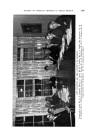
TECHNIQUES OF FOAM MEASUREMENT 411 In the meantime, we found a machine called Struers automatic dispenser. Its main use is for biological and biochemical work to dispense a known volume of liquid at a fairly strong pressure and we have put it to use in foam breaking. We generate our foam in the way described, and put a known volume into a glass cylinder which has drainage at the bottom. This is sprayed with water in units of 5 ml at about 3 seconds' intervals to allow the water to drain away. We count the number of sprays to break the foam and we find it gives very satisfactory results. Table 6 Number of injections to break foam Detergent applied to hair Detergent Unsoiled 1st Application 2nd Application M 19 16 20 H 22 18 17 N 23 8 20 C 27 25 23 I feel certain that you realise how important it is to know whether a shampoo will wash away quickly or whether it will take half an hour to wash it out. To achieve a figure of (1) no foam would be present at all even a figure of 8 is an extremely weak foam. With the unsoiled detergent we find that M is easiest to rinse and then H, N and C. If we used C as a shampoo we would be having quite a time to rinse it away. After we used a shampoo and wash in the laboratory we checked our foam again and there was quite a difference from N. The foam produced practically collapsed on the spot. This tells us that it is very easy to wash out, in fact it is dangerously easy and therefore not very good. The foam from C is no good either because it takes many injections and hence a lot of washing out but H and M are the best. The second shampooing in most cases is very nearly the same as the unsoiled, excepting M which shows that the second shampooing is in effect more difficult to wash out than the first one or the unsoiled shampoo. This technique is still in its infancy and we do not have very definite results, except these few on the effect of soil. We have made a film of foam breaking-down, and although this is not terribly exciting as far as movies go, we do learn a lot from it. Besides the obvious ones such as the particle size and the film thickness we also see the mechanism of the breakdown, the formation of the large bubbles, the bursting and in fact one can see the whole structure altering in front of one's eyes. The sequence of the events is illustrated by Figures 5-10.

412 JOURNAL OF THE SOCIETY OF COSMETIC CHEMISTS Figure $ Toothpaste C.D.1 age 60 sec. x 15. ..... ß ':.'..'.. '. . 4, ," ..... '.. ,."..,. 5'.' .'?.. Figure 6 C.D.1 age 240 sec. x 15. Figure 7 Shampoo M. age 60 sec. x 45. Figure 8 M. age 140 sec. x 45. Figure 9 M. age 280 sec. x 45. F, gure 10 M. age 720 sec. x 45.
Purchased for the exclusive use of nofirst nolast (unknown)
From: SCC Media Library & Resource Center (library.scconline.org)