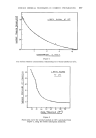
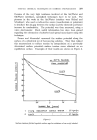
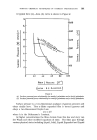
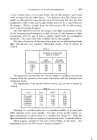
TECHNIQUES OF FOAM MEASUREMENT 413 DISCUSSION MR. A. HERZKA: Do you have any special techniques for determining the foam density, and other characteristics of pressurized (aerosol) foams ? THE LECTURER: As I had notice of this question we did some work last week and found that these techniques stand up quite well for the pressurized pack. We have tried some shaving soap. The density was quite easy to determine, the viscosity measurement took a little longer than I would like, but by having another tube for it one can do it quite easily, and we have subjected the foam to the breakdown technique where it took approximately 34 injections. I think it is quite in order to use these measurements for pressurized packs or practically any other foam. The idea behind these techniques is not to limit these tests just to shampoo and toothpaste, but to have as wide a field as possible. At Mr. Holmes's suggestion these methods were tried for detergents and satisfactory results were obtained. DR. A.M. POSNER: 1. What sort of correlations has Mr. Neu obtained between his experiments carried out in the laboratory and those carried out in the salon ? It is a very praiseworthy effort to try to place the subjective properties of the product on an objective basis using controlled measurements. My colleagues and I have, for many years, been trying to do a similar thing. It does seem to me, however, in the case of the present paper, that there is a convenient get-out mentioned in the case of, say, feel of the foam where part of the tactile impression would be governed by adsorption on the skin. 2. I am not very happy about the use of C.G.S. units in expressing the results on viscosity of foam, because it seems to me that a foam would be non-Newtonian in character and the use of C.G.S. units implies that it is in fact NewtonJan. What experiments has Mr. Neu carried out to vary the shear rate applied to the foam in order to determine its thixotropic or other devia- tions from Newtonian behaviour ? 3. I am not clear from the text what exactly Mr. Neu means by the term "viscosity differential". Is it a differential coefficient ? If so, then the units employed on the Y axis of his figures seem to me to be wrong. 4. Can Mr. Neu explain the physical meaning of the term "superfoam"? Does it correspond to the region of very rapid drainage ? THE LECTURER: 1. As far as feel is concerned, we cannot tell, but the viscosity we can tell very easily because a viscosity of 20 or more will mean a very creamy foam, and a viscosity of 15 or less will be practically lost on the hair. I think the correlation is extremely good, as far as these methods are concerned. We developed the methods, then we went to the salon

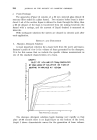
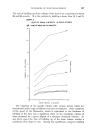
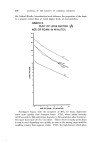
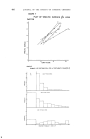
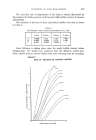
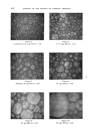
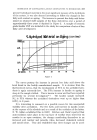
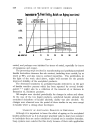
414 JOURNAL OF THE SOCIETY OF COSMETIC CHEMISTS and correlated theoretical and practical results until we knew that we were running parallel. But as far as the feel is concerned, we have no method for it and I believe, though I may be quite wrong, that I can make up two shampoos with the same viscosity, the same particle distri- bution volume, in fact with identical properties, but they will feel different. To the touch this is something which has nothing to do with physical property but with the adsorption on to the skin. I do not think that this is so very important in our foam work, because you know immedi- ately without any measurements, that some types of foam will feel unpleasant. You have to assess it yourself, we cannot help. It is just the same if you put an acid on your skin, well you know how that burns. I do not think that these things can be done by physical methods they are not physical techniques. I wish they could be. 2. Our instrument does not allow us to vary the air pressure but what we have done is that we have various viscosity tubes which we have stan- dardised with known oils. Measurement of foam viscosity is independent of tube diameter. This particular viscometer is claimed by its maker to give C.G.S. results although we had to modify it. 3. The viscosity differential is just a means of not having very cumbersome titles and names, and actually I do say here that the change in viscosity with the age of the foam is what I mean by viscosity differential. It is not a true calculus differential and is actually a plot of the viscosity against time, and it has exactly the same units as these which I use for viscosity. 4. A superfoam is quite a different type of foam to the more aged foam. It not only has rapid drainage, but it also has very rapid decrease of viscosity, and changing light transmission. It seems to be having a lot of excess energy in it and that excess energy dissipates by draining quickly, collapsing fast, bursting, and then it comes to the region of relative stability. You can see that in Figures 5-10. MR. D. BAss: Amphoteric detergents are increasing•ly used in both shampoos and toothpaste. Have you conducted any of your experiments on foaming and rinsing on any amphoteric surface active agent, and if so, how did results compare with anionics, nonionics, and cationics ? THE LECTURER: We have done no work with this class of detergent.
Purchased for the exclusive use of nofirst nolast (unknown)
From: SCC Media Library & Resource Center (library.scconline.org)