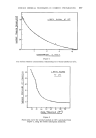
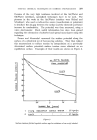
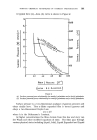
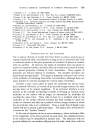
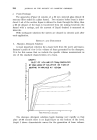
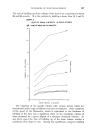
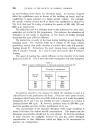
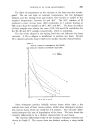
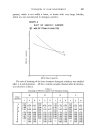
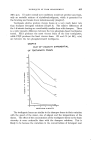
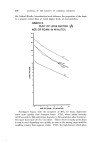
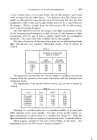
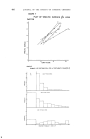
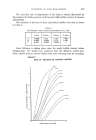
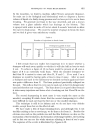
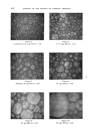
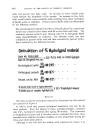
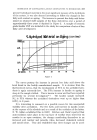
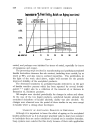
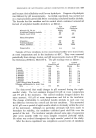
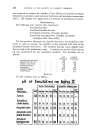
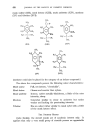
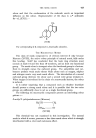
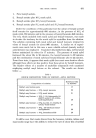
THE MUSK ODOUR 431 1. Pure benzyl acetate. 12. Benzyl acetate plus 10% musk xylol. 3. Benzyl acetate plus 10% benzyl benzoate. 4. Benzyl acetate plus 5•o musk xylol and 5% benzyl benzoate. Under the conditions of this particular test the odour of benzyl acetate itself remains for approximately 600 minutes in the presence of 10% of musk xylol, 750 minutes and in the presence of benzyl benzoate 840 minutes. The test, which included both musk xylol and benzyl benzoate, was made to obviate the tendency for the musk xylol to crystallize from the solution. The solution containing both musk xylol and benzyl benzoate retained its odour of benzyl acetate for about 960 minutes. A similar set of experi- ments were made but in this case a more volatile solvent (namely methyl amyl ketone) was employed. Examined olfactorily from slips, methyl amyl ketone maintained its odour for 17 minutes. The presence of musk xylol increased the odour life to 20 minutes, the benzyl benzoate to 22 minutes and the combination of musk xylol and benzyl benzoate also to 22 minutes. From these tests, it appears that musk xylol does exert some fixative effects although these effects are less positive than those given by benzyl benzoate. The fixative effects of a number of musk-like compounds were examined employing methyl amyl ketone as the solvent. The results are shown below :- Table 1 ODOUR RETENTION TIME OF METHYL AMYL KETONE Retention time Composition of solution in minutes Methyl amyl ketone pure 17 Methyl amyl ketone -t- 10% benzyl benzoate 22 Methyl amyl ketone + 10% musk ketone 21 Methyl amyl ketone + 10% 1.1.4.4-tetramethyl-6- ethyl-7-acetyl- 1.2.3.4 -tetra- hydronaphthalene 28 Methyl amyl ketone + 10% 4-acetyl-l.l-dimethy-6- tertiary-butyl-indane 27 Methyl amyl ketone d- 10% 3.5-ditertiary-butyl- acetophenone 26 Methyl amyl ketone + 10% Pentadecanolide 28 It will be seen that musks drawn from the benzene, tetralin, indane and macrocyclic range have the ability to reduce the rate of odour loss of methyl

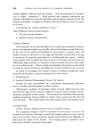
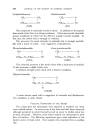
432 JOURNAL OF THE SOCIETY OF COSMETIC CHEMISTS amylketone to an extent greater than benzyl benzoate or the two nitro musks ketone and xylol. SUMMARY AND CONCLUSIONS There is no denying the value of natural musk in high-class perfumery. Unfortunately, natural musks vary from source to source and it is extremely difficult to give an odour description which is characteristic of the named item. While all natural musks from the deer possess the sweet clean musk odour, the degree of "bouquet" varies. In point of fact, one is forced to accept natural musk as a perfume rather than as one characteristic note. Blended with the musk-like odour is the distinct effect of civet with a subtle undertone of castoreum. From this, it can be seen that it is quite impossible to obtain a "natural" musk effect with one particular pure chemical. Nevertheless, the synthetic musks play a very important part in all branches of perfumery. The nitromusks are inexpensive and offer a range of odour effects from the full toning action of the xylene and ketone to the strong almost aggressive effect of ambrette. They are all of great persistence and tend to remain when all other odours have departed. In most cases, they lead to problems of discoloration, particularly in combina- tion with other chemicals. Of the benzene musks, little is heard but 3.5-ditertiarybutylaceto- phenone and 3.5-ditertiarybutylpropiophenone offer great possibilities. Of the tetralin musks, 1.1.4.4-tetramethyl-6-ethyl-7-acetyl-l.2.3.4-tetrahydro napthtalene is a first-class product. In the indane field, 4-acetyl-l.1- dimethyl-6-tertiarybutylindane is outstanding. It is of obvious value in high-class perfumery and may be used to replace nitromusks when colour becomes a problem. The macrocyclic musks offer a wide range of products for use in many branches of perfumery. In addition to a sweet musk effect they possess a full woodiness which imparts character to most perfumes. In some ways the macrocyclic musks approach the "bouquet" effect of the natural musk from the deer. The pentadecanolide is perhaps the out- standing example in this class. ACKNOWLEDGMENT I am indebted to Dr. M. G. J. Beets and Dr. L. G. Heeringa of the Polak & Schwarz Research Laboratories, Hilversum, for their advice given to me during the preparation of this paper. (Received: 1st June 1960) REFERENCES • Beets, M. G. J. Symposium on Molecular Structure and Organoleptic Quality, Geneva (1957) 83. • Beets, M. G. J., van Essen, H. & Meerburg, W. Rec. tray. chirn. ?? 861 (1958). a Pickthall, J. Soap, Perfumery • Cosmetics 32 889 (1959). 4 Stoll, M. Mfg. Perfumer 1 107 (1937).
Purchased for the exclusive use of nofirst nolast (unknown)
From: SCC Media Library & Resource Center (library.scconline.org)