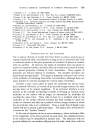
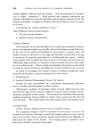
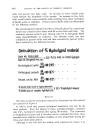
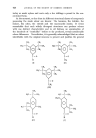
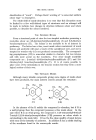
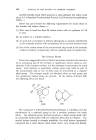
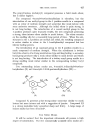
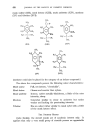
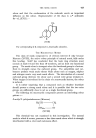
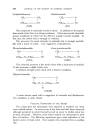
THE MUSK ODOUR 433 INTRODUCTION BY I). E. BUTTERFIELD, B.A. The field covered by musks is now a very wide one indeed with the discovery in the last few years of further types of compounds possessing a musk odour. However, there is no denying the fact that natural musk is still of great value in high-class perfumery. Unfortunately, the natural musk does vary from source to source and it is difficult to give an odour description to characterise this material. While the sweet clean musk odour is always present, the degree of "bouquet" varies. Consequently, one is forced to accept natural musk as a perfume rather than as one charac- teristic note. We find, in fact, that blended with its musk-like odour are distinct effects of civet, together with a subtle undertone of castoreum. In this connection, it is interesting to note the occurrence of civetone-- which is a macrocyclic musk compound--in natural Civet itself. In view of the complexity of the natural musk odour, it is quite impossible to obtain a natural "musk effect" with one pure chemical. Nevertheless, the syn- thetic musks do play a very important part in all branches of perfumery. Of the synthetics, the nitro musks were the first to be discovered and are also the least expensive. They offer a range of odour effects from the full toning action of musk xylene and ketone to the strong and almost aggres- sive effect of Ambrette. They are all of great persistence and tend to remain when most other odours have departed. However, in many cases, they lead to problems of discoloration, particularly in combination with other chemicals. Today, besides the nitro musks, we now know of five other groups of compounds with a musk-like odour. They are: the benzene, indane, tetralin, macrocyclic and steroid musks. Of the benzene musks, little has been heard but it is interesting to note that one of these, namely 3: 5 ditertiary butyl benzaldehyde (I) is appar- ently the simplest compound known to possess a musk odour. Unfor- tunately, it is unstable on account of the aidehyde group but two other closely related compounds, 3:5 ditertiary butyl acetophenone (II) and the corresponding propiophenone (III), offer great possibilities. A considerable amount of work has been carried out on the Tetralin musks and of these, 1.1.4.4-tetra methyl 6-ethyl 7-acetyl 1.2.3.4-tetrahydronaphthalene (VII), is a first class product. A wide range of Indane compounds has also been worked upon and several possess the Musk odour. In this field, 4-acetyl 1.1-dimethyl 6-tertiary butyl Indane (X) is outstanding. It is of obvious value in high class perfumery and like the Tetralin musks, may be used to replace the nitro musks when discoloration is a problem. There is a wide range of macrocyclic musks, which are of importance to the per- fumer. In addition to a sweet musk effect, they also possess a full woodi- ness which imparts character to most perfumes. In some ways, the best

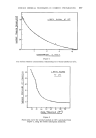
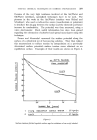
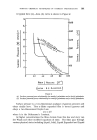
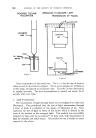
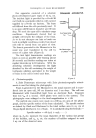
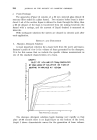
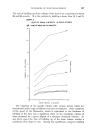
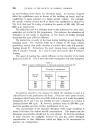
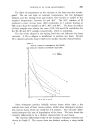
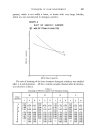
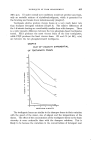
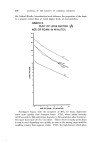
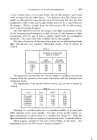
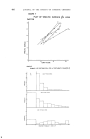
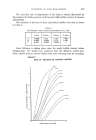
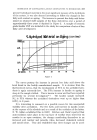
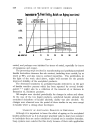
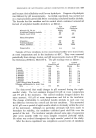
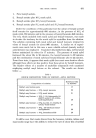
434 JOURNAL OF THE SOCIETY OF COSMETIC CHEMISTS of the macrocyclics approach the "bouquet" effect of the natural musk. In this class Pentadecanolide (XX) is perhaps the most outstanding example. Although Steroids have been discovered which possess a musk odour, they are of no commercial importance. It can be confidently predicted that further types of compound with a musk odour will be discovered. As the literature indicates, work has already been carried out in the field of tricyclic compounds with some degree of success. In fact, it is possible that the next 10 years will see almost as great a change in the types of synthetic musks in general use as has occurred during the last decade! The author also describes a series of simple experiments carried out to illustrate the fixative effect of several musk compounds. Two common perfumery materials were used as the basis for these experiments. These were, benzyl acetate and methyl amyl ketone and the effect on their rate of evaporation of adding 10 per cent of various musk compounds was determined. The experiments showed that while the simple nitro musks and a high-boiling solvent (benzyl benzoate) undoubtedly had some fixative effect, a much increased effect is obtained by the use of certain musks drawn from the benzene, indane, tetralin and macrocyclic series. As a footnote to the paper, it is interesting to reflect upon the wide range of chemical structures which have now been shown to possess the "musk odour". It almost seems as if the more we learn the less specific become the structural requirements for the "musk odour". In fact, Dr. Beets has suggested that the minimum requirements are basically a mole- cular weight of 2-300, a closely-packed molecular structure that is of bulky profile and an easily accessible functional group. •)ISCUSSION DR. H. W. HIBBOTT .' How far do these fixatives, being what they may be, affect vapour liquid chromatography, because if they do, then it may be that we have a better notion of what a fixative should be. MR. •). E. BUTTERFIELD: I presume you are meaning, how would they affect the performance of a material on a chromatographic column ? I have certainly no direct evidence myself or any knowledge of experiments to that end, although I know that the author has considered gas chromato- graphy as a possible tool for investigating fixation. These simple experi- ments, as I am sure Mr. Pickthall would agree, really need carrying further to see whether this difference between say, nitro musks or benzyl benzoate and the macrocyclics can be confirmed by other techniques. Also, the extent to which other types of compounds possess these properties.
Purchased for the exclusive use of nofirst nolast (unknown)
From: SCC Media Library & Resource Center (library.scconline.org)