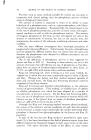
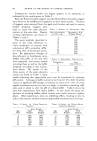
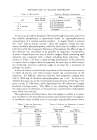
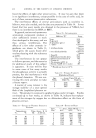
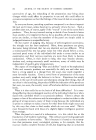
446 JOURNAL OF THE SOCIETY OF COSMETIC CHEMISTS Temperature control within one degree appears to be adequate, as indicated by the results given in Table 2. Both the Folin-Ciocalteu reagent and the diluted Folin-Ciocalteu reagent were found to be unaffected by aging for at least three months. Portions of reagents were removed from the aged stock bottles and used in assays freshly prepared reagents were used to assay the same placenta extracts at the same time. Results of these experiments are shown in Tables 3 and 4. The assay methods described in some of the cited references in- volve incubation of enzyme with substrate at pH's somewhat differ- ent from that of the present proce- dure. By appropriate changes of the carbonate to bicarbonate ratio, buffers with pH's of 9.6 and 10.6 were prepared, and assays carried out using these as well as the buffer prepared according to the instruc- tions above. The results of the three assays of the same placenta extract are listed in Table 5, these TABLE 1--EvvEC'r OV INCUBATION TIME Time of Incubation Phosphatase, K & at 37øC., min. A Units/100 ml. 5 484 10 1120 13 1295 14 1290 15 1610 16 1540 17 1645 20 1635 25 2315 30 2690 TABLE 2--INCUBATION TEMPERATURE Temperature, Assay øC. Units/100 mi. 36 1838 37 1800 38 1862 results indicating that appreciable error may be introduced by improper pH control. A change in buffer concentration from 0.1 M to 0.01 M, which causes no significant pH change, introduces no assay error--this of course applies to placenta extract but may not apply to products containing suffi- cient acid or alkali to alter the pH of a dilute buffer. Table 6 shows the data from experiments with dilute buffers. It also shows the great im- portance of avoiding buffers which contain even small amounts of phos- phate. Other experiments show an inhibiting effect, resulting in low re- suits, if the reaction medium contains appreciable concentrations ofcitrate. TABLE 3--Ac,,INC, or FOLIN-CIOCALTEU TABLE 4--AGING or DILUTE-FoLIN- REAGENT CIOCALTEU REAGENT . -Assay Found----•- .... Assay Found------- Age, Aged Fresh Age, Aged Fesh Days Reagent Reagent Days Reagent Reagent 2 1826 1852 2 1823 1852 15 1815 1801 15 1774 1801 25 1807 1778 25 1752 1778 46 1764 1815 46 1802 1815 52 1769 1807 52 1810 1807 85 1826 1825 85 1841 1825

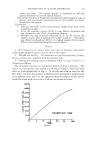
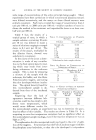
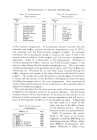
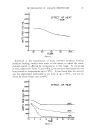
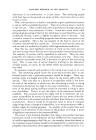
DETERMINATION OF ALKALINE PHOSPHATASE 447 TABLE 5--BuvvEk PH Assay Found, pH Units/100 ml. 9.6 1392 10.1 (normal) 1818 10.6 1634 TABLE 6--BurrE•t COMPOSITION Buffer Assay 0.1 M carbonate (control) 1681 0.05 M carbonate 1704 0.0! M carbonate 1668 0.01 M phosphate 93 0.05 M carbonate, 0. 005 M phosphate 591 In the assay procedure the phenol liberated through enzymatic activity of the alkaline phosphatase is determined finally by spectrophotometric measurement of a colored reaction product. A reagent blank is used as the "zero" optical density control. Since the reagents include the sub- strate, disodium phenylphosphate, which by itself may be subject to slow hydrolysis with the consequent liberation of free phenol, the effect of age of the substrate was considered to be possibly an important consideration. A series of experiments was run, in which a reagent blank containing aged substrate was compared with a blank including fresh substrate. The results, in Table 7, do show a rapid enough deterioration of the substrate to require that a reagent blank be prepared for each da, y on which assays are conducted, and that substrate ought to be kept for a maximum of perhaps two weeks. A series of assays was performed on portions of the same placenta extract, in which all factors were held constant except the concentration of the substrate. Six different substrate solutions were prepared, ranging from 1.09 to 109.0 rag. of disodium phenylphosphate per 5 ml. As shown in Table 8, the assay run at the recommended concentration of 10.9 rag./5 ml. gave a result of 1706 units, while departing from this substrate strength produced varying results. This effect is not surprising, but emphasizes the importance of adherence to the particular concentration of phosphate ester which was selected. The experiments described above show the degree to which it is neces- sary to adhere to the prescribed procedures and concentrations of reagents. A satisfactory assay method nmst of course give reproducible results over a TABLE 7--AOE Or SUBSTKATE Blank Analysis TAULE 8--EffECT or SUBSTKATE CONCEN- TKATION 0 0.000 109.0 2634 7 0.0058 21.8 2174 18 0.0075 10.9' 1706' 2• 0.0235 5.45 1205 40 0.073 2.18 786 60 0.210 1.09 475 72 0.385 * Specified in method. Age, Phenol, Concentration, Assay, Days Mg./5 ml. Mg./5 ml. Units/100 ml.
Purchased for the exclusive use of nofirst nolast (unknown)
From: SCC Media Library & Resource Center (library.scconline.org)