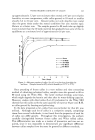
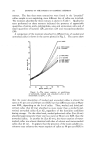
264 JOURNAL OF THE SOCIETY OF COSMETIC CHEMISTS lost from living skin to a dry atmosphere. Blank (18) indicated that glycerol moisturizes the skin by attracting water from the environment. Recently, Flesch (22), working with dead skin and powdered callus, re- ported that glycerol acts as a barrier to water diffusion through the skin in one instance and potentlares the water pickup of powdered callus tissue in another. No work has been published comparing the effects of commonly used humectants on the moisture sorption of the stratum comeurn, nor have the humectant properties of the known naturally occurring water-soluble ma- terials in the stratum corneum been studied individually so far. The pres- ent work reports on such studies. II. Methods and Results A. Effect of Particle Size and Grinding on l'Fater Sorption of Unwashed Callus The water-holding capacity of whole callus tissue at various relative humidities has been determined by Blank (2, 3). On a priori grounds, it is expected that the rate of moisture pickup is a function of the particle size and source of the callus. Accordingly, in the present study, powdered callus of uniform particle size was utilized. It has been shown that grind- ing may degrade keratin and that the degree of grinding has a direct bearing on the amount of water extractables in callus (23) this, in turn, may affect the water-holding capacity of callus. Therefore, a preliminary study was necessary to determine whether the water-holding ability of callus (at equilibrium) was affected by the degree and type of grinding. Gross pieces of plantar callus (Lot #1) approximately 1 cm. 2 in area and 0.25 ram. in thickness were placed in test tubes, chilled in a dry ice/acetone bath for about illteen minutes and pulverized by pounding in a Platther tool steel mortar. The particles were passed through standard mesh sieves and screened into 10 to 20 mesh, 20 to 40 mesh, 40 to 60 mesh and 80 and up mesh aliquots. Duplicate samples (ap- proximately 100 to 200 rag.) of each size range as well as of the gross pieces of callus were placed into weighing bottles and dried to constant weight in a vacuum desiccator over P2Os at room temperature. The samples were then placed in a constant humidity chamber at 45 per cent R.H. and maintained at room temperature. The constant humidity chambers were prepared by placing 500 g. of known constant humidity mixtures of glycerol and water (24) in the base of 200 min. sleeve top desiccators and Boekel stainless steel desiccating cabinets. The samples were weighed daily until they reached constant weight. The data for the average moisture pickup is plotted in Fig. 1. It is apparent that grinding of callus to a particle size of 10 mesh or smaller in- creases its water-holding capacity by a small amount. Gross callus takes

WATER HOLDING CAPACITY OF CALLUS 265 up approximately 5.3 per cent moisture when stored at 45 per cent relative humidity at room temperature, while callus ground to 10 mesh or smaller absorbs 6.2 to 6.6 per cent. Ground callus not only absorbs more water than the gross tissue under the stated conditions but also reaches equi- librium at a faster rate. The samples ground to 80 mesh take up slightly more moisture than the 10 mesh material but gradually lose some of this to equilibrate at a moisture level of approximately 6.6 per cent. o o Gross x. ........... x I0 Mesh a-------,• 20 Mesh •-.e 40 Mesh o-.-.--• 80 Mesh I 2 3 4 5 6 7 8 Time (Doys) Figure l.--Moisture sorption of callus (Lot #l) as a function of particle size and time. (Samples stored at 45% relative humidity at 23øC. q- 2øC.) Since pounding of frozen callus is a very tedious and time consuming method of obtaining pulverized callus, samples were also ground to 60 to 80 mesh using the Wiley Mill. The latter method develops some heat, which might degrade the keratin and thus alter its water-holding capacity. However, studies with dried callus (Lot #1) pulverized in the Wiley Mill showed that this callus sorbs the same quantity of water at 45 per cent as callus ground by freezing and pulverizing. In the data presented so far, callus from one particular lot (Lot #1) was utilized. Although each lot of callus is a composite sample, comprising tissue from several individuals, it was found that the properties of each lot of callus can differ greatly. Throughout this investigation, the authors carefully distinguished between frozen callus and Wiley milled callus. This differentiation was made as a matter of precaution and was not re- quired, since it was impossible to demonstrate any significant difference between callus samples from the same lot ground by different methods.
Purchased for the exclusive use of nofirst nolast (unknown)
From: SCC Media Library & Resource Center (library.scconline.org)