5 t. Soc. Cosmetic Chemists, 15, 541-547 (1964) AN EVALUATION OF THE CONTRIBUTION OF LUNG AIR TO TOTAL ORAL ODOR By W. A. CURBY* ABSTRAGT This study is concerned with the contribution to oral odor of the air which had been in contact with bronchii and alveolar processes of the lung of subjects whose mouth odor was being observed. A Fair and Wells osmoscope was modified to allow air from the test subject to be exhaled directly into it either via the nose or the mouth. Tests performed on nine subjects and duplicated by two trained observers showed that the lungs normally contributed no odor to that gen- erated in the oral cavity. However, heavy smokers were found to have a tobacco odor in their lung air, and the odor of garlic in an individual whose diet normally included foods flavored with garlic was found in the lung air sample. INTRODUCTION A study was undertaken to determine the extent of involvement of the air which has been in contact with the bronchii and alveolar processes of the lungs of subjects whose mouth odor was being observed by trained odor evaluators using the Fair and Wells osmoscope (1). A preliminary study had shown that the method of evaluation of mouth odors by having the subject breathe deeply twice and then exhale into an osmoscope at the end of the second inspiration was inadequate. A technique was then devised and tested experimentally which does give a valid separation of the observed odor attributable to the oral cavity and odor attributable to lung air. This method was based upon the follow- ing analyses. Breathing deeply twice through the nose or mouth has the effect of diluting the lung air total capacity (Fig. 1). The release of the complemental air (Fig. 1) of the lungs into the osmoscope moves the standing column of air out through the osmoscope in the following order: air in the osmoscope, air in the mouth, air from the velopharyngeal area, air from the * Sias Research Laboratories, Brookline, Mass. 02146. 541

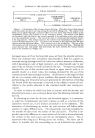
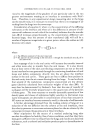
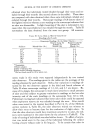
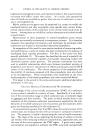
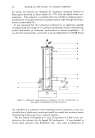
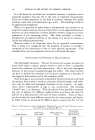
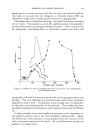
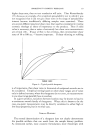
542 JOURNAL OF THE SOCIETY OF COSMETIC CHEMISTS TOTAL CAPACITY VITAL CAPACITY 1 EXPIRATORY COMPLEMENTAL TIDAL RESERVE RESIDUAL 2000 cc 1500 cc [ 1300 cc I 1600 cc '• NORMAL CAPACITY Figure 1.--A breakdown of the volumes of air in the lung. The tidalvolume is that amount of air that enters and leaves the lung during the natural breathing cycle. The amount of air which can be inhaled through a maximum effort over and above tidal volume makes up the complemental volume (also referred to as the inspiratory reserve). 'Ihe amount of air which can be exhaled after the tidal air has escaped naturally is the expiratory reserve (also referred to as the supplemental volume). The sum of the tidal air volume and the expiratory reserve is the vital capacity. The normal capacity is the volume of air remaining in the lung after a natural effortless expiration of air. A volume of air remains in the lung even after the most vigorous possible expiration efforts. This volume of air is the residual air. The sum of the vital capacity and the residual air volume make up the total capacity of the lung. Although the actual amounts may vary widely with individuals, the ratios between the volumes remain more or less constant (cf. Wiggets (2)). laryngeal areas, air from the bronchial areas, air from the alveolar environs. Since any detected odor considered objectionable is final for a given os- moscope setting (settings from 0 to 6 show the relative intensity of the odor, with 6 denoting an odor of high intensity), any objectionable odor in any part of the air column is totally included in the test. As expected, readings obtained by use of this method were found to agree exactly with, or to parallel closely at a lower value, the readings obtained by the use of the standard mouth odor testing procedures. Such factors as the length of time the air is in contact with a given interface, the amount of air dilution by prebreathing, and the partial pressure generated by the exertion of holding the breath while the osmoscope is inserted in the subject's mouth all con- tribute to the results obtained in the standard mouth odor testing pro- cedures. In order to isolate air which had been in contact with the alveolar and bronchial processes, a new technique based upon the following rationale was devised. In obtaining air from the alveolar and bronchial regions, it is necessary to expel the complemental and tidal volumes as well as a portion of the expiratory reserve air, if any dilution procedure is to be employed. The admixture of odor-bearing air within the oral environs will follow either solution or vapor diffusion laws. Two phenomena must be considered in the transfer of odors from the surface of the oral cavity. The first is de- pendent upon the difference in concentration of the odor substance between the surface of the oral tissues and the air immediately above. This is important when lung air is flowing across the surface. The odors can be shown to transfer into the surrounding air at an interfacial rate potpot-
Purchased for the exclusive use of nofirst nolast (unknown)
From: SCC Media Library & Resource Center (library.scconline.org)