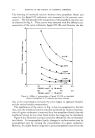
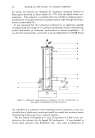
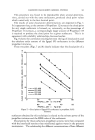
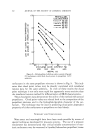
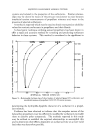
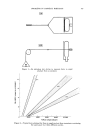
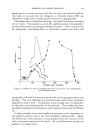
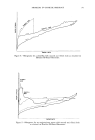
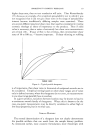
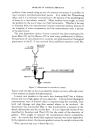
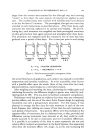
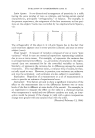
572 JOURNAL OF THE SOCIETY OF COSMETIC CHEMISTS by wall slippage and can be obviated by the ribbed bob. In Figs. 4 and 5 are shown examples of materials examined with the Hercules Hi-Shear Rheometer ©** using smooth and ribbed bobs and cups. What often happens in cosmetic systems is a sort of syneresis in which a thin film of liquid is obtained at a shear face. This provides lubrication and slip. The viscosity of this film is then measured at high shears after breakdown. The apparent spur value then becomes but a reproducible artifact. The same anomalous results are possible with the cone and plate design for the same reason. The use of artificially toughened surfaces in the theology of cos- metic lotions should be seriously considered by all workers in the field. For the study of yield value behavior, Bruss (14) used a rotor which does not disturb the sample appreciably on insertion. This is of the star shape so that true structural behavior in the body is measured rather than inter- face dependent phenomena. This concept for a rotor deserves more atten- tion. Indeed, it would seem desirable that all cosmetic rheologists consider the use of a design of this type of rotor for all samples loosely designated as semisolids. With such a rotor the rheogram will clearly show when a slippage plane develops and plug flow begins. Indeed, the rotor might well be applied in all studies of the yield value type. It should be mentioned that one such bob is available with the Rotovisko. The use of ribs on both the cone and plate of such a rheometer and the design of suitable cones of a star-type design in conjunction with the ribbed plate are to be recommended for cosmetic studies with that instrument. MULTI POINT VS. SINGLE POINT MEASUREMENTS On/ly a full rheogram can characterize a non-Newtonian liquid it takes a minimum of two points to prove the existence of a Newtonian system, valid only within the range examined (curve A of Fig. 6). Every basic study of theology emphasizes that one cannot compare simply the properties of fluids of different theological dependencies. Thus, in Fig. 6 at the shear equivalent to the point of intersection all three are identical at lower shear values, major differences are exhibited, partic- ularly between C and the other two curves. At shears above the crossing, a complete inversion of order occurs. If the one point measurement corresponds to the shear region of the property of interest, it is accepted without question. If it does not, then another test, usually empirical, which does relate is employed. Thus an empirical test to relate to a property observed below the point of intersec- tion must itself be in that shear range. If the test is below the intersection (and in general that itself is a wide range) while the property desired is at a ** Martinson Machine Co., Kalamazoo, Mich.

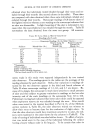
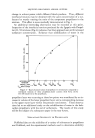
PROBLEMS IN COSMET1C RHEOLOGY 573 higher shear rate, then no test correlation will exist. Thus Kostenbauder (15) discusses an example of an empirical spreadability test in which it was not recognized that it did not give shear rates in the range of spreadability interest because insuflqciently differing samples were examined. There are several different practical shear rates that need be considered in routine cosmetic rheology as those of importance to the product. Thus if yield value is necessary, then a series of extremely low shear rate measurements are critical (16). If ease of flow is the criterion, then intermediate shear rates of 10 to 100 sec. -* become important. If shear thinning or rubbing SHEAR RAIE Figure 6.--Typical possible rheograms. is of importance, then shear rates in thousands of reciprocal seconds are to be considered. Empirical testing based on other shear ranges are of value only in defined systems, where the rheograms do not cross, so measurements in one shear range parallel those in another. In a given product, variations between batches may be known to lead to a continuous smooth family of rheograms. Where this is known to be the case, one-point measurements may be directly correlated to either high or low shear properties, but in no other case. SAMPLE HISTORY The normal determination of a rheogram does not clearly demonstrate the possible artifacts that can result from the sample history problem. As mentioned earlier, most cosmetic formulations show thixotropy with
Purchased for the exclusive use of nofirst nolast (unknown)
From: SCC Media Library & Resource Center (library.scconline.org)