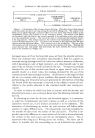
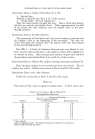
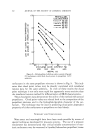
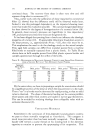
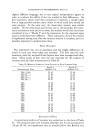
574 JOURNAL OF THE SOCIETY OF COSMETIC CHEMISTS continued shear. The recovery from shear is often very slow and still apparent long after its occurrence (17). Thus, earlier work with the calibration of shear imparted by commercial fillers (2) showed that the difference could still be observed weeks later. Indeed it was this prolonged dependency on the imparted shearing treat- ment that made this evaluation possible. This same prolonged dependency has been shown for the degree of homogenization of a cosmetic lotion (18). In general, shear recovery processes are logarithmic in time dependency (18), and so protracted recovery times are the general rule. It has been alleged that pouring from a bottle can influence the rheologic properties of a lotion (19). If appreciable thixotropic breakdown occurs in the shear process, i.e., approximately $0 sec.-l(13), then this must be so. This emphasizes the need to do the theology study on the actual sample. Thus aged bulk samples can differ from material poured from a machine filled bottle or manually squeezed from a plastic bottle. In Table II are shown data on bulk samples poured from filled plastic squeeze bottles and samples squeezed out through the orifice of the bottle. TABLE II--DIrrERENCES iN MEASURED APPARENT VISCOSITY WITH SHEAR RATE EXTRUDED FROM A SQUEEZE BOTTLE AT Two DIffERENT ACINC PERIODS Apparent Shear Rate, 8 days-- - 75 days sec. -1 Bulk, poises Extruded, poises Bulk, poises Extruded, poises 0.066 324 245 920 900 0.13 249 199 626 572 0.33 150 113 389 345 0.66 105 79 265 245 1.33 76 56 190 168 2.65 57 43 130 118 By the same token, no shear in preparing a sample for examination should be a significant portion of the shear at which the measurement is to be made. Thus a "set" in a bottle may be destroyed by rapid pouring, so that no yield value is observed. The shear of rheometer loading can be a severe problem where pastes and other thick systems are loaded in narrow gap rheometers. This can be avoided by studying rheology from collapsible tubes with an extrusion rheometer (2). V]SCOELASTIC MATERIALS Somewhere in the continuum of time-dependent pseudo-plastic systems we pass to those normally recognized as visco-elastic. This category is much more prevalent than has been normally recognized. Thus Kosten- bauder (20) turned a coarse thread on his rotating bob in the direction opposite to rotation to prevent the up-pumping of his suspension. This

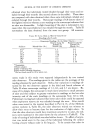
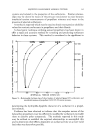
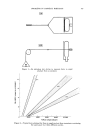
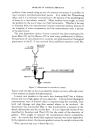
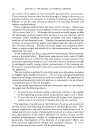
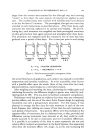
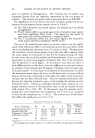
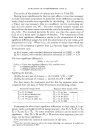
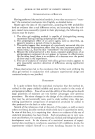
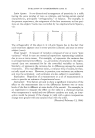
PROBLEMS IN COSMETIC RHEOLOGY 575 problem of the sample rising up out of a couette instrument is a problem in most cosmetic and pharmaceutical pastes. It is called the Weissenburg effect, and it is a necessary consequence to the balance of the parallelogram of forces in a visco-elastic material. Many workers have sought to avoid the problem by the use of caps over their instruments. Whether it be caps or threaded bobs, the measurements become somewhat dubious because of the interplay of stress components, and the measurements omit a portion of the observation. The time dependent nature of many materials has been emphasized by Scott-Blair (21) and by Reiner (22) in their many publications in Britain. The presence of visco-elasticity in cosmetic and pharmaceutical theological phenomena in the U.S. has received little published attention until Mc- REGULATED TO OPEN PRESSURE ATMOSPHERE • VACUUM CAPILLARY DISPLACEMENT TUBE i I'*--STOPCOCK Figure 7.--Elastometer for viscoelastic systems. Vean's work (23, 24) on the visco-elasticity of gum systems, although many of our systems do display this phenomenon. A recent new product in the men's hair dressing field* has a distinct bounce due to its high degree of visco-elasticity. Conventional rheological measurements were of limited value in characterizing this material, since both wall slippage and plug flow seemed always to be involved. An elastometer was constructed (Fig. 7) that would permit a measure of the elastic deformation and the viscous flow. It is an improved version of one described by Saunders and Ward (25) for the study of the elasticity of gelatin. They sought to measure the instantaneous elastic components only. As a result they found their expected constant was stress dependent. In the apparatus shown the pressure gradient across the sample is always the * Score, rcgistcrcd trade name of Bristol-Myers Co.
Purchased for the exclusive use of nofirst nolast (unknown)
From: SCC Media Library & Resource Center (library.scconline.org)