JOURNAL OF THE SOCIETY OF COSMETIC CHEMISTS 590 (8) W. J. O'Malley and J. E. Christian, J. Am. Pharm. Assoc., 49, 398 (1960). (9) E. W. Rosenberg, H. Blank, and S. Resnick, J. Am. Med. Assoc., 179, 809 (1962). (10) W. G. Fredell and R. R. Read, Proc. Sci. Sect. Toilet Goods Assoc., No. 15, 23 (1951) Ibid., No. 25, 32 (1956). (11) M. J. Rodman, J. Am. Pharm. Assoc., 42, 550 (1953). (12) W. M. Wooding, Tappi, 39, No. 6, 417 (1956). (13) O. L. Davies, Statistical Methods in Research and Production, 3rd Ed., Hafner Publishing Co., New York, 1961. (14) O.L. Davies, Design and Analysis of Industrial Experiments, Hafner Publishing Co., New York, 1956. (15) D. S. Villars, Statistical Design and Analysis of Experiments for Development Research, W. C. Brown Co., Dubuque, Iowa, 1951. (16) W. M. Wooding and H. E. Jass, Unpublished paper, First Annual Clinic and Conference on Statistics and Quality Control in the Consumer Product Industries, Louisville Sect. A. S. Q. C., Louisville, Ky., June, 1963. (17) H. Scheffe, The Analysis of Variance, John Wiley and Sons, Inc., New York, 1961. (18) K. Brownlee, Industrial Experimentation, 4th Ed., Chemical Publishing Co., New York, 1953. (19) E. S. Pearson and H. O. Hartley, Biometrika Tables for Statisticians, Vol. I, Cambridge University Press, Cambridge, England, 1954. (20) L. P. V. Johnson and E. S. Keeping, Appl. Statistics, 1, 202 (1952). APPENDIX l•xplanation of Statistical Terms and Procedures The following is a brief summary of some statistical terms and proce- dures, for the convenience of those to whom they may be unfamiliar. It is obviously impractical to be thorough. For further information, references (13) and (14) will be found particularly lucid and well-adapted to the prac- tical investigator's point of view. Full FactoriM Design: An experimental arrangement comprises a full factorial design if all levels (separate values) of each experimental variable (such as treatments in the present case) are run with each level of each of the other variables (such as days in this experiment). Balance: An experimental design is considered to be balanced if each combination of levels of the variables occurs the same number of times as each of the others. zfnalysis of Fariance: This is a statistical procedure for the analysis of data resulting from experiments. It separates sources of variation in the data due to the controlled factors, their interactions with each other, and experimental error due to one or more sources. Quantities representing variation due to the controlled variables are then compared with a measure of variation due to error, to determine whether the apparent effect of the controlled factors or variables may reasonably be concluded to be greater than that accounted for by error alone. A variable believed to be real is said to be "significant," and statements of significance are accompanied bv a probability statement referring to the chance that the observed effect is due to chance alone (i.e., to experimental error), and that the conclusion of reality is untrue.

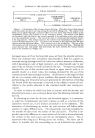
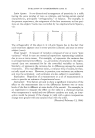
EVALUATION OF ANTIPERSPIRANT DATA (I) 591 Latin Square: A two-dimensional arrangement of quantities in a table having the same number of rows as columns, and having certain special characteristics, principally "orthogonality," or balance. For example, in the present experiment, the assignment of the four treatments to four posi- tions on the subjects' backs was controlled by two duplicate Latin Squares, viz: . Positions Sub0ect 1 2 3 • 1 T1 T2 Ta T4 2 T• Ta T4 T1 3 Ta T4 T1 T2 4 Ti T1 Ts T• The orthogonality of the above 4 X 4 Latin Square lies in the fact that each treatment appears once in every position (column) and once on every subject (rows). Mean Square: A measure of variation composed of one or more "pure variances" which in turn are numerical expressions representing variation due to one or more causes. For example, •r, 2 represents the variance due to all experimental error effects i.e., all sources of variation in the experi- mental data not accounted for by the controlled variables or factors. Similarly, •rt 2 represents the variance due to differences among the several treatments. If no real difference exists, a variance will, of course, be theo- retically equal to zero. However, in practice, true variances are unknown and must be estimated such estimates are also subject to uncertainty. Replication: Repetition of a measurement or a set of measurements in order to provide an estimate of experimental error. Interaction: Two factors are said to show a significant interaction if the effect on the measurement due to the differences between two or more levels of the first is different at some levels of the second. For example, in an experiment to measure the effect on the yield in a chemical reaction when temperature is varied and two different catalysts are used, an inter- action would be present if the change in yield with a given temperature change were greater with one catalyst than with the other. (Received February 13, 1964)
Purchased for the exclusive use of nofirst nolast (unknown)
From: SCC Media Library & Resource Center (library.scconline.org)