580 JOURNAI, OF THE SOCIETY OF COSMETIC CHEMISTS tire results which appear to have reasonably good precision and accuracy. These methods, however, have the disadvantages of being cumbersome, not portable, indirect, not conducive to multiple simultaneous determinations, difficult to use for long continuous periods and requiring frequent and tedious standardizations. Direct weighing methods have also been used in the past. These have comprised the absorption and weighing of sweat on rated absorbent paper (10) or cotton balls (11). Although such procedures would appear to offer the advantages of direct measurement and ease of use, the materials require extremely careful handling, including immediate and rapid weighing to avoid loss of the absorbed sweat. Further, the precision and probably the accuracy of such procedures appear quite highly dependent upon the quan- tity of sweat collected. Finally, statistical design and evaluation proce- dures, to improve rigor and sensitivity in the interpretation of results, were apparently not used. A new method for the direct, quantitative measurement of human perspi- ration is described below. Based upon experimental work, some of which is presented here, it is believed that this method is more accurate than previously-reported procedures, and it has been found to be precise enough to distinguish readily among various pretreatments of the sweating site. It is easy to use and minimizes losses due to experimental errors in handling the apparatus. The new method comprises the use of silica gel as an absorbent, contained in weighed easily-handled containers. The use of an orthogonal (balanced) experimental design, calculated to yield data suitable for the application of conventional parametric statistical analyses, is considered to be an inherent and necessary part of the new procedure. The particular experimental work and subsequent analysis described in this paper had the following objects: 1. To test the new method, in order to determine whether it was capable of distinguishing among typical antiperspirant agents and a blank. 2. To test the use of a conventional factorial design of the experiment and an analysis of variance of the data from the new method. This experiment was planned as the initial one of a series and consisted of the first formal work following development of the silica gel method. Sub- sequent experiments and their analyses were more sophisticated and in- cluded quantitative studies of perspiration produced at various anatomical sites, determination of the relative efficiency of a number of pure and for- mulated antiperspirants, studies of antiperspirant product formulation parameters, investigations of the duration of antiperspirant effects and more advanced experimental designs and statistical analyses, It is ex- pected that some of these results will be published later.

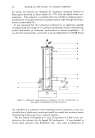
EVALUATION OF ANTIPERSPIRANT DATA (I) 581 SWEAT COLLECTION CONTAINERS The silica gel absorbent is contained in desiccator pans of the type used to maintain a dry atmosphere in analytical balance cases.* They consist of press-fitted aluminum pans and covers about 28/4 in. in diameter, per- forated on both sides. An outer metal canister is used for storing each unit to prevent loss or gain of moisture by the silica gel when it is not in use. When the absorbent is saturated with moisture, it is regenerated by heating in an open dish on a hot plate at about 350øC until the original blue color of an indicator contained in the gel has returned, then transferring it, hot, back into the inner can and outer canister, and finally cooling and storing it until use in a desiccator. In use, the entire assembly is preweighed in the outer canister on an analytical balance to the nearest milligram. It had been found that there was no appreciable weight change after storing containers in their unopened outer canisters in the atmosphere for periods of a half hour. Since this exceeded the total weighing time by a considerable margin, no significant errors in the data due to this operation were anticipated. After preweighing, the containers are removed from their outer canisters and placed on a predetermined skin site which may be pretreated with a test material if the procedure is part of an experiment. Each container applied to the skin is masked completely with surgical tape to prevent moisture pickup from the air or from the surrounding skin. Following a wearing period, each container is removed from the skin, replaced in its canister and reweighed. The difference in weights is then calculated and recorded. EXPERIMENTAL DESIGN As previously indicated, the principal object of this experiment was to test the effectiveness of the new method, used in conjunction with a statis- tical design and analysis, for distinguishing among various experimental conditions (in this case, typical antiperspirant agents, subjects and exposure times) such as would be likely to be encountered in general antiperspirant work. The following four "treatments" were selected with this in mind: (TD Blank (20% aqueous sodium chloride) (T•.) 20% aqueous aluminum chlorhydrate (Ta) 20% aqueous solution of an experimental antiperspirant agent (T4) 20% aqueous sodium aluminum chlorhydroxy lactate Eight male subjects were selected for the experiment. On the basis of * Davison Silica-Gel Air Dryer, Davison Chemical Co., Div. W. R. Grace and Co., Balti- more, Md.
Purchased for the exclusive use of nofirst nolast (unknown)
From: SCC Media Library & Resource Center (library.scconline.org)