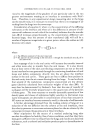
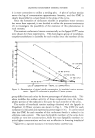
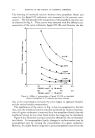
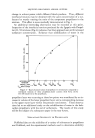
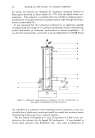
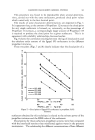
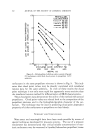
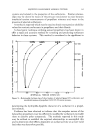
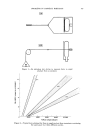
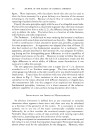
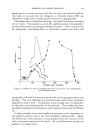
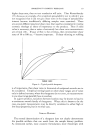
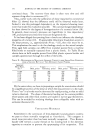
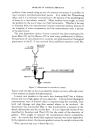
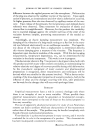
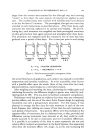
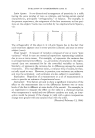
568 JOURNAL OF THE SOCIETY OF COSMETIC CHEMISTS figure. More important, with the plastic bottle this also can be used to show the force necessary for a given delivery as a function of the amount remaining in the bottle. Because of elastic flow of contents during the squeezing of a plastic bottle this can be serious. Exactly the same principles apply with the use of a collapsible metal tube. The force for extruding from a closed tube is greater than the force necessary to blow material out from a tube (1, 2), the difference being the force neces- sary to deform the tube. The latter force is a function of tube diameter, wall thickness and tube composition. The Tackmeter: A while back we were studying the increase in tackiness that occurs with some lotions and ointments as they dry. Here the concern is with a combination of skin absorptive power and, possibly, evaporation for some preparations. An apparatus was adapted after that of Green (3) who had worked out the fundamental equations for a tackmeter. This apparatus, already described in the literature (4), was adequate for follow- ing drying and for distinguishing gross differences in rub-in capability of ointments and creams on the skin. However, in order to follow the rate of decrease of tackiness of skin after the rub-in of a deodorant cream and the slight differences in rub-in ability of different cream formulations it was necessary to refine this concept. The new apparatus described here uses a copper disc of '*f4 in. diameter attached to a 1.5 oz. Starham strain gauge. The force recorded by the strain gauge was followed as the skin (usually arm) was slowly lowered until break-away. Typical data for stickiness with time after 60 seconds rub-in are shown in Fig. 3. Since variations in skin texture, etc., may reflect somewhat on the values obtained with different diameters or shaped discs, this measurement falls into the category of an empirical test founded on fundamental principles however, it is a direct measure of the cohesive- adhesive capability of a skin-surface during absorption after rub-in. INSTRUMENTS FOR ABSOLUTE MEASUREMENTS An absolute instrument is defined here as any rotational or extrusion rheometer where apparent shear stress and shear rate may be calculated as a function of the geometry of the system. It is customary in routine cosmetic use to use one of the many commercially available systems. Arbitrarily, let us first consider the rotational couette type instruments. Normally these utilize a series of cups and bobs with varying cup-to-bob radius ratios, depending upon the consistency of the sample. As long as comparative measurements are always made with one cup and bob ratio, it is not critical that equations based upon NewtonJan liquids are almost always used for the calculations for the rheogram. However, when

PROBLEMS IN COSMETIC RHEOLOG¾ 569 aging causes a viscosity increase such that the next cup and bob combina- tion needs to be used, then the rheograms so obtained always differ sig- nificantly in magnitude, introducing discontinuities in aging profiles. The explanation is simple but shocking: the usual NewtonJan equations are not valid. The equations as normally applied assume a linear gradient in velocity between the rotating and the fixed member. This is true not only for moderately close-fitting bobs in Newtonian systems but does hold 30 l0 I RUBBING o I \\1 I o I oo 200 500 600 ELAPSED TIME (SECONDS) Figure &--Profiles tbr decay of stickiness after 60 sec. rub-in for four antiperspirant and deodorant creams. remarkably well with NewtonJan systems with even large gaps between cup and bob. The very definition of a non-Newtonian requires that this linear dependency cannot hold. The gradient across the gap must be dependent on the shear stress characteristics of the material. The problem has been described completely in the literature and is well summarized by Van Wazer (S). A similar problem exists with capillary instruments and is dependent on the capillary diameter and on the ratio of length to diameter (6). Again, the NewtonJan system assumes a linear gradient from zero velocity at the wall to maximum velocity at the center. In a non-Newtonian system the gradient is no longer linear.
Purchased for the exclusive use of nofirst nolast (unknown)
From: SCC Media Library & Resource Center (library.scconline.org)