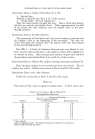
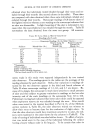
588 JOURNAL OF THE SOCIETY OF COSMETIC CHEMISTS INTERPRETATION OF RESULTS Having performed the statistical analysis, it was then necessary to "trans- late" the numerical conclusions into English, as detailed below. Based upon the data of this experiment, accepting the 0.05 probability level as evidence that a real difference exists, and assuming that the sub- jects tested were reasonably typical in their physiology, the following con- clusions may be drawn: 1. The silica gel weighing method is capable of distinguishing among treatments having varying antiperspirant efficacy. 2. The antiperspirant effect of an active agent, used as described, ap- parently requires a period of time to develop. 3. The results suggest that treatment of a previously untreated skin site may have less antiperspirant effect than the same treatment applied a second time, i.e., that the skin "remembers" the initial application. 4. Beyond the initial period of a few hours, repeated applications of an antiperspirant compound do not appear to increase its effectiveness. On the other hand, there is no evidence of a decrease over the period ooe time used in the experiment. 5. The use of analysis of variance with silica gel test results appears to give reasonably sensitive detection of differences among application variables. These observations led to the conclusion that further work utilizing the silica gel method in conjunction with adequate experimental design and statistical analysis was justified. DISCUSSION It is quite evident from the statistical evaluation that the method de- scribed in this paper yielded reliable and precise results in the study of antiperspirant effects. Ease of use and the ability of the silica gel to absorb large quantities of moisture are two further advantages over previous procedures. By minor changes in the design of the collection containers, they may be, and eventually were, used to study axillary sites, thus per- mitting quantitative comparisons of perspiration produced by axillae to that produced on the back or other areas. Several of the references cited at the end of this paper, as well as many others not listed, describe methods which yield data in quantitative terms. In view of this fact, it is surprising that almost no evidence of the use of statistical procedures has been found. Such procedures are in very com- mon use elsewhere, for example, in chemical, medical and biological product development work. In the absence of a statistical treatment of experi- mental data resulting in conclusions associated with confidence levels, the experimenter subjects himself to a severe handicap, because he has no

EVALUATION OF ANTIPERSPIRANT DATA (I) 589 measure of the dependability of his conclusions. Statements or numerical computations showing relationships among relative effectiveness of several antiperspirants, for example, do not necessarily imply real differences in antiperspirant action, since no account of the magnitude of the associated experimental errors is taken in a simple comparison of averages or of indi- vidual results. Some of the published work utilized methods for inducing perspiration (such as treadmills) presumably in order to increase the quantities of sweat produced and thus increase the ease of measurement. Such experiments are of course of great interest, but it is felt that these results have not been proved to reflect conditions which may exist when the perspiration rate is more moderate this might be especially true when preparations or in- gredients intended for every day use are being tested. It is possible that conditions of heavy, induced perspiration may be associated with a dif- ferent response to a given antiperspirant, or may show a different relation- ship among two or more test substances, than might be found under normal use conditions. It was interesting to note that no significant difference was found, in the work described in this paper, between the amount of perspiration produced by skin treated with sodium aluminum chlorhydroxy lactate and that produced by skin treated with a blank consisting of aqueous sodium chlo- ride, especially in view of the effectiveness of the aluminum chlorhydrate. In our present state of relative ignorance of the mechanism of the operation of antiperspirants, however, no worthwhile explanation seems available. Of course, this investigation was directed toward the evaluation of a method and the use of statistics therein rather than to such questions. Some further work is being done in the investigation of fundamental mechanisms, and a rationale for the chemistry of an effective antiperspirant may even- tually be evolved. It is hoped that this presentation will be of assistance to others in carrying out experimentation in the field of antiperspirants and of the physiological (and possibly psychological) mechanisms of human sweating. ?Icknowledgment: This work was done under the guidance and encourage- ment of the late Raymond Stetzer, President of the Revlon Research Cen- ter, Inc. REFERENCES (1) V. Minor, Oeutsch Z. Nervenheilk., 101, 3052 (1927) Zbl. Haut Geschlechtskrankh,, 44, 727 (1933). (2) W. C. Randall, J. Clin. Invest., 25, 761 (1946). (3) S. A. Muller and R. R. Kierland, J. Invest. Dermatol., 32, 126 (1959). (4) C. Papa and A.M. Kligman, [bid., 36, 167 (1961). (5) Y. Takahashi and M. Wada, Ibid., 38, 197 (1962). (6) R. Brun, J. Soc. Cosmetic Chemists, 10, 70 (1959). (7) E.G. Helton, E. W. Daley, and J. E. Ervin, Proc. Sci. Sect. Toilet Goods •lssoc., No. 26, 27 (1956).
Purchased for the exclusive use of nofirst nolast (unknown)
From: SCC Media Library & Resource Center (library.scconline.org)