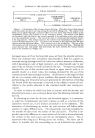
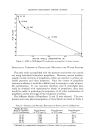
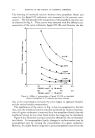
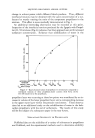
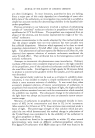
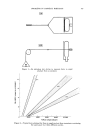
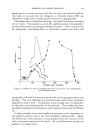
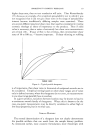
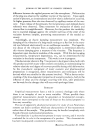
582 JOURNAL OF THE SOCIETY OF COSMETIC CHEMISTS preliminary work, all of those chosen were believed to be reasonably normal as regards perspiration output. It was not planned to expose the subjects to exercise or excessive heat, or otherwise to attempt to induce abnormal sweating rates, because, in this case, it was desired that the test be made at levels reflecting normal use conditions. The sample size of eight subjects was, of course, quite small in view of the potentially great variation possible in a population, and some of the subsequent experiments used larger and more diverse groups. To demonstrate the utility and practicability of the new method and the analysis, however, it was only necessary in this case to be able to show differences, without unusual regard for the sampling prob- lem therefore it was felt that the selection of subjects used was quite suitable in this instance. Each of the above four treatments was repeated on each of the eight sub- jects on five successive periods a day apart, a•d measurements were made at these intervals, beginning three hours after the first application of the treatments. The time factor was introduced to determine, if possible, whether there were detectable differences in effect with the repetitive appli- cations, and whether there were detectable interactions between treatments and application history. This constituted a second factor in the design of the experiment, identified as follows: (D•) Measurements made three hours after first set of treatments (D=) Measurements made three hours after second set of treatments, one day later (D.0 --" (Ds) Same, for third, fourth and fifth treatments Each new treatment was associated with a separate measurement, so that the need of the statistical analysis for independent observations was ful- filled. Details of the experimental design, using the above two factors, were as follows: Each subject received all four treatments (T• through T4) on his back. To eliminate any possible bias among the treatments which might have been caused by variations in normal perspiration output among the dif- ferent treatment sites, each treatment was assigned to a position on each subject which was predetermined by the use of two "Latin Squares," each using a group of four subjects arranged in a "block" of four "plots" each. Each plot was the site of one treatment, and each group of four subjects constituted a complete 4 X 4 Latin Square. Each treatment thus ap- peared a total of eight times on each day, twice in each of four possible positions. This arrangement is made clear in Fig. 1. In carrying out the actual experimental work, each back was thoroughly cleaned, then dried gently with a towel. Each treatment was applied by swabbing with a cotton ball, ensuring that eacl• swabbed area was a little

EVALUATION OF ANTIPERSPIRANT DATA (I) 583 larger than the contact area required by the silica gel cup, and counting "swabs" st) that about the same amount of material was applied in each case. The swabbed areas were outlined with indelible pencil and allowed to air-dry for about 15 minutes. The preweighed silica gel cans were then attached to each treated area as described above. After three hours, each container was removed, replaced in its canister and weighed. On the fol- lowing day, each treatment was reapplied and fresh preweighed containers of silica gel attached, then again removed and reweighed after three hours. This procedure was repeated until five successive sets of data had been gathered over a period of four days. P1 P2 P4 P$ T 4 T3 S U BJECTS T1 T4 SUBJECTS For a time just prior to and during P4 % P4 P3 T2 Tl T3 T2 SUBJECTS SUBJECTS oo• 4& ø Pl • P4 : POSItiON DESIGNATION T• '--•t 4 : TREATMENTS 1 = 4 l•'igure 1.--Position-treatment-subject arrangement (Latin square). the actual three hours of application, each subject was exposed to controlled temperature and humidity conditions. In so far as possible, other factors with a possible effect upon the results (time of day, time since last meal, physical exertion, water intake, etc.) were held constant. After weighing and recording the data, calculating the weight gains and tabulating the results, the difference weights in grams were coded by mul- tiplying each by 100. This was done to facilitate subsequent computation. Preliminary work had given no evidence that there were any substantial position effects, and the use of the above Latin Square design for applying treatments was only a precautionary procedure. For this reason, it was planned to average the four data for each treatment in each of the two Latin Squares, thus yielding two means of four data for each treatment at each period of observation. Any position effects were thus included in the apparent effect of treatments, but in a balanced way, so that, provided real differences among treatments were detected at all, they could be confi- dently assumed to be due to treatments and not to position differences. It is possible in an analysis of this kind to assess separately the row and column effects (subjects and positions) in the Latin Squares, thus separating them from the treatment effects (14, chapt. 5), in this way increasing the
Purchased for the exclusive use of nofirst nolast (unknown)
From: SCC Media Library & Resource Center (library.scconline.org)