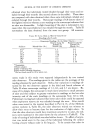
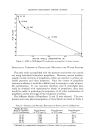
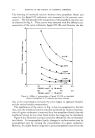
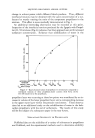
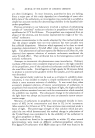
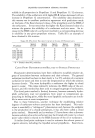
LIQUEFIED HALOCARBON AEROSOL SYSTEMS 557 soluble in all proportions in Propellant 11 and Propellant 11/12 mixtures. The solubility of the surfactants with higher HLB values decreased with an increase in Propellant 12 concentration. The solubility data obtained in this manner are in excellent qualitative agreement with predictions made on the basis of the Kauri-butanol values of the propellants and the HLB of the surfactants. It was noted that the higher the Kauri-butanol value of a mixture the greater the solubility of a surfactant and vice versa. An in- crease in the HLB value of a surfactant resulted in a corresponding decrease in solubility in any given propellant mixture. Table II is an example of data obtained in this manner. TAB[•. II--P•.P, CE•T SOI.UBILIT¾ (W/W) OF [GEPAL CO SURFACTANTS Igepal, Igepal, Igepal, Igepal, Igepal, Propellant CO 210 CO 430 CO 520 CO 530 CO 630 11 S* S S S S 11/12 (75:25) S S S S 37 11/12 (60:40) S S S S 35 11/12 (50:50) S S S S 30 11/12 (40:60) S S S S 20 11/12 (25:75) S S S S 10 12 4 3 2 1 0.1 * S = Greater than 50% solubility. CLOUD POINT DETERMINATIONS RELATED TO SURFACE PROPERTIES Cloud point determinations have been utilized to establish relative de- grees of association between surfactants and their solvents. The general technique involved has been to heat slowly a 1 or 2% solution of a nonionic surfactant in water and then to note the temperature at which the solution becomes cloudy. The more hydrophilic a surfactant the higher its cloud point in water. This index indirectly indicates the HLB value of the sur- factant, and this method has been used to categorize groups of surfactants. The cloud point method is limited, however, because extremely hydro- philic surfactants may not precipitate f•om water at temperatures ap- proaching its boiling point, while the more lipophilic surfactants are insolu- ble in water even at room temperature. Due to these limitations, another technique for establishing relative degrees of surfactant-solvent association has been developed. This tech- nique is essentially a "salting-out" phenomenon and, because the endpoint is the production of a cloudy precipitatei it has also been called a cloud point method. Greenwald and co-workers (7) have shown that a dioxane- benzene solution of an oil or surfactant may be titrated with water to a cloud point value which is related to the HLB character of the oil or surfactant. A similar cloud point technique is used to estimate the solvent power of organic solvents, including the liquefied aerosol propellants. Kauri-buta-

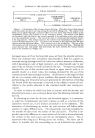
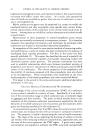
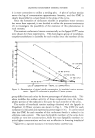
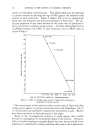
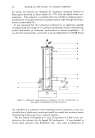
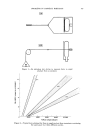
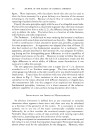
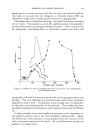
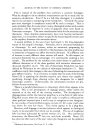
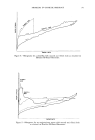
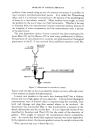
558 JOURNAL OF THE SOCIETY OF COSMETIC CHEMISTS nol values for solvents are obtained by titrating a standard solution of Kauri gum dissolved in butyl alcohol at 77øF with the liquid under con- sideration. The endpoint is reached when the turbidity produced due to precipitation of the gum prevents reading 10 point type through the Erlen- meyer titration flask (8). It was reasoned that this technique conducted in an apparatus capable of maintaining the integrity of a pressure-producing system could provide useful information on surfactant performance in aerosol propellants. It was further reasoned that, since there is an interdependence of the HLB and Figure &--Schematic representation of apparatus for the determination of cloud points of propellant-surfactant mixtures. the solubility of a surfactant with interfacial tension reduction, it was con- ceivable that a cloud point technique would be a rapid and accurate means of predicting surface activity in aerosol systems. The five blends of Propellants 11 and 12 described in Table I were ployed as the solvents for the Igepal CO surfactants. It was decided to titrate these solutions with Propellant 114. Any other combinations of
Purchased for the exclusive use of nofirst nolast (unknown)
From: SCC Media Library & Resource Center (library.scconline.org)