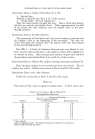
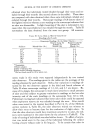
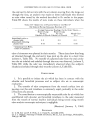
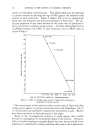
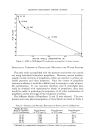
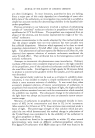
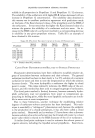
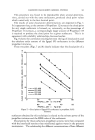
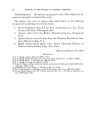
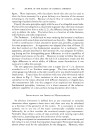
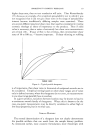
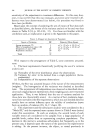
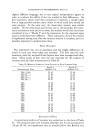
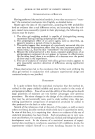
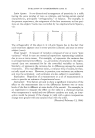
LIQUEFIED HALOCARBON AEROSOL SYSTEMS 553 13 I • 8 c0 710 •. CO 5•0 CO 210 • 2•,0 1.0 3.0 4.0 CRITICAL MICELLE CONCENTRATION (%) Figure 3.--CMC rs. HLB-lgepal CO surfactants in propellant l 1/water systems. INTERFACIAL TENSIONS OF PROPELLANT MIXTURES AND WATER SYSTEMS The early work accomplished with the pressure tensiometer was carried out using individual halocarbon propellants. However, aerosol products usually contain mixtures of propellants, which are selected to achieve de- sirable pressures and other properties. Since the variety of propellant mixtures is infinite, it would be a difficult task to attempt to study all possi- ble combinations. It was reasoned, therefore, that if meaningful data could be obtained with representative blends of propellants these data would be useful in predicting the properties of all other combinations of propellants within the ranges of the component members. Five different blends of Propellants 11 and 12 were selected. The com- position and some physical properties of these blends are listed in Table I. TXBLE I--C•qEMzC•L •ND P•q¾szc• PROVER•rz•s or PRovE•wr 11/12 Mzx•ruz•s Weight Per Cent Ratio of Propellant Liquid Density Vapor Pressure Kauri-Butanol 11/12 Combinations at 25øC, gm./cc. at 25øC, psig. Value* 75:25 1.441 24 49.5 60:40 1.416 36 43.25 50:50 1.400 43 39 40:60 1.383 51 35 25:75 1.356 62 28.5 * Obtained by mathematical interpolation of known values for pure propellants.

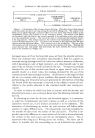
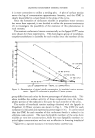
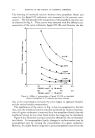
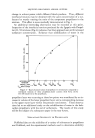
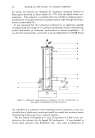
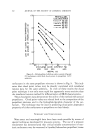
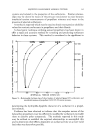
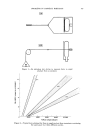
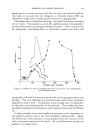
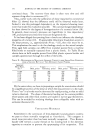
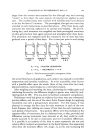
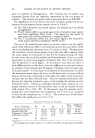
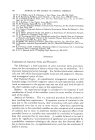
554 JOURNAL OF THE SOCIETY OF COSMETIC CHEMISTS The lowering of interfacial tensions between these propellant blends and water by the Igepal CO surfactants was measured in the pressure tensi- ometer. The role played by the composition of the propellant mixtures may be observed in Fig. 4. These curves were obtained with five different con- centrations of the same surfactant, Igepal CO 520, and illustrate the fact IO 8 o o ß • 0.50% • 0.75% I.OO% 20 40 60 PROPELLANT 12 {% W/W} 80 60 40 PROP/LLANT I I (% W/W) 80 20 Figure 4.--Effect of concentration of Igepal CO 520 on interfacial tension of propellant 11/12 mixtures and water systems. that as the concentration increases the curve begins to approach linearity and the critical micelie concentration. The significance of the curves in Fig. 4 may be recognized by the fact that, once the interfacial tension reduction produced by various concentra- tions of a given surfactant is measured for a few propellant blends, then the interfacial tension for any other blend within the range may be calculated. Figure 4 also illustrates a unique versatility afforded by the use of propel- lant blends. In nonpropellant liquids, changes in surface tension may be accomplished only by varying the concentration of a given surfactant. However, the added feature imparted to aerosol propellants stems from the
Purchased for the exclusive use of nofirst nolast (unknown)
From: SCC Media Library & Resource Center (library.scconline.org)