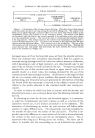
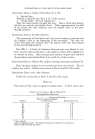
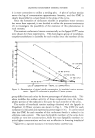
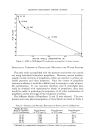
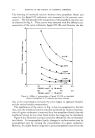
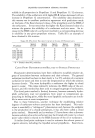
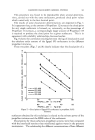
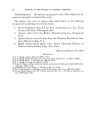
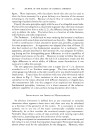
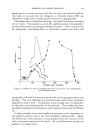
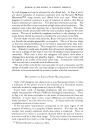
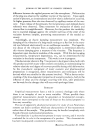
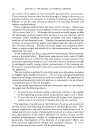
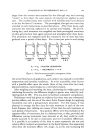
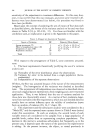
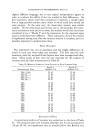
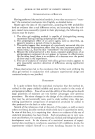
LIQUEFIED HALOCARBON AEROSOL SYSTEMS 551 it is more convenient to utilize a semilog plot. A plot of surface tension versus the log of concentration approximates linearity, and the CMC is clearly discernible by a sharp break in the slope of the curve. Since the formation of surfactant micelies in propellant/water systems has never been reported, it was decided to utilize the pressure tensiometer (3) to investigate the possibility of the existence of this phenomenon in such systems. The nonionic surfactants known commercially as the Igepal CO ©* series were chosen for these experiments. This homologous group of nonylphen- oxypolyoxyethylenes is desirable for such studies since the members of the 50 45 •- 4C • 30 o •5 •- •o • •5 • •0 õ co 2•o (4%) co 7•o (o.•*/o) o -3 -• - 6 ,.o ß o• o• co.cE.'r..'r,o.- •E•'*. CO su.•.c'r..'rs Figure 1.--Determination of critical micelle concentration by interfacial tension measure- ments. Igepal CO surfactants in propellant 11/water systems. group differ from each other by known percentages of ethylene oxide. This alone modifies the surface activity of these compounds since the hydro- phobic portion of the molecule is the same for each member of the series. The results of interfacial tension readings obtained with the Igepals in Propellant l 1/Water systems are shown in Fig. 1. The CMC for each surfactant is indicated and expressed as percentage (w/w). It can be noted that the CMC for each member of this surfactant family is related to its ethylene oxide content. The more hydrophilic members of the series form micelies at very low concentrations, while the more lipophilic members re- quire higher concentrations and are not as effective in lowering interfacial * Igepal CO is a registered trademark of the General Aniline and Film Corp.

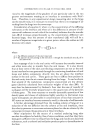
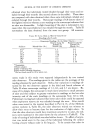
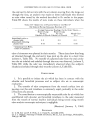
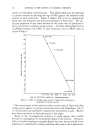
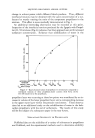
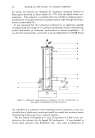
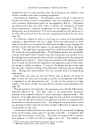
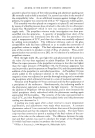
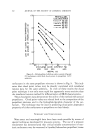
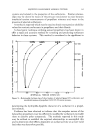
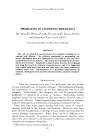
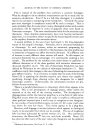
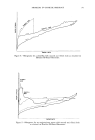
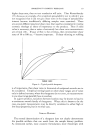
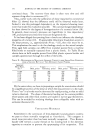
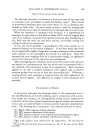
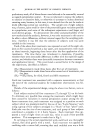
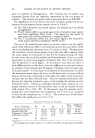
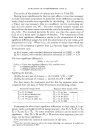
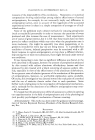
552 JOURNAL OF THE SOCIETY OF COSMETIC CHEMISTS tension at equivalent concentrations. This relationship may be expressed in another manner by plotting the log of CMC against the ethylene oxide content of each surfactant. Figure 2 depicts this to be an approximate linear plot and illustrates the potential usefulness of these data. The sur- factant properties of any other member of this series may be predicted in this system from its ethylene oxide content. A similar relationship may be established between the CMC of each surfactant and its HLB value as shown in Fig. 3. I1 • 8 710 -610 c0-210 1• ' -,'.0-035-0'.5-01a5 ( o.fi5 0'.5 0.?5 LOG OF CRITICAL MICELLE CONCENTRATION Figure 2.--CMC rs. ethylene oxide content of Igepal CO suroeactants in propellant ll/water systems. The measurement of the critical micelle concentration of these and other surface-active agents in systems containing water and Propellants 114, 12 or 113 have been accomplished in the pressure tensiometer as well. Results have been equivalent to those presented in this paper. Based on this investigational evidence, it would appear that micellar formation is taking place in the propellant phase of the systems. The possi- bility of micelles forming in nonpolar liquids has been demonstrated in our laboratory in solubilization studies, and these data seem to be in agreement.
Purchased for the exclusive use of nofirst nolast (unknown)
From: SCC Media Library & Resource Center (library.scconline.org)