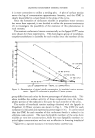
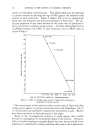
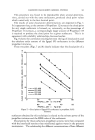
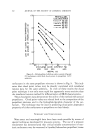
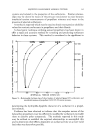
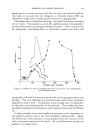
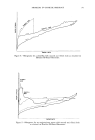
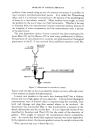
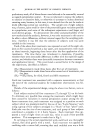
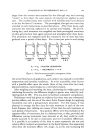
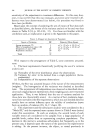
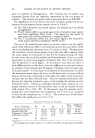
LIQUEFIED HALOCARBON AEROSOL SYSTEMS 561 This procedure was found to be reproducible when several determina- tions, carried out with the same surfactants, produced cloud point vah]es which varied only in the first decimal point. The results of some cloud point determinations are depicted in Fig. 7. It is apparent that, as the amount of Propellant 12 increases the cloud point for any single surfactant is lowered, or, conversely, as the percentage of Propellant 11 increases, a correspondingly larger amount of Propellant 114 is required to produce the cloud point for a given surfactant. This is in agreement with solubility relationships discussed earlier. Fig. 8 shows the correlation existing between the log of cloud points and the ethylene oxide content of the Igepal CO surfactants in the different propellant mixtures. These two plots (Figs. 7 and 8) clearly indicate that the cloud point of a 30 20 I0 ..... CO 43 __20 ø '"...o .......... GO 6:50 0 o go so PROPELLANT '2 (% W/W) 80 60 40 20 PROPELLANT II (%W/W) Figure 7.--Cloud points of Igepal CO surfactants in propellant 11/12 mixtures. surfactant obtained by this technique is related to the solvent power of the propellant mixture and the HLB index of the surfactant. Cloud points for these surfactant-propellant systems were then compared with the interfacial tensions they manifested against water in the pressure tensiometer. The relationship for different concentrations of four different

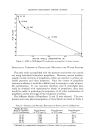
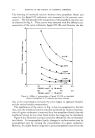
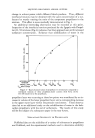
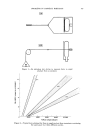
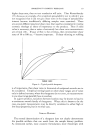
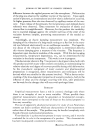
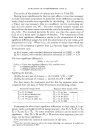
562 JOURNAL OF THE SOCIETY OF COSMETIC CHEMISTS 1.7! PROPELLANT 11/12 MIXTURES ...... 75:25 o .,, :..:....- tu • t,,,•. 40: 60 03 - I ,. ' .... 25:75 b.I I-- ' •11i,ø,%%, ß • o O X\ • I•_ ill: • o • •.0 \ . \ 0.75 40 : 50 : 60 : 70 ET•IYLENP-' OXIDE:. CONTENT (•o) •o 5•o 5•o 63'0 IGEPAL CO Figure 8.--Relationship of ethylene oxide content of Igepal CO surfactants with their cloud points in propellant 11/12 mixtures. surfactants in the same propellant mixtures is shown in Fig. 9. This indi- cates that cloud point values may be directly correlated with interfacial tension data for the same solutions. In view of these results the cloud point technique is not only more rapid but apparently more sensitive than the interfacial tension method for differentiation of HLB characteristics. These cloud point data demonstrate the utility of the method with aerosol propellants. Cloud point values are related both to the composition of the propellant mixtures and to the hydrophile-lipophile character of the sur- factant. The technique may be used in predicting cloud point-dependent properties of either surfactants or propellants or their blends. SUMMARY AND CONCLUSIONS More exact and meaningful data have been made possible by means of special techniques developed for pressure systems. The use of a pressure tensiometer has demonstrated that critical micelie concentrations of non- ionic surfactants may be measured in liquefied halocarbon propellant/water
Purchased for the exclusive use of nofirst nolast (unknown)
From: SCC Media Library & Resource Center (library.scconline.org)