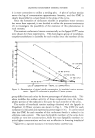
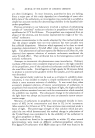
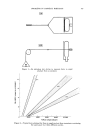
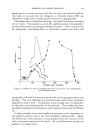
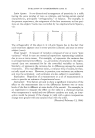
LIQUEFIED HALOCARBON AEROSOL SYSTEMS 563 systems and related to the properties of the surfactants. Similar relation- ships may be shown by means of the pressure tensiometer to exist between interfacial tension measurements of propellant mixtures and water in the presence of selected surfactants. A method is reported which may be used to obtain more precise solubility values for nonionic surfactants in propellants and their blends. A cloud point technique utilizing aerosol propellants has been shown to offer a rapid and accurate method for screening and predicting surfactant behavior in these systems. This method is considered to be significant in •- 1.5 0 h o m • 1.4 • I.:5 z o •' 1,2 o _1 0.75% 0.50% 0.25 % 0.10% '" - z'.• s'.o ?•5 INTERFACIAl_ TENSION (DYNES/cm.} CO 430 CO 520 CO 530 • CO 630 Figure 9.--Relationship between log of cloud points of selected Igepal CO surfactants and interfacial tensions of propellant 11/12 (75:25)-water systems. determining the hydrophile-lipophile character of a surfactant in a propel- lant mixture. Evidence has been obtained to indicate that the nonpolar nature of the halocarbon propellants may be sufficiently modified by surfactants to enable them to dissolve polar compounds. The methods reported in this study may be utilized to establish the required relationships to accomplish this and to determine other effects dependent on surface activity on a more valid basis than was heretofore possible.

564 JOURNAL OF THE SOCIETY OF COSMETIC CHEMISTS zIcknow/edgments: The authors are grateful to Dr. Milo Gibaldi for his assistance during the conduct of this study. The authors also wish to express their appreciation to the following companies for supplying the materials listed: 1. Freon Propellants from E.I. du Pont de Nemours Co., Inc., Freon Products Division, Wilmington, Del. 2. Aerosol valves from the Risdon Manufacturing Co., Naugatuck, Conn. 3. Aerosol plastic coated bottles from the Wheaton Plasti-Cote Com- pany, Mays Landing, N.J. 4. Igepal surface-active agents fi'om Antara Chemicals Division of General Aniline & Film Corp., New York. (Received January 10, 1964) REFERENCES (1) J. L. Kanig, Aerosol Age, 6, 35 (May, 1961). (2) J. L. Kanig and R. M. Cohn, Proc. Sci. Sect. Toilet Goods Assoc. No. 37, 19 (1962). (3) J. L. Kanig and C. T. Shin, Ibid. No. 38, 55 (1962). (4) J. L. Kanig, •. Pharm. Sci., 52, 513 (1963). (5) Lloyd I. Osipow, Surface Chemislry, Theory and!ndustrial Applications, Reinhold Publish~ ing Corp., 1962, p. 165. (6) P. Becher and N. K. Clifton, •7- Colloid Sci., 14, 519 (1959). (7) H. L. Greenwald, G. L. Brown, and M. N. Fineman, Anal. Chem., 28, 1693 (1956). (8) Freon Aerosol Report No. FA 3, Freon Products Div. E. I. du Pont de Nemours Co., Inc., Wilmington, Del.
Purchased for the exclusive use of nofirst nolast (unknown)
From: SCC Media Library & Resource Center (library.scconline.org)