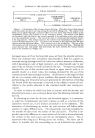
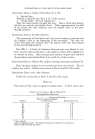
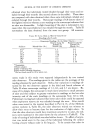
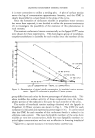
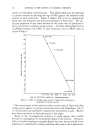
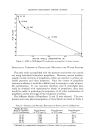
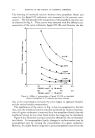
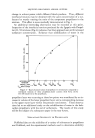
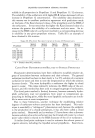
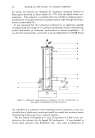
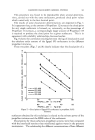
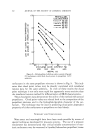
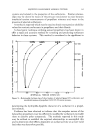
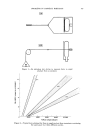
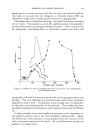
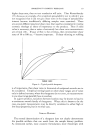
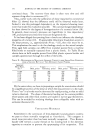
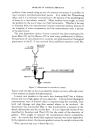
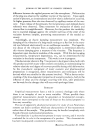
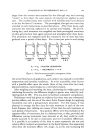
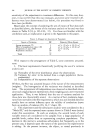
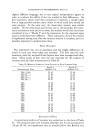
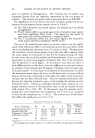
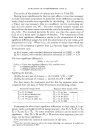
566 JOURNAL OF THE SOCIETY OF COSMETIC CHEMISTS It is the desire for the clean-cut correlation between a subjective and a measured property that has led to the rash of empirical measurement. There are indeed specialists in the field of cosmetic rheology who prefer arbitrary scale units to fundamental c.g.s. units. This thinking is both to be applauded and deplored. Where it is practical to make either a fundamental unit measure or an empirical number measure, the use of the latter is to be regretted because it prevents an intercomparison of values between workers, except by an exact replication of the measuring device. This leads inevitably to either a proliferation of empirical devices or the misuse of a device to measure a similar but different phenomenon. However, there is an important place for an empirical measurement. This is where it is recognized that the property of interest is actually a composite of the interaction of two or more physical parameters. Two examples from our own experience will serve to illustrate this point. INSTRUMENTS FOR EMPIRICAL MEASUREMENTS The Deformable Container: The act of removal of a paste, ointment or lotion from either a plastic squeeze bottle or tube or from a collapsible metal tube combines two basic phenomena. One is the truly rheological behavior of the contents passing through the orifice. The other involves the force to deform the container and its elastic response as a function of the degree of deformation and of the conditions of fill. Some time ago, it was necessary to determine the force required to extrude the product from a plastic bottle as a function of bottle design, wall thick- ness, type of orifice and theological character of the contents. An appa- ratus, shown schematically in Fig. 1, was constructed. The pressing "thumb" was 1/2 in. diameter. With this device it was possible to measure the rate of delivery for different applied forces and hence the time for delivery of a fixed quantity with each of these variables. Thus, in Fig. 2 are shown data for three different nozzles for the same product and bottle. In Table I data are presented for different pastes using nozzle No. 1 of the TABLE I--RELATION BETWEEN RHEOLOGIC PARAMETERS AND SQUEEZE PRESSURE FOR A I.OTION PASTE IN A SQUEEZE Bo'r'rLE Flow Force, Yield Value, Plastic Viscosity, wt. g. for 5 g. ()rifice Nozzle dynes/cm. • Poises flow in 10 sec. #1 1150 2O 3OOO #1 1600 22 3750 #1 800 20 2200 #2 800 20 6750 #3 800 20 11300

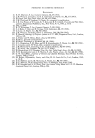
PROBLEMS IN COSMETIC RHEOLOGY 567 TOP F- SIDE Figure 1.--An extrusion test device to measure force to expel product from a container. o 6 ' /•' • 4 2 0 2000 4000 6000 8000 I O, 000 FORCE (6RmaS WE•6HT ) Figure 2.--Typical data obtained for force to expel product from containers containing the same paste but three different nozzles.
Purchased for the exclusive use of nofirst nolast (unknown)
From: SCC Media Library & Resource Center (library.scconline.org)