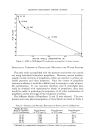
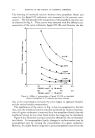
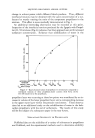
•. Soc. Cosmetic Chemists, 15, 549-564 (1964) THE PHYSICAL-CHEMICAL PROPERTIES OF SURFACE-ACTIVE AGENTS IN LIQUEFIED HALOCARBON AEROSOL SYSTEMS* By JosEp• L. KANm, P•.D.•, and SAuRaB• J. DEsa•, M.S. Presented before the New York Chapter, yanuary 8, 196¾, New York City ABSTRACT Surface-active allents may be used to enhance the properties of liquefied aerosol propellants or to diversify their applications. In order to minimize haphazard and empirical approaches to the use of surfactants, studies have been conducted to establish accurate methods for determininll the relationships which exist between surfactants and aerosol systems. The methods which were used in measurinll solubilities, inter- facial tensions and critical micelie concentrations of selected sur- factants in liquefied propellants are presented. The correlations between these determinations and the results obtained with a cloud point technique are described. The value of this approach in measur- inll and predictinll the required parameters of aerosol systems is also reviewed. STATEMENT OF PROBLEMS The increased interest in the utilization of surface-active agents in solving many problems in aerosol systems has been accompanied by an awareness of the need for the development of sound procedures for meas- uring the effects of surfactants in such systems. The use of surface-active agents in preparing two-phase solutions, sus- pensions, emulsions or related aerosol products has been considered to be the most practical approach in circumventing many of the shortcomings inherent in the liquefied halocarbon propellants (1-3). However, most of the work accomplished with the aid of surfactants has been done on a rather * This study was conducted, in part, under a research grant from International Flavors and Fragrances, Inc., New York. t Aerosol Research Laboratory, College of Pharmacy, Columbia University, New York, N.Y. 10023. 549

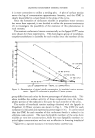
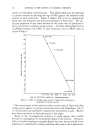
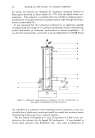
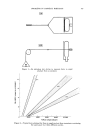
550 JOURNAL OF THE SOCIETY OF COSMETIC CHEMISTS haphazard and pragmatic basis, and reported studies in this area have been concerned with effects rather than causes. As a result, only generalized rules-of-thumb are available as guides when the use of surfactants in aero- sols is contemplated (4). Before surface-active agents may be employed in a system to modify the interfacial barrier and thus accomplish some specific task, certain funda- mental characteristics of the surfactant in the system under study must be known. Among these are solubility, surface adsorption and critical micetie concentrations. Measurement of these properties in aerosol propellants poses serious problems not normally encountered in nonpressure systems. It is therefore necessary that specialized instruments and techniques be developed when surfactants are studied in the liquefied halocarbon propellants. In recognition of this need for more precise methods of measuring surfac- rant performance, a series of studies has been instituted for the purpose of developing these required procedures. The first in this series has been recently published (3). This report has described the use of a specially de- signed pressure tensiometer capable of accurately measuring surface and interfacial tensions under pressure. The pressure tensiometer has been used to establish relationships which exist between interfacial tensions of propellants and water in the presence of selected surfactants and the HLB values of the surfactants. The solvent properties of the propellants and the stability of emulsions prepared with these propellants were also shown to be interdependent. These relationships were established on the inter- facial properties of individual propellants and other nonmiscible fluids. This paper is the second in this series and presents additional specialized techniques in this area. CR•'r•c^n MICELLE CONCENTKATION MEASUREMENT Knowledge of the critical micelle concentration (CMC) of a surfactant in any system is valuable in a variety of ways. Specifically, it is an indica- tion of the concentration range in which surfactant ions or molecules begin to aggregate and form micelies. The point at which micelles form is also indicative of the minimum surfactant concentration required for the solu- bilization of insoluble substances into the system and the maximum deter- gency and foaming manifested by the surfactant (5). At concentrations greater than the CMC value, the surface tension of the solution does not decrease further with an increase in surfactant concentra- tion. This property is useful in determining the critical micelle concentra- tion. The slope of the curve, depicting the lowering of surface or interfa- cial tension with increasing surfactant concentration, approaches zero, and this area of the curve represents the CMC region. A great many experi- mental points are required to estimate the CMC accurately and generally
Purchased for the exclusive use of nofirst nolast (unknown)
From: SCC Media Library & Resource Center (library.scconline.org)