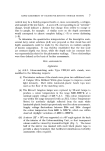
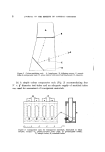
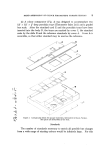
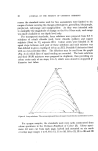
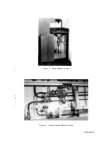
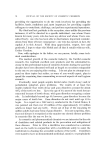
24 JOURNAL OF THE SOCIETY OF COSMETIC CHEMISTS that in a fully swollen fibre, the size of pores is about 35 A. A preliminary study has lead Holmes (19) to suggest 15.8 A as the mean diameter. Using data from diffusion studies, the same author (20) has measured the effect of bleaching and chemical setting on the size and number of the holes. While the optical microscope gives valuable information on the location of dyes in cross-sections of hair, the limiting factor is the resolution of the instrument. Using a new technique based on the electron microscope, Swift (21) has measured the penetration of heavy metal compounds across an individual cuticle cell. The electron micrographs show that both permonosulphuric acid and hydrogen peroxide degrade the cuticle cell membranes of the hair, increasing the hole size and allowing phospho- tungstic acid into the damaged regions, thus confirming the conclusions made by Holmes. Breuer (22) using a theoretical approach based on the thermodynamics of irreversible processes has concluded that anomalies in the kinetics of dyeing can be explained by assuming that the rate-determining process is the transportation of dye across a surface membrane. Measurement of diffusion rate The rate of uptake of dyes onto hair can be measured by sampling techniques and the experimental details will be described, followed by an example of the application of this method to improving the performance of hair colourants. Hair dyes are used at a relatively high concentration (•1%) and at low liquor to hair ratios. It is desirable to make measurements under similar conditions and so solutions with extinction coefficients of about 200 need to be analysed. The Perkin Elmer model 137UV measures optical densities up to 1.5 absorbance units (A) in normal hair and can accommodate solutions with optical densities up to 3.5 A. Short path length cells are available and are reliable down to 0.1 mm. Italian blue string hair (untreated with chemicals, setting aids, etc.) is chopped into 1 cm lengths and thoroughly mixed. The hair is then transferred to a Soxhlet extractor, and extracted three times with methylene chloride. After standing in a fume cupboard to remove most of the methylene chloride, the hair is dried in vacuo at 35øC. The dried hair is then conditioned for at least 24 hr over distilled water at room tem- perature in a desiccator. 0.5 g samples are weighed into 1 oz screw top bottles and returned to the humid container until required. The dyestuff and other additives are weighed, and the solutions made

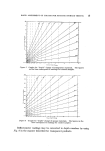
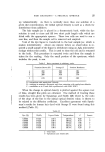
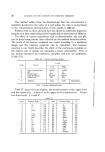
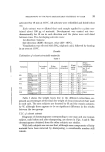
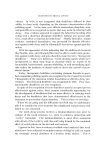
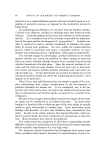
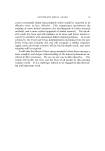
HAIR COLOURANTS - A PRACTICAL APPROACH 25 up volumetrically. As there is normally more than one solution of a given dye concentration, the initial optical density is used as a check for interference from additives. The hair sample jar is placed in a thermostatic bath, while the dye solution is used to rinse and fill two short path length cells which are fitted with the appropriate spacers. These two cells are used to run a zero line, and then the sample cell is removed and emptied. $ ml of the dye liquor is transferred to the hair sample jar, which is shaken intermittently. About one minute before an observation is re- quired a small sample of the liquor is withdrawn using an Agla micrometer syringe without the needle. This is used to rinse the cell and is returned to the bath. This procedure is repeated twice and then the sample is taken for the reading. Only the small portion of the spectrum, which includes the peak, is run. Table I Rate constants in arbitrary units Fourrine Brown 2R Orange II Ortolan Bordeaux ,, .290 .063 .351 .240 .063 .259 .265 .018 .170 .015 .023 .052 A- extraction with methylene chloride B- washing in nonionic detergent and then extration with methylene chloride C - conditions as in B and then equilibrated with 0.001 NHC1 When the change in optical density is plotted against the square root of time, straight line plots are obtained. One method of treating these results has been given by Speakman and Smith (23) where A, the ratio of the slope of the line to the initial optical density value, is shown to be related to the diffusion coefficient. Excellent agreement with Speak- man's results for human hair dyed with Orange II were found using this method (Table II). Table II ,,, Dye (%) H2SO4 Liquor Ratio Temperature • Source 0.0400 0.01N 100:1 30.0øC 0.63 a 0.0436 0.01N 106:1 28.0•C 0.70 b 0.0400 0.01N 100:1 40.0øC 1.44 a 0.0436 0.01N 106:1 40.5øC 1.00 b 0.0400 0.01N 100:1 60.0øC 6.26 a 0.0436 0.01N 106:1 59.7øC 7.20 b a - This work b- Speakman and Smith (23)
Purchased for the exclusive use of nofirst nolast (unknown)
From: SCC Media Library & Resource Center (library.scconline.org)