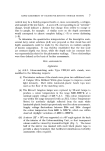
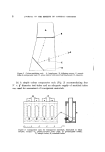
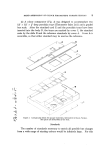
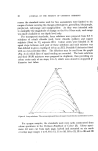
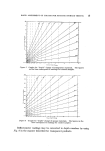
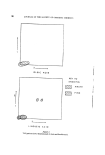
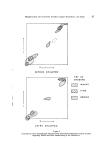
3O JOURNAL OF THE SOCIETY OF COSMETIC CHEMISTS positions correspond to the square lattice of points, and the centre (for convenience X has been chosen as the centre), then by calculation (24) the line YZ can be deter- mined and also the fact that X has the highest freezing point of any product on that line. Whether a system based on •1 or B is preferable will probably depend on other points, such as cost. The use of statistical designs such as these removes a lot of chance from experi- ments, allows synergism to be readily determined, and requires less supervision than the conventional method. It only works however, when the property can be measured, and this is one reason for measuring the uptake of dye.

J. Soc. Cosmetic Chemists 18 31-40 (1967) •) 1967 Society of Cosmetic Chemists of Great Britain The effect of shampooing on extractable material on hair solvent S. V. BRASCH and MISS J. A. AMOORE* Sltnopsis--Hair clippings taken from subjects before and after shampooing were quantitatively solvent extracted and thin layer chromatography applied to the extracts. TLC was also applied to the solvent extracts from hair clippings collected from a commercial ladies' l•airdressing salon, both before and after shampooing in the laboratory. The results indicated tlmt shampooing removed only certain solvent extractable components whilst leaving con- siderable amounts on the hair. It is suggested that the mechanism of shampooing, apart from involving the removal of particulate soil, also involves the selective removal of certain fatty soil/sebum components and a redistribution of the remainder. INTRODUCTION Almost all the work so far published about the action of shampoos deals with laboratory studies (1-5). Very little information appears to be published about work done under conditions of commercial practice (6). To be sure, it is difficult to maintain very strict control over such conditions and the results thus obtained may be correspondingly less specific. Nevertheless, it was felt worth investigating the shampoo process more directly and to try to provide at least a semi-quantitative picture of one or two of the component mechanisms under practical conditions. In some earlier work (7) we have attempted to study the effect of some external factors involved in practical shampooing. The work reported here is an extension of the earlier approach, although clearly still a preliminary foray into a very com- plex field. The paper is divided into salon and laboratory experiments. SALON •XP•RI•ENTS Experimental Quantitative estimation of extractable material Hair samples were taken from subjects in the salon immediately before •Beecham Toiletry Division, Brentford, Middlesex 31
Purchased for the exclusive use of nofirst nolast (unknown)
From: SCC Media Library & Resource Center (library.scconline.org)