JOURNAL OF THE SOCIETY OF COSMETIC CHEMISTS These improvements have been brought about by a better understand- ing of the structure of the fibre, the interactions of dye molecules with the fibre and with other ingredients in solution, and the colour effect which is produced. The two fields of colour measurement and rate measurement are essential tools for formulating and testing products based on both existing dyes and on completely new concepts of colouring. (Received: I8th March 1966) REFERENCES (1) Giles, C. it. Chem. Ind. London 92 (1966). (2) Giles, C. H. Chem. Ind. London 137 11966]. (3) Rostenberg, A. and Kass, G. S. Soap Perfumery Cosmetics I•9 45 (1966). (4) B. James, private communication. (5) Peters, L. and Stevens, C. B., J. Soc. Dyers Colour ?2 100 (1956). idem, ibid 71• 23 (1957) Peters, L., Stevens, C. B., Budding, J., Burdett, B.C. and Sykes, J. A. W., ibid 75 543 (1960) technical aspects are discussed by Beal, W., Dickinson, K. and Bell- house, E., ibid 75 333 (1960), German Pats. 198,008 199,559 (1907) Audry, P., German Pats. 687,062 (1937). (6) Kubelka, P. and Munk, F. Z. Tech. Physik 12 593 (1931). (7) Cutler, A. E. J. Soc. Dyers Colourists 8! 601 (1965). (8) Judd, D. B. and Wyszecki, G. Colour in business, science and industry, 2nd edition, 88 (1963). John Wiley and Sons, New York.) (9) Commission Internationale de l'Eclairage, Proc. 8th Sessions, 19 (1932) (Cambridge University Press.) (10) Adams, E. Q. .1. opt. Soc. Am. 112 168 (1942). (ll) MacAdam, D. L. and Gardner, Am. J. Phys. Anthropol 19 187 (1934). (12) Bell, J. R., Gailey, J. and Oglesy, S. J. Soc. Dyers Colourists 71) 613 (1963). (13) Park, R. H. and Sterns, E. I. ]. opt. Soc. Am. 114 ll2 (1944). (14) Duncan, D. R. Paint Res. Sta. Bul. 8 5 (1949). (15) Sterns, E. I. Am. DyestuffReptr. fill 1 (1944). (16) Alderson, J. V., Atherton, E. and Derbyshire, A. N.J. Soc. Dyers Colourists 77 657 (1961). (17) Davidson, H. R., Hemmendinger, H. and Landry, J. L. R., Jr. J. Soc. Dyers Colourists 79 577 (1963). (18) Speakman, J. B. Proc. Roy. Soc. London Ser. A 182 167 (1931). (19) Holmes, A. E. J. Soc. Cosmetic Chemists 15 595 (1964). (20) Holmes, A. W. Proc. 3rd Intern. Wool Conf. Paris (1965). (21) Swift, J. A. Proc. 3rd Intern. Wool Conf. Paris (1965). (22) Breuer, M. M. Proc. 3rd Intern. Wool Conf. Paris (1965). (23) Speakman, J. B. and Smith, S. G. J. Soc. Dyers Colourists 52 121 (1936). (24) Davies, O. L. ed. Design and analysis of •ndustrial experiments (1963) (Oliver & Boyd. Edinburgh) DISCUSSION M•. J. C. B•ow•: You mentioned the difficulty of extracting dyes from the h•ir. I h•ve not carried out any experiments with h•ir dyes, but I have tried to extract dyes from textile fibres h•ve you tried •he solvent dimethyl •orm•mide? It seems to be capable of extracting dispersed dyes from Tefyle•e, •nd •lso perhaps 2: I met• complex dyes from nylon and wool it is actually more effective when mixed with water, say in the ratio of 2: 1.

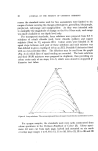
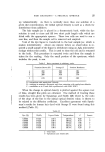
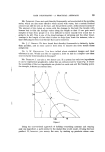
HAIR COLOURANTS -- A PRACTICAL APPROACH 29 MR. PARSLOW: I have not used dimethyl formamide we have looked at the pyridine series, which are also more effective when mixed with water, but a certain residual amount can still be seen on the hair, and the problem arises- is the amount constant? The amount of dye taken up varies with the damage to the hair the trouble with human hair is that the damage varies along the length so that if one gets small samples of hair from people it is very difficult to know exactly how much dye is going to be left. This is one of the disadvantages of stripping and the other disad- vantage is the length of time that it takes to strip dyes some for instance, take a day's refluxing to remove all the dye that can be removed. MR. J. C. BROWN: •Ve have found that dimethyl formamide is distinctly better than pyridine, and in some cases it does seem to remove dye from textile fibres completely. DR. A. W. MIDDLe:tON': YOU have talked about statistical designs and their efficiency in use. Would you like to expound a little on this in a simpler case than your six factor determination in the paper? MR. PARSLOW: I can take a two factor case. If a system has only two ingredients it can be represented graphically, rather like an ordnance survey map (Fig. 1) where the quantities of the two ingredients are plotted on each axis and the freezing point, for example, is shown as contour lines. l0 ZB 10 Figur• 1 Using the conventional approach of holding everything constant and varying only one ingredient, a path similar to the dashed line would result, X being the best product. If, however, you survey the area, by making up products whose corn-
Purchased for the exclusive use of nofirst nolast (unknown)
From: SCC Media Library & Resource Center (library.scconline.org)