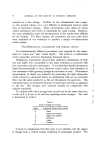
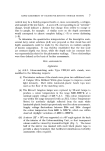
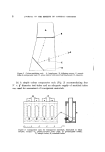
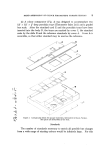
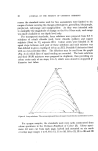
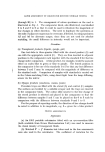
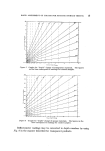
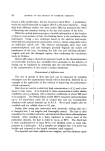
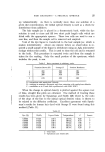
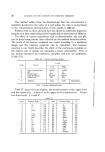
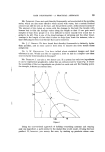
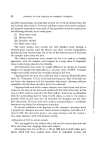
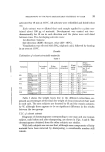
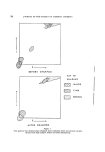
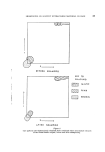
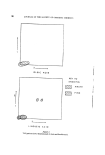
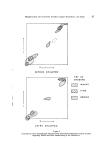
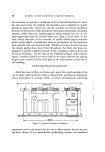
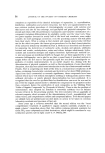
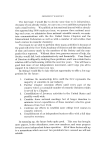
38 JOURNAL OF THE SOCIETY OF COSMETIC CHEMISTS Fig. 3 shows the results of chromatograms obtained previously in this laboratory from reference samples of oleic and linoleic acids. These were carried out under identical conditions to the above, on dioxane-washed silica gel G plates and each sample containing 50 •g of the fatty acid. LABORATORY EXPERIMENTS Attempts at independent confirmation of the effects reported above were made in the laboratory, under more controlled conditions. Experimental Hair clippings were collected from a commercial ladies' hairdressing salon and thoroughly mixed by hand and the use of a plastic-toothed hair brush. Care was taken to tease out the individual tresses which would not readily separate in the overall mixing process. Three samples were taken from widely spaced portions of this hair mass and compounded into one. Several samples (ca. 1 g each)were taken from this compounded sample and extracted. Part of the original purpose of this particular exercise included a com- parison of the extracting powers of acetone and chloroform/methanol (2/1) and several of the above samples were extracted in these solvents. Since this paper does not purport to deal with a comparison of these solvents, results are only given for the chloroform/methanol extracts. The effects of shampooing the hair were equally demonstrated by the chromatograms obtained from the acetone extracts. The extractions were carried out for 4 hr in a Soxhlet apparatus. The conditions of TLC were identical with those described above. The samples of hair (ca. 1 g)were washed by agitation with a glass rod, in a beaker, for 90 sec (a representative time for a one stage shampoo). A 1 g solution was used of the same shampoo as in the salon experiments and at a similar concentration to that found in practice, i.e. with a C.V. of about 26.5. The samples were washed in tap water until the washings were clear and finally in distilled water. Air drying preceded the solvent ex- traction. Results Fig. 4 shows diagrams of the chromatograms obtained from the extracts of both the dirty and washed hair.

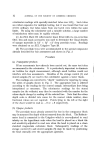
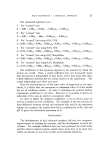
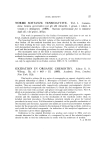
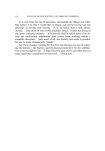
SHAMPOOING ON SOLVENT EXTRACTABLE MATERIAL ON HAIR 39 Discussion The results of the quantitative extraction of the hair clippings are noteworthy in showing a high ratio of matehal extracted from shampooed hair to that extracted from dirty hair. This calls into question the im- portance of the cleaning action of shampoos as such, for material other than particulate soil. From the diagrams of the chromatograms one can see that, although some of the components of solvent extractable matehal have been removed from the dirty hair, a considerable number still remain. Since the con- centration of each sample applied to a plate was adjusted to ensure that each sample contained the same amount of fatty material, the results indicate a selective removal, by the shampoo, of some of the fatty soil/ sebum components. Although no extensive attempts were made to identify any of the components, a comparison with the chromatograms for oleic and linoleic acids suggests that at least a fair proportion of the material retained by the hair after shampooing is fatty acid. CONCLUSION An important feature of shampoo action may be a selective removal of some fatty material from hair and a redistribution of the remainder. The distinction between one shampoo and another is often very subtle, in so far as the effects on hair condition are concerned. It is well known that a shampoo suitable for one person may not be so for another and this without any apparent reason. The almost intangible differences between the actions of many shampoos, quite apart from any physiological differences in the people using them, may partly result from their differences in the sort of selective actions suggested above. It is not difficult to see that the amount of fatty matter on hair, its composition and distribution, could affect the frictional, gloss and electro- static properties of the hair. If, therefore, shampoos should show fine differences in their effect upon fatty matter one might equally expect differences in their effect upon those properties associated with hair condition. (Received: lt•th August 1966) REFERENCES (1) Ester, V.C. et al. Proc. $ci. Sect. Toilet Goods Assoc. •.0 0 (December 1053) (2) Barnett, G. and Powers, D. H. ibid •.t• 24 {December 1055) (3) Fredell, W. G. and Read, R. R. ibid 2õ 30 {May 1056) (4) Barnett, G. and Powers, D. H. J. Soc. Cosmetic Chemists •. 210 (1051)
Purchased for the exclusive use of nofirst nolast (unknown)
From: SCC Media Library & Resource Center (library.scconline.org)