42 JOURNAL OF THE SOCIETY OF COSMETIC CHEMISTS for facilities which are common to the site, e.g. conference rooms, library, and semi-technical laboratories. Architectural, civil and electrical engineering design services for the first laboratory block were provided by the Technical Division of Unilever. This has meant that right from the time of the original brief, we had the great advantage of commencing with a team of about half a dozen people, each being concerned with his own particular aspect of the project, yet having respect for the problems confronting his colleagues. We were also fortunate in obtaining the benefit of experience of laboratory design within Unilever as the result of a two-day conference which was held early in 1961. During this conference which was attended by specialists from Unilever laboratories in England and Europe, unanimity was achieved on the major- ity of matters discussed and the recommendations of the various study groups provided an excellent basis on which to commence the planning of the Isleworth laboratory. It is also noteworthy that a number of points remained unresolved at the end of the conference - of these we shall have more to say below. In our first discussions with the architects, we were asked to define the areas required for the anticipated scientific and administrative functions needed when the whole site was occupied by the research laboratory which was intended ultimately to house some 500-600 staff. With this information the architect was able to prepare the overall development scheme which has remained the basis of our construction programme. Following this, we then had to consider certain fundamental matters affecting the basic design of the building and to arrive at decisions which were vital to the satisfactory progressing of the project. In view of the importance of these aspects in connection with the planning of any laboratory, I feel it may be useful to consider them in some detail. The modular dimensions of the building One of the findings of the Unilever conference on laboratory design was that a 10 foot module in length with an 11 foot module in width were the most economical. As we, too, already had satisfactory experience of these modules at Isleworth, it was clear that we should use them in the construction of the new laboratory block. At this time too, it was thought that additional planning flexibility would be provided by designing each floor to span the whole of the width of the building, without any central column support. This decision resulted in the necessity to provide horizontal

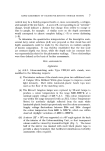
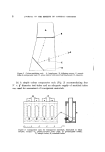
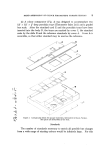
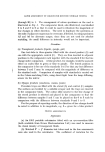
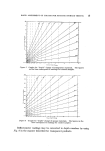
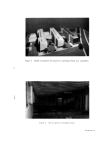
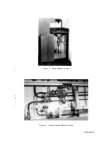
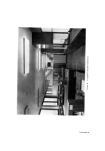
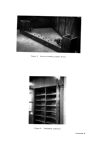
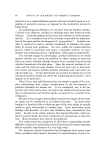
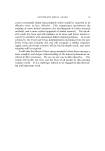
Figure 1. == Model of complete development right-hand block now completed. '1: I ß • III111 { I ' •" Figure oe. Service points on modular basis. Facing page 42
Purchased for the exclusive use of nofirst nolast (unknown)
From: SCC Media Library & Resource Center (library.scconline.org)