JOURNAL OF THE SOCIETY OF COSMETIC CHEMISTS and after shampooing, ensuring that at least one week had passed since the hair had last been washed. Two men and three women were used as subjects and separate estimations were made of the quantities of matter removed by the following solvents, in the order given. (i) First water wash. (ii) Diethyl ether. (iii) Absolute alcohol. (iv) Final water wash. The water washes were carried out with distilled water through a sintered-glass crucible until the flitrate was clear. Careful manipulation avoided the loss of more than one or two of the shorter pieces of hair from the samples taken from the men. The solvent extractions were carried out for 4 hr each in a Soxhlet apparatus, with the samples well wrapped in a large piece of disposable tissue before being placed in the thimble. All estimations were done by weight difference by drying to constant weight over phosphorus pentoxide in a vacuum oven, at 60øC. Constant weight was readily attained by overnight drying in this way. Clippings from the men were collected with a Hairvac Model 215 (John Oster Co., Wisconsin, U.S.A.) as the hair was being cut. Part of the hair was cut before the shampoo and the remainder afterwards, allowing sufficient quantities of both clean and dirty hair to be collected. Clippings from each of the women subjects were taken from each of two tresses at the back of the head and underneath the bulk of the hair. In this way no effect could be noticed in the final coiffure. Each tress was identified from the surrounding hair by tying it with string, as near to the scalp as possible. Half of each tress was cut off before the shampoo and the other half afterwards. The hair from each subject corresponding to a particular treatment was bulked for subsequent extraction. No special conditions were imposed on the shampoo operation itself a proprietary shampoo was used, based on lauryl sulphate, and with a C.V. close to 215. The men were given a one-stage shampoo and the women a two-stage shampoo with intermediate rinsing. Application of TLC to solvent extracts TLC was applied to the bulked ether and alcohol extracts from both the dirty and clean hair clippings from each subject. All samples were run on 20 cm X 20 cm (250 micron thick) silica gel G plates which had been washed three times in redistilled acetone and

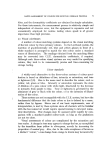
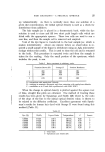
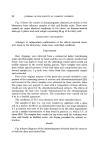
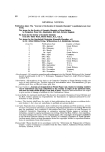
SHAMPOOING ON SOLVENT EXTRACTABLE MATERIAL ON HAIR activated for 15 min at 110øC. All solvents were redistilled and dried before use. Each extract was so diluted that each sample applied to a plate con- tained about 100 •g of material. Development was carried out two- dimensionally for 10 cm in each direction and the plates were well died between runs. The developing solvents were: 1st direction: benzene 2nd direction: 20/80 ether/pet. ether (40 ø- 60øC). Visualisation was effected with 50% sulphuric acid, followed by heating in an oven at 110øC. Results Estimation of solvent extractable materials Table I 'Post- Subjects 1st water Ether Alcohol Final !shampoo wash extraction extraction water Total extractable wash as % of total extractable Dirty 1.2 6.0 6.5 4.2 17.9 •[1 Shampooed 0.9 1.5 2.5 2.5 7.4 41.6 Dirty 2.4 14.4 7.3 6.9 31.0 •i2 Shampooed 1.9 4.0 -- 5.2 7.6 18.7 60.4 ---- Dirty f.2 7.0 2.0 8.5 18.7 W1 Shampooed 0.4 1.2-- t•]• ............. 5.3 7.7 41.9 _ Dirty 1.9
Shampooed 2.7 1.6 3.6 9.8 W2 1.2 1 3.3 '3.2 1.4 ]• 89.5 'Dirty 1.5
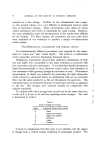
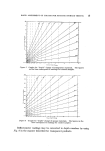
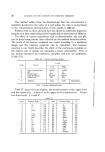
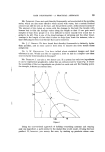
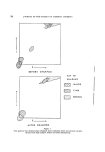
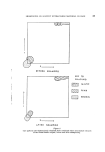
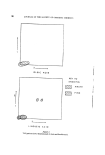
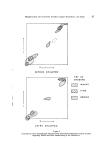
Is•¾•t•ooed 7.1 4 2 2.4 •3 •9 "' '7S.S 4.0 •:.• ............. 2.4 I'll.S Table I shows the weight losses due to the different extractions, ex- pressed as percentages of the final dry weight of clean (extracted) hair used in each case. The men subjects are denoted by M and the women subjects by W, although there appears to be no significant difference in the results between the two groups. TLC of solvent extracts Diagrams of chromatograms corresponding to one man and one woman subject, each before and after shampooing, are shown in Figs. I and 2. The chromatograms obtained from the other subjects are similar. With both subjects one can see that, although some components of fatty material have been removed by shampooing, a considerable number still remain.
Purchased for the exclusive use of nofirst nolast (unknown)
From: SCC Media Library & Resource Center (library.scconline.org)