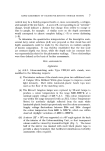
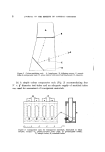
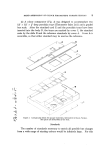
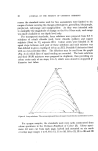
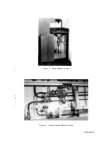
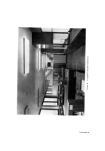
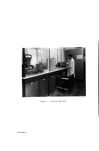
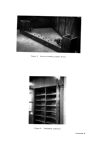
48 JOURNAL OF THE SOCIETY OF COSMETIC CHEMISTS heating. The units have no projecting door or drawer handles, all the pulls being of the flush type. Working surfaces in most laboratories are of Burmese teak which we have found generally to be the most satisfactory for many types of labora- tory work. In a few instances, we have also specified a compressed plastic laminate surface and in our bacteriology laboratories we have some stainless steel bench tops. An interesting feature of the benches is the service trunking which also serves as a reagent shelf. This has been designed as a separate unit, so that it can be prefabricated and tested outside the laboratory and then only needs to be connected with the services at floor level. Because of this arrangement, the space under the centre of the benches is available for the glass pipelines and traps from the drip cups and sinks. Each service trunking is normally 9 ft 6 in. long and carries sixteen 13 amp socket outlets, 8 per side, 10 water outlets, 4 town gas, 2 compressed air and 2 central vacuum outlets, together with primary earthing point. An isolating switch has been provided at the end of each bench so that the electricity supply to all the socket outlets can be cut off in the event of an emergency. In laboratories where there was the likelihood of the continuous use and storage of chemicals of unpleasant odour or those giving off noxious yap- ours, we have installed ventilated cupboards where there is a slow but con- tinual draught pulling through the cupboard and exhausting any unpleasant fumes. By the use of these cupboards it has been possible virtually to eliminate the bottles of reagents which so frequently clutter up the working surfaces in the fume cupboards and the presence of which may be a serious embarrassment in the event of an explosion or fire in the area. Above, I mentioned that some matters were not resolved during the discussions which took place in 1961. There was the point concerning the washing up of apparatus. In some Unilever laboratories there is one central wash-up to which all dirty apparatus is sent for cleaning, in others a person is attached to a laboratory and is responsible for the cleaning and washing- up. Both systems have advantages and disadvantages, and the one adopted may well depend on the availability of suitable labour. We have put a wash-up on each floor which is intended to serve the whole floor and the system is found to be reasonably satisfactory. We have examined auto- mated equipment for cleaning glassware but I feel that while this type of equipment is undoubtedly excellent for washing-up apparatus from routine and quality control laboratories, more development remains to be carried

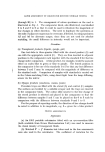
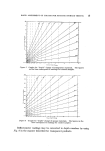
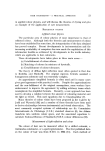
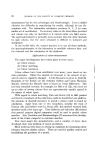
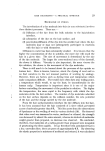
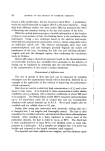
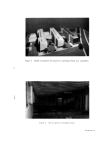
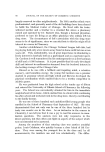
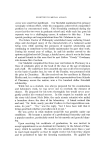
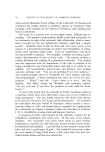
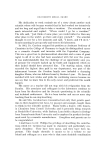
Figure 8. Service trunking (upside down). Figure •. Ventilated cupboard. Facing page 48
Purchased for the exclusive use of nofirst nolast (unknown)
From: SCC Media Library & Resource Center (library.scconline.org)