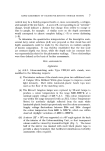
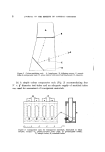
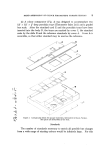
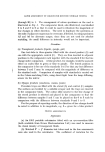
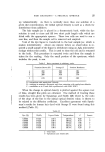
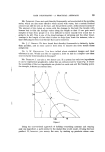
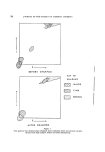
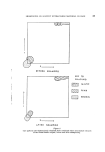
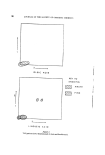
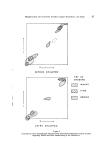
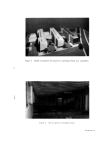
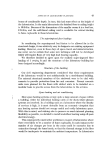
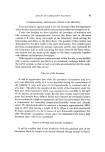
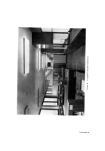
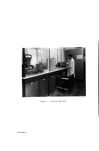
RAPID ASSESSMENT OF COLOUR FOR ROUTINE STORAGE TESTING 9 (c) A colour comparator (Fig. 3) was designed to accommodate two lb" x lb" x •" deep porcelain trays (Tintometer Sales Ltd.) and a graded hue scale. After the standard card E and the porcelain trays have been inserted into the body D, the trays are masked by cover C, the standard scale by the slide B and the reference standards by cover A. Cover A is reversible, so that either standard may be used as the reference. Figure $ Comparator block for opaque materials, fabricated in black J•erspex. The parts are described in the text. Standards The number of standards necessary to match all possible hue changes from a wide range of starting colours would be infinitely large. For this

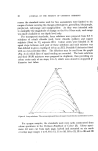
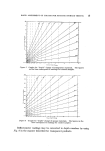
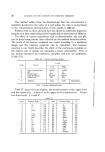
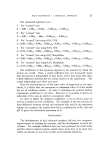
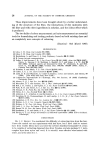
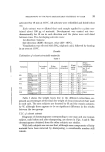
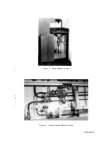
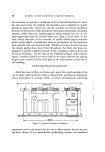
10 JOURNAL OF THE SOCIETY OF COSMETIC CHEMISTS reason the standard series used for hue assessments were limited to six ranges of colour covering the changes yellow/green, green/blue, blue/purple, purple/red, red/orange and orange/yellow. As they were intended only to exemplify the magnitude of change on the 0 to 5 hue scale, each range was made available at one depth level only. For transparent standards, Arny solutions were prepared from 0.5 N solutions of cobalt chloride (red), ferric chloride (yellow) and copper sulphate (blue) in 1% aqueous HC1. Colour series were blended in 10 equal steps between each pair of these solutions and each mixture was then dil•uted to give a reading of 1.0 on an EEL Portable Colorimeter fitted with an eye-correction filter. The dilutions may be read from the graph (Fig. 4) on which lines of equal reading are recorded. The basic solutions and their 50:50 mixtures were prepared in duplicate, thus providing six colour series each of six steps, 0 to 5, which were stored in stoppered diameter test tubes. 100'o Yellow 1.0 100 BI e 100•Red Figure 4 Arny solutions. The curves represent lines of equal visual density and dilution factors. For opaque samples, the standards used were cards constructed from colour specimens in the Methuen Handbook of Colour (3). Colour speci- mens A5 were cut from each page, halved and mounted on six cards coverin• page ranges 1 to t3, t3 to 11, 11 to 113, 113 to 21, 21 to 213 and 213
Purchased for the exclusive use of nofirst nolast (unknown)
From: SCC Media Library & Resource Center (library.scconline.org)