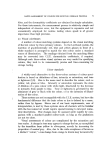
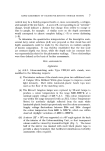
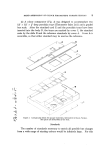
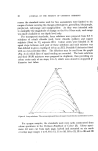
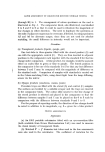
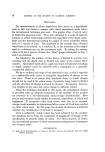
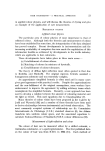
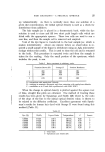
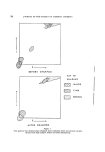
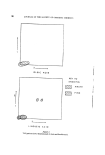
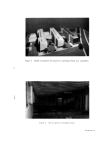
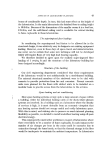
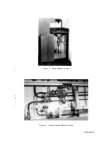
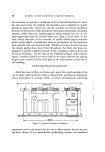
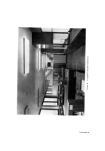
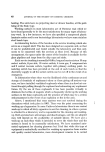
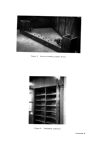
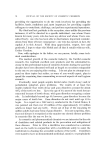
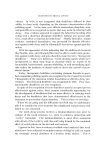
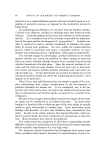
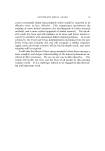
RAPID ASSESSMENT OF COLOUR FOR ROUTINE STORAGE TESTING 7 control may be a freshly-prepared batch or, more conveniently, a refriger- ated sample of the test batch. A score of 5, corresponding to an "extreme" change, would indicate a distinct hue change from yellow to orange or blue to purple, for example. A similar score on the depth assessment would correspond to almost complete fading (-5) or severe darkening (+5). To determine the quantitative interpretation of the descriptive scale, several Amy colour solutions (4-6) were prepared so that visual hue and depth assessments could be made by the observers on random samples of known composition. It was thereby established that the hue scale (at constant depth) was linear, while the depth scale (at constant hue) was exponentially related to the photometer readings. These relationships were then defined as the basis of .further assessments. HUE ASSESSMENTS Apparatus (a) A.E.I. Colour-matching units Type F221/43 with stands, were modified in the following respects: (i) The interior surfaces of the stands were given two additional coats of Valspar Ultra Brilliant White gloss lacquer to improve overall light intensity. Matt white laminated-plastic bench tops were used as the floor of the matching units. (ii) The 60-watt tungsten lamps were replaced by 75-watt lamps to produce a colour temperature in the range 5400-5900øK at a nominal supply voltage of 245 V.A.C. This colour temperature was within the range measured (with an EEL Colour Temperature Meter) for northerly skylight reflected from the matt white laminated-plastic bench tops previously used for colour assessments. Supply voltage fluctuations between 200v and 250v changed the colour temperature from 6400 to 5200øK, which was within observed daylight variations of 4800 to 6500øK. (iii) A mirror (12" x 16") was supported at a 45 ø angie against the back of the interior of the Colour-matching Unit, so that transparent colours could be viewed by transmitted light (Fig. 1). The lower half of the mirror was masked with matt black plastic tape to provide a sharp boundary that facilitated simultaneous turbidity assessments when required.

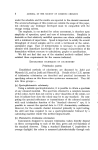
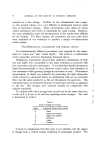
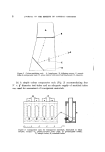
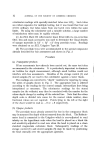
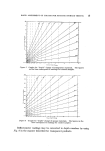
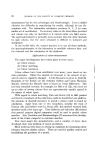
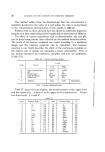
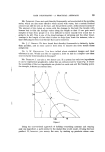
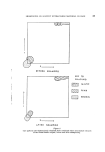
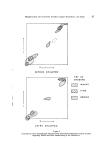
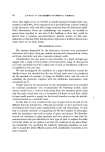
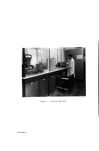
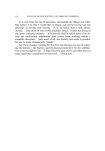
JOURNAL OF THE SOCIETY OF COSMETIC CHEMISTS A [, , Figure I Colour-matching unit. A, lamphouse ]3, diffusing screen C, sample tubes in comparator rack' D, plane mirror with lower half blackened E, observer. (b) A simple colour comparator rack (Fig. 2) accommodating four 3" x •" diameter test tubes and an adequate supply of matched tubes was used for assessment of transparent materials. [ I ø. I . I .,. I 1 12 13 .l 4 15 ins. Figure 2 Comparator rack for transparent materials, fabricated in black Perspex, except :--A, plastic-covered Terry clips B, ground-glass screen D, sample tubes E, standard tubes.
Purchased for the exclusive use of nofirst nolast (unknown)
From: SCC Media Library & Resource Center (library.scconline.org)