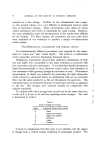
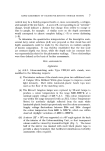
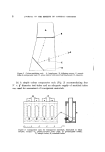
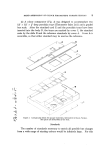
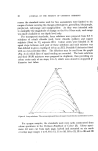
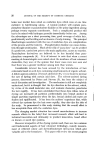
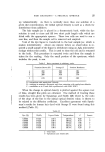
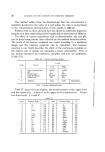
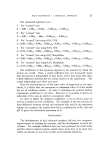
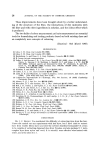
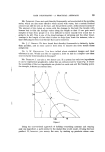
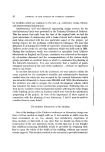
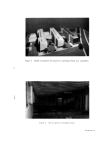
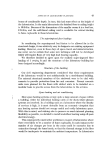
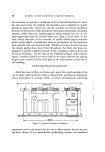
46 JOURNAL OF THE SOCIETY OF COSMETIC CHEMISTS was necessary to provide a minimum level of thermal insulation to lower the heat losses from the building. We therefore were committed to double glazing in some form. There was also the question of acoustic insulation because the laboratory, while having the advantage of proximity to London Airport, suffers from the disadvantage of being situated on one of the main approaches used by aircraft which are about to land there. It was thus clearly desirable, if not essential, to install double glazed windows which would afford a considerable measure of reduction in the noise level from aircraft, and road and rail traffic. Windows having a $" space between the double glazing have been fitted throughout the block and these are designed to permit a limited amount of free ventilation without gross loss of sound insulation. On the side of the building having a south easterly aspect, venetian blinds have been fitted in the space between the glazing to give some control over the solar gain in the laboratories on that side of the building. Partitioning between the laboratories Much has been written, and more said, upon the vexed question of the use of either solid blockwork walls or demountable partitions in laboratory areas. Dependent to a large extent on local circumstances, convincing CORRIDOR •' '.•~ . . • STORE -I I OFFICE I DESK 'l I DESK lil i I DESK II DES• ,!l.. 'i • 50'-O" arguments can be put forward for the use of either system. In our own case we have chosen to use demountable partitioning because we considered

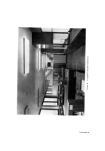
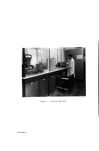
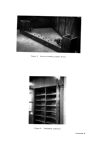
Facing page 46
Purchased for the exclusive use of nofirst nolast (unknown)
From: SCC Media Library & Resource Center (library.scconline.org)