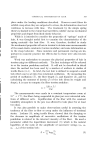
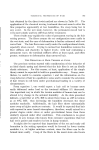
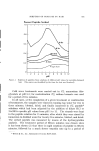
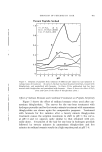
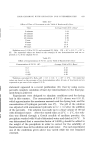
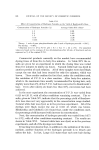
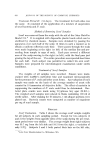
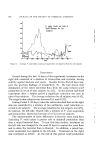
606 JOURNAL OF THE SOCIETY OF COSMETIC CHEMISTS Percent Peptide Sorbed 1.2-- 1.0 0.8 0.6 . . 0 t I I I I I I I I I I 2 3 4 5 6 7 8 9 10 11 12 pH Figure 6. Sorption oF peptides from solutions of different pH values by thioglycolate- damaged hair. (The curves are identified by the time the hair was reduced) tion minimum observed after twenty minutes of reduction. This is shown in Fig. 6, which includes the twenty minute curve again for reference. The peptide is sorbed more readily at the lower pH values of 5 to 9, and sorption increases very rapidly after two hours' treat- ment in ammonium thioglycolate at pH values from 10 to 12. A suggested explanation for the results is that only a short period of treatment with thioglycolate is necessary to open up the cutide and increase the protein area for sorption of the peptide. The cuticle is rapidly separated from the hair strands, and in 20 minutes it has ap- parently been removed almost completely. The cortex then reacts but here the action is much slower, so that after one hour of treatment the sorption over the entire pH range has not increased markedly above that obtained after twenty minutes of treatment. It is only after additional treatment that the great increase in peptide sorption occurs.

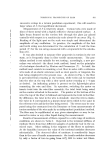
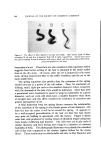
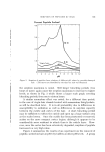
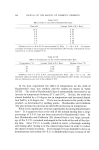
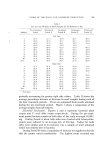
SORPTION OF PEPTIDES BY HAIR 6O7 Percent Peptide Sorbed I I I I I 1.0 1 hr, 6% H202 A C 20 min, 5% NHaTG A B D 5 mln, 3% NaBrO 3 A B 0.8 0.6 0.4 0.2 Virgin hair I I I 1 2 3 4 5 6 7 8 9 10 11 12 pH Figure 7. Sorption of peptides from solutions of different pH values by hair subjected to various types of treatment. (In curve A the hair has been bleached with H202, treated with thioglycolate, and neutralized with bromate. In Curve B the unbleached hair has been treated with thioglycolate and neutralized with bromate. Curve C shows the effect of alone and Curve D the effect of thioglycolate alone.) Effect of Sodium Bromate and Combined Treatments on Peptide Sorptivity Figure 7 shows the effect of sodium bromate when used after am- monium thioglycolate. The curves for the one-hour treatment with hydrogen peroxide and for the twenty-minute treatment with ammonium thioglycolate are shown again for comparative purposes. Treatment with bromate for five minutes after a twenty minute thioglycolate treatment causes the sorption maximum to shift to pH 7 the curve, at pH 11 and 12, appears quite similar to that obtained with per- oxide alone. Treatment of the hair for one hour in hydrogen peroxide followed by twenty minutes in ammonium thioglycolate and five minutes in sodium bromate results in a high sorption peak at pH 7-8.
Purchased for the exclusive use of nofirst nolast (unknown)
From: SCC Media Library & Resource Center (library.scconline.org)