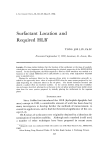
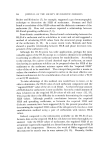
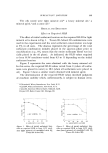
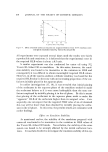
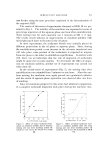
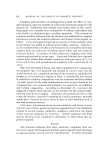
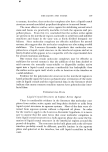
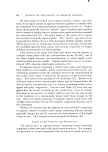
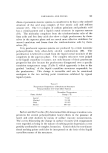
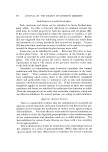
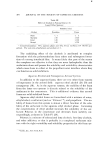
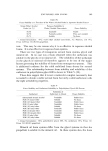
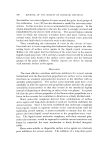
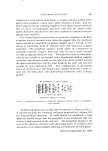
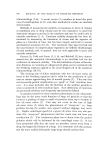
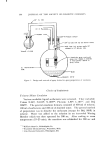
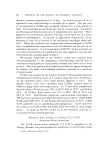
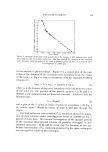
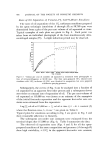
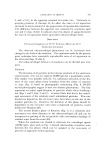
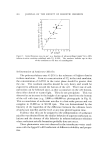
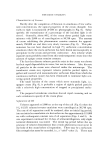
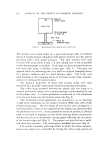
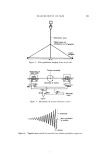
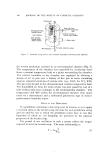
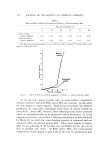
SURFACTANT LOCATION 369 The oils tested were light mineral oil, • a heavy mineral oil? a mineral spirit,* and a castor oil.{ RESULTS AND DISCUSSION Effect on Required HLB The effect of initial surfactant location on the required HLB for light mineral oil is shown is Fig. 1. Tween 80-Arlacel 80 combinations were used in the experiments and the total surfactant concentration was kept at 3% in all cases. The abscissa represents the percentage of the total surfactant combination initially placed in the aqueous phase prior to emulsification (e.g., 0% means that the entire surfactant blend was ini- tially placed in the oil phase). As indicated, the HLB values required to form O/W emulsions varied from 8.5 to 11 depending on the initial surfactant location. Figure 2 represents the runs obtained with the heavy mineral oil. In this series, the required HLB values varied from 8 (when all surfac- tants were placed in water) to 10.5 (when all surfactants were placed in oil). Figure 3 shows a similar result obtained with mineral spirit. The determination of the required HLB values involved judgment of emulsion stability which, unfortunately, is subject to human error. * Carnation©, Witco/Sonneborne, New York, N.Y. t Kaydol©, Witco/Sonneborne, New York, N.Y. .+ Amsco©, American Mineral Spirit, Oakland, Calif. {Crystal O©, Baker Castor Oil, Chicago, Ill. • LIGHT MINERAL OIL 7 6 I • I I 20 40 60 80 I00 % SURFACTANTS IN AQ PHASE Figure 1. Effect of initial surfactant loca- tion on required HLB to form O/W emul- sion (light mineral oil emulsified with 3% Tween 80-Arlacel 80) HEAVY MINERAL 01 L 20 40 60 80 % SURFACTANTS IN AQ PHASE IOO Figure 2. Effect of initial surfactant loca- tion on required HLB to form O/W emul- sion (heavy mineral oil emulsified with 3% Tween 80-Arlacel 80)

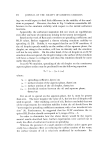
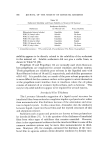
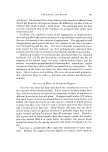
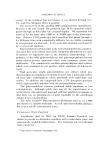
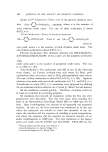
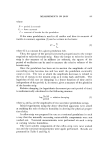
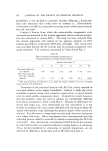
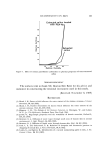
370 JOURNAL OF THE SOCIETY OF COSMETIC CHEMISTS MINERAL SPIRIT t I • I 0 20 40 60 80 I00 % SURFACTANTS IN AQ PHASE Figure 3. Effect of initial surfactant location on required HLB to form O/W emulsion (min- eral spirit emulsified with 3% Tween 80-Arlacel 80) All experiments were repeated several times until the results were fairly reproducible and consistent it is believed that the experimental error in the required HLB values is about __0.5 unit. A similar experiment was also conducted for castor oil using 3% Tween 80-Arlacel 80 as emulsifiers. In this series, however, the emul- sion stability was found to be insensitive to the variation in HLB and consequently it was difficult to obtain meaningful required HLB values. However, in all the systems studied, a definite tendency was found for the required HLB value to decrease with an increasing proportion of the sur- factants initially placed in the aqueous phase. In earlier investigations (17, 18), it was revealed that initial placing of the surfactant in the aqueous phase of the emulsion tended to make the surfactant behave as if it were more hydrophilic than the same sur- factant employed by initially placing it in the oil phase. By this is meant that placing of the surfactant in the aqueous phase tends to make the "apparent" HLB of the surfactant higher than its assigned value. Con- sequently, one can expect that the required HLB value of an oil obtained this way will be lower than that obtained by initially placing the surfac- rant in the oil phase. In this sense, the present results are consistent with earlier findings. Effect on Emulsion Stability As mentioned earlier, the stability of the emulsions prepared with castor oil was found to be insensitive to the variation in HLB values of the Tween 80-Arlacel 80 blends. Nevertheless, the stability of the same system was found to be strongly affected by the initial surfactant loca- tions. It was then decided to investigate the emulsion stability of this sys-
Purchased for the exclusive use of nofirst nolast (unknown)
From: SCC Media Library & Resource Center (library.scconline.org)