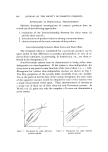
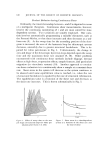
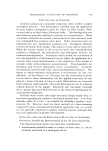
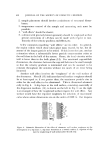
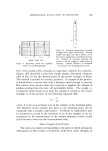
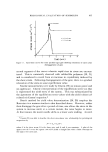
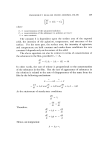
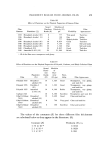
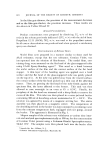
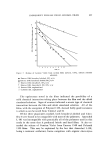
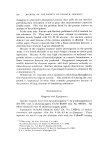
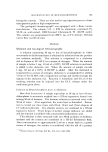
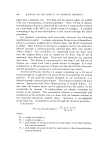
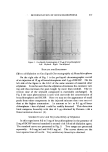
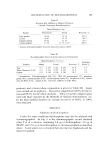
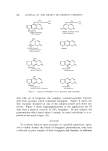
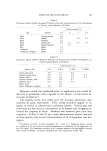
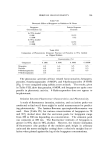
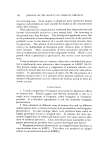
646 JOURNAL OF THE SOCIETY OF COSMETIC CHEMISTS APPROACHES TO RHEOLOGICAL MEASUREMENTS Absolute rheological investigations of cosmetic products have in- volved one of the following approaches: 1. evaluation of the interrelationship between the shear stress (r) and the shear rate (D) 2. determination of product behavior during continuous shear 3. characterization of the static structure of the product. Interrelationship between Shear Stress and Shear Rate The rheogram which is established for a particular product can be quite useful in that differences in product spreadability, in ease of re- moval from containers, in processing, in formulation, etc., are often re- flected in the rheograms (3, 4). Non-Newtonian systems may be characterized as being either time- independent or time-dependent. If the system is time-independent, the shear stress at any point is some function of the rate of shear, i.e., •- ---- f(D). Rheograms for various time-independent systems are shown in Fig. 1. The flow properties of the systems differ markedly from one another. Yet, at the point of intersection of the various rheograms, the same value of the apparent viscosity would be obtaind for each of the systems were a single measurement relied upon. Thus, measurements of viscosity at a single rate of shear are of little value for non-Newtonian systems. As Wood et al. (1) point out, only the complete r-D curve can characterize a given system. D Figure 1. Rheograms for some time-inde- pendent systems Figure 2. Rheograms for some time-de- pendent systems

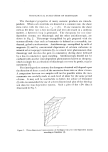
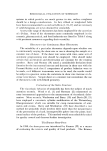
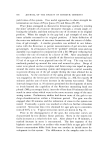
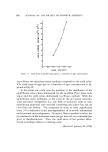
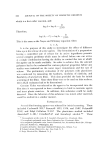
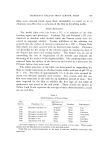
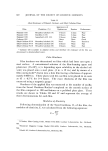
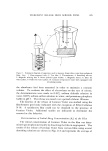
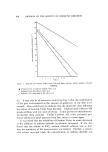
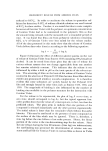
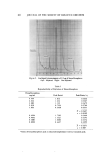
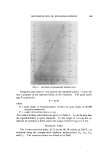
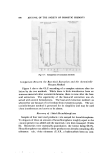
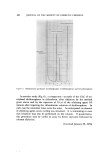
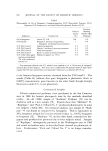
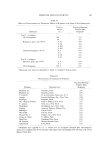
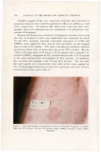
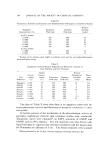
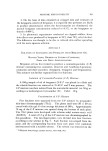
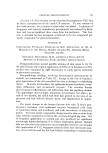
RHEOLOGICAL EVALUATION OF SEMISOLIDS 647 The theological properties of many cosmetic products are time-de- pendent. When such materials are sheared at a constant rate, the shear stress varies with the time, i.e., 7 o = f(t). If one measures the shear stress as the shear rate is first increased and then decreased in a uniform manner, a hysteresis loop is generated. The rheograms for two time- dependent systems, one thixotropic and the other antithixotropic, are shown in Fig. 2. Thixotropy--exemplified by gels prepared with the montmorillonite clays such as bentonite--is defined as a reversible, iso- thermal, gel-sol transformation. Antithixotropy--exemplified by milk of magnesia (5) and by concentrated dispersions of calcium carbonate in mineral oil or isopropyl myristate (6)--is a much rarer phenomenon than thixotropy and involves the gain in consistency during shear followed by a loss in consistency upon standing. Antithixotropy should not be confused with another time-dependent phenomenon known as rheopexy, which is simply the acceleration of thixotropic recovery by gentle, regular movement (7). For time-dependent systems, the rheogram obtained will depend upon the duration of shear at each of the successive shear rates or shear stresses. A comparison between two samples will not be possible unless the mea- surements are carefully made at each level of shear for the same period o• time. It may well be worthwhile to follow the advice of Umst•itter (8) who recommended the use of a three-dimensional plot of the rheolog- ical data for time-dependent systems. Such a plot of the r-D-t data is illustrated in Fig. 3. Figure 3. Three-dimensional representation of rheological data for time-dependent systems according to Umst/itter (8)
Purchased for the exclusive use of nofirst nolast (unknown)
From: SCC Media Library & Resource Center (library.scconline.org)