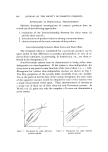
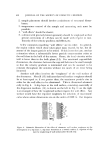
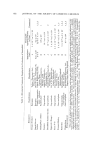
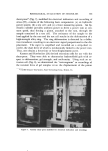
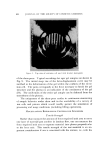
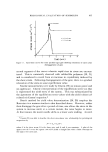
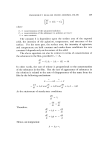
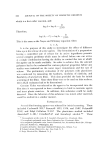
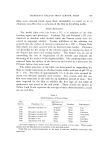
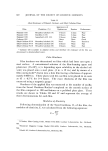
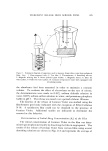
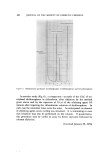
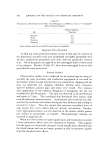
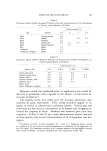
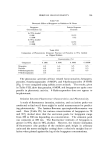
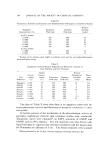
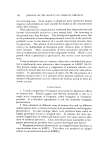
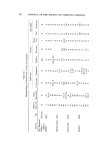
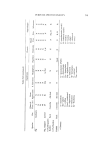
674 JOURNAL OF THE SOCIETY OF COSMETIC CHEMISTS As the film gets thinner, the precision of the measurement decreases and as the film gets thicker, the precision increases. These results are also shown in Tables III and IV. Aerosol Formulations Product concentrates were prepared by dissolving 5% w/w of the resin in the solvent previously indicated (25% w/w) with the aid of heat. Propellant 12/11 (50:50), 70% w/w, was used as the propellant system. In all cases a clear solution was produced and when sprayed, a satisfactory spray was obtained. Determination o/Release Rates Model films were prepared in a manner similar to those used for alkali resistance, except that the test substance, Gentian Violet, was incorporated into the solution of film-former. The model films, con- taining drug, were mounted on the flat head of the glass-stoppered tube using EA-40 Epoxy-Bonding agent. * This acted as a bond between the under surface of the film and the contact surface of the flat head stopper. A thin layer of the bonding agent was applied over a hard surface and the flat head of the glass-stoppered tube was gently placed on the top of it. As the tube was pulled away from the treated surface, the contact surface of the flat head picked up a thin coat of the adhering matter. Then, on pressing the flat head of the tube firmly against the specimen film, the latter adhered to the former. This unit was then allowed to cure overnight in an oven at 45 _+ 0.5øC. Finally, the periphery of the flat head was trimmed with a sharp blade to remove the excess of the film. This tube was then placed in a water-jacketed beaker containing 300 ml of desorbing solvent maintained at 37 ñ 0.5øC. The solution was agitated by means of a magnetic stirring bar. The entire assembly was then placed on a magnetic stirrer. The temperature of the desorbing solvent in the beaker was kept constant by circulating water from the constant temperature bath, equipped with stir pump, around the beaker. The apparatus is illustrated in Fig. 1. Aliquot samples of the solvent were withdrawn at various time inter- vals and analyzed spectrophotometrically at 590 mr, for the concentration of Gentian Violet present using a Coleman-Hitachi Spectrophotometer, Model 124.* The samples were then placed back into the beaker after ß SmOoth-On, Inc., Gillette, N.J. ? Coleman Instruments Corporation, Maywood, Ill.

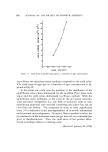
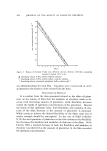
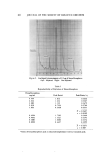
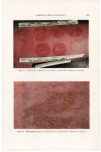
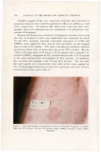
INGREDIENT RELEASE FROM AEROSOL FILMS 675 • 4 2 l0 [ Figure 1. Schematic diagram of apparatus used to measure drug release rates from polymeric films. Key: 1. Glass-stoppered tube 2. Test film 3. Thermometer 4. Desorbing solvent 5. Magnetic stirring bar 6. Water-jacketed glass beaker 7. Magnetic stirrer 8. Inlet for water jacket 9. Outlet for water jacket 10. Constant-temperature water bath equipped with circulating pump the absorbance had been measured in order to maintain a constant volume. To evaluate the effect of electrolytes on the rate of release, the determinations were made in 0.45% sodium chloride solution in water, 0.45% sodium sulfate solution in water, and potassium phosphate buffer in pH 7. The release was noted over a period of about 10 hours. The kinetics of the release of Gentian Violet was studied using the film-formers previously indicated with the exception of Ethyl Cellulose N-10. A satisfactory film could not be obtained in the presence of Gentian Violet. Additional studies are indicated to determine the reasons for this behavior. Determination of Initial Drug Concentration (.4o) of the Film The initial concentration of Gentian Violet in the film was deter- mined spectrophotometrically by dissolving the film in isopropanol. The results of the release of Gentian Violet from various films using several desorbing solutions are shown in Figs. 2--4 and represent the average of
Purchased for the exclusive use of nofirst nolast (unknown)
From: SCC Media Library & Resource Center (library.scconline.org)