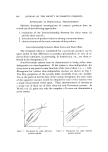
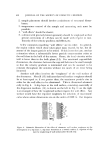
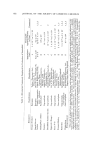
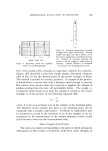
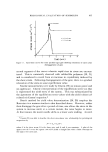
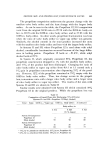
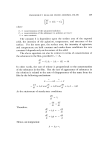
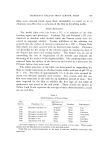
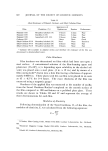
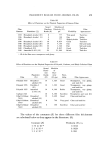
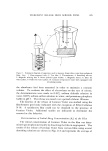
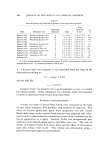
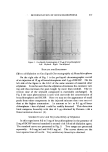
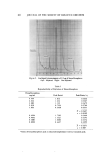
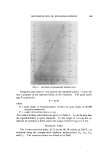
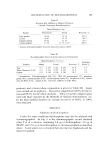
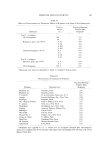
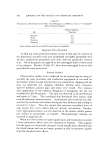
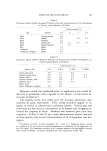
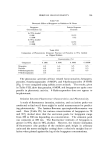
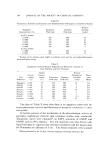
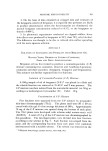
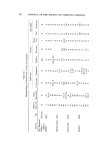
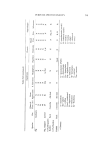
DETERMINATION OF HEXACHLOROPHENE 691 Table II Recovery after Addition to Marketed Products (Already Containing Hexachlorophene) Hexachlorophene, mg Product Theoretical" Found Recovery, % Face powder 10.36 10.50 101.4 Lotion 12.87 12.65 98.3 Liquid makeup 14.27 13.63 95.5 Cream makeup 17.50 17.95, 17.05 100.0 Amount of hexachlorophene found by assay plus amount added. Table III Hexachlorophene Recovery from Laboratory Formulations Hexachlorophene, % (w/w) Standard Product Added Found Recovery, % Error, % Talc 0.5 0. 497 0. 476 0. 495 97.8 1.9 White Ointment, U.S.P. 0.1 0.101 0.097 0.101 99.3 2.1 Lotion" 0.2 0.189 0.194 0.184 94.9 2.2 a Composition: Polyethyleneglycol 400, 10% PEG 400 monostearate, 1% propylene glycol, 10% methyl par,ben, 0.2% lanolin isopropyl ester, 2% tocopherols, 0.1% antoxi- dant 221 BHA, 0.1% veegum, 0.2% and water, sufficient to make 100%. position), and a lotion whose coinposition is given in Table III. Assays were carried out in triplicate. Recoveries ranged from 94.9% for the lo- tion and 99.3% for the white ointment. These recoveries compare quite well with those reported by the Methods of Analysis Subcommittee (1). In the final method decided on, average recoveries of 94.8% to 100% were obtained. ADDENDUM Silylation of Dichlorophene tinder the same conditions dichlorophene may also be silylated and chromatographed. In Fig. 5 is the chromatographic record obtained when 2 v1 of a solution containing 5.6 vg of dichlorophene, 3.8 vg of DCHP, and 11.8 t'g of hexachlorophene is chromatographed as described above. Good separation is obtained between the two bisphenols and the internal standard.

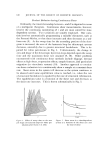
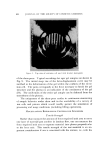
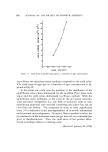
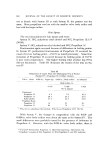
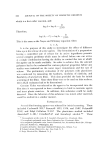
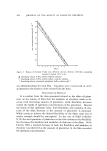
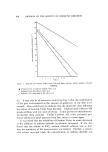
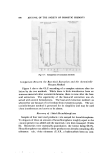
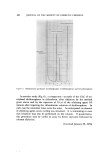
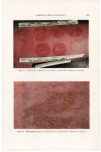
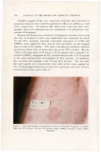
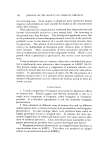
692 JOURNAL OF THE SOCIETY OF COSMETIC CHEMISES k-igure 5. Simultaneous gas-liquid chromatography of dichlorophcne and hexachloropheue In another study (Fig. 6), a comparison was made of the GLC of un- silylated dichlorophene in chloroform, after silylation by the method given above and by the injection of 10 t•l of the silylating agent 0.5 minute after injecting the chloroformic solution of dichlorophene. In each case the retention times were the same. As anticipated, in absence of silylating agent, severe tailing was obtained. It is interesting to note that silylation may also be performed on the column. If quantitative, this procedure may be useful in assay by direct injection followed by column silylation. (Received January 22, 1970)
Purchased for the exclusive use of nofirst nolast (unknown)
From: SCC Media Library & Resource Center (library.scconline.org)