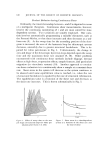
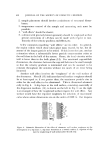
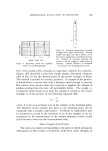
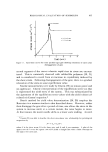
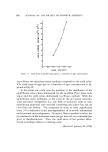
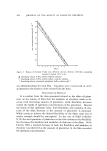
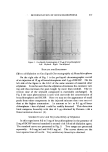
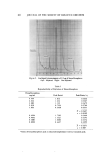
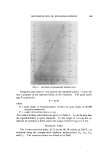
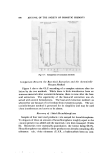
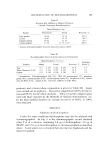
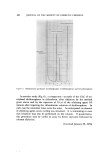
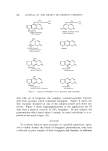
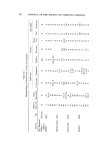
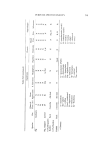
DETERMINATION OF HEXACHLOROPHENE 693 Figure 6. Effects of silylation on the gas-liquid chromatography of dichlorophene REFERENCES (1) Methods of Analysis Subcommittee of Society of Cosmetic Chemists of Great Britain, Estimation of hexachlorophene in cosmetic products, J. Soc. Cosmet. Chem., 19, 213 (1968). (2) Elvidge, D. A., and Peutrell, B., The determination of hcxachlorophene and other phenols in pharmaceutical preparations by a AE spectrophotometric method, J. Pharm. Pharmacol., 13, Suppl. lilt (1961). (3) Porcaro, P. J., and Shubiak, P., Detection of subnanogram quantities of hexachloro- phene by electron capture gas chromatography, Anal. Chem., 40, 1232 (1968). (4) Porcaro, P. J., Detection of dichlorophene, hexachlorophene, and other related bis- phenols by gas-liqnid chromatography, Ibid., 36, 1664 (1964). (5) Wisniewski, J. V., How to determine hexachlorophene in soap. Facts Methods, 8, 10 (1967). (6) Wehrli, A., and Kovats, E., Gas chromatographische Charakterisierung organischer Ver- bindungen, Teil III, Berechnung der Retentionindices aliphatischer, alicyclischer und aromatischer Verbindungen, Helv. Chim. Acta, 42, 2709 (1959). (7) Kovats, E., ZusammenhSnge zwichen Structur und gas chromatographischer Daten organischer Verbindungen, Z. Anal. Chem., 181, 359 (1961) .

J. Soc. Con, met. Chem., 21,695-715 (Sept. 17, 1970) Perfume Phototoxicity* FRANCIS N. MARZULLI, Ph.D.,* and HOWARD I. MAIBACH, M.D.* Presented be[ore the New Yorh Chapter, April 1, 1970, Clifton, N.J. $ynopsis--A study of BERGAMOT PHOTOTOXICITY in man and animals is presented. A review of pertinent literature is included and techniques are described which lead to conclusions regarding the phototoxic component of bergamot, the concentrations re- quired for phototoxic effects, and other important experimental conditions involving the light source, the skin site, and characteristics of phototoxic chemicals. Resnits of a survey of phototoxic potential of currently marketed commercial PERFUMES are discussed. Details of the methods of chemical preparation and the histopathologic findings arc given in separate appendixes. INTRODUCTION During the past decade, the Food and Drug Administration has received consumer complaints of skin damage by commercial perfumes the peak number was received in 1965. The most frequently involved perfumes were found to contain bergamot oil. The decline in complaints in recent years is thought to coincide with the use of tiurocoumarin-free bergamot, the use of artificial bergamot, or a reduction in the concentra- tion of natural bergamot oil in perfumes. * Animal studies conducted at FDA laboratorics. ttuman work performed at the Cali- fornia Medical Facilities of Vacaville, Calif., under Contract CPF-69-28: Stndy of Skin Sensitization and Penetration by Known Chemicals Regents of the University of California, San Francisco Medical Center, San Francisco, Calif. *Derreal Toxicity Branch, Division of Toxicology, Food and Drug Administration, Washington, D.C. 20204. $ University of California, San Francisco Medical Center, San Francisco, Calif. 91422. 695
Purchased for the exclusive use of nofirst nolast (unknown)
From: SCC Media Library & Resource Center (library.scconline.org)