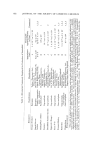
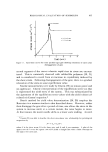
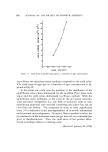
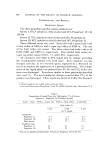
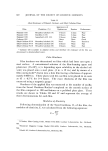
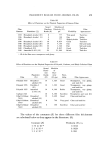
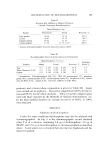
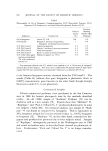
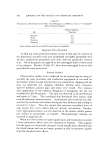
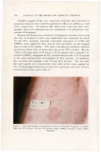
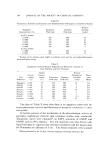
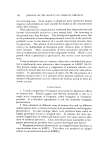
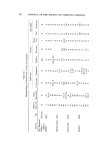
702 JOURNAL OF THE SOCIETY OF COSMETIC CHEMISTS Table IV Phototoxicity Test Results with 100% Oil of Bergamot on Different Areas of "Unstripped" Skins of Human Subjects Positive Response Site Fraction Scrotum 4/6 Neck 4/6 Forearm 1/4 Forearm a 0/2 • Agent applied and site occluded 24 hours prior to irradiation. Regional Shin Variation To find out if the penetrant barrier action of skin may be a factor in the phototoxic reaction, tests were performed on highly permeable scro- tal skin, moderately permeable neck skin, and less permeable forearm skin. Oil of bergamot was applied to the unstripped skins of these areas of six subjects. Results (Table IV) show that unstripped forearm skin provided the most protection. Animal Studies Phototoxicity studies were conducted on six animal species using es- sentially the same procedure and irradiation equipment as was used for the human studies except that the hair was removed by clipping and the skin was generally not stripped. Rabbits, hairless mice, hamsters, squirrel monkeys, guinea pigs, and swine were tested. Five minutes after application of test material (bergamot or bergapten), the site was irradiated for 20-,q0 minutes. The skin was observed at 24 and 48 hours and again at 7 days. The irradiated skin fiuoresced after topical (and even intradermal) administration. A phototoxic skin reaction was char- acterized 1)y erythema and edema during the first 48 hours and scaling or necrosis by 7 days. Thus the animal skin reactions resembled those of man except that severe effects did not include vesiculation. Further- more, hyperpigmentation was not observed in the mouse, rabbit, guinea pig (albino or pi•mented), or hamster. Histopathologic findings are reported in Appendix II. When the interval between agent application and irradiation exceeded 1 hour, phototoxic effects were not obtained on animals. This suggests •hat the agent was chemically changed, or had already been absorbed into the blood stream and was no longer present in skin in amounts capable of producing phototoxic effects.

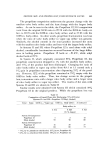
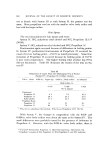
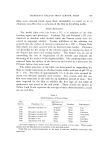
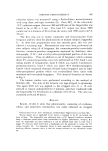
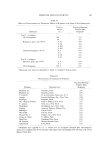
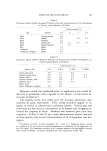
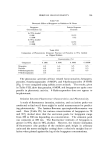
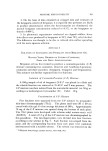
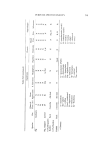
PERFUME PHOTOTOXICITY 703 Table V Phototoxic Effects (Positive Response Fraction) of Several Concentrations of Oil of Bergamot on Various Animal Species at 48 Hours Concentration (%) Site Species 10 5 1 0.5 Back Hairless mouse 2/2 Back Rabbit 2/2 Back Hamster 1/2 Back Guinea pig 4/4 Back Squirrel monkey Ear Swine 1 / 1 Abdomen Swine 1/3 Abdomen, stripped Swine 4/4 2/2 2,/2 1/1 4/5 0/5 o/1 Table VI Phototoxic Effects (Positive Response Fraction) of Several Concentrations of Bergapten on Various Animal Species at 48 Hours Concentration (%) Species, Site 0.01 0. 001 0. 0001 0. 00001 Guinea pig, back 5/6 5/7 0/4 Hairless mouse, back 2/2 5/5 3/4 Rabbit, back 6/6 3/6 0/1 Squirrel monkey, back 0/6 1/8 0/7 Hamster, back 0/3 0/3 0/3 Swine, back 0/2 Swine, abdomen, stripped 2/2 2/2 0/3 o/1 Bergamot which was irradiated prior to application was found in- effective in producing a skin response in the absence of concurrent ul- traviolet irradiation.* - The hairless mouse and rabbit gave the strongest phototoxic skin reactions by gross observation. They would therefore appear to be species of choice in phototoxicity screening studies. Guinea pig and swine skin was less reactive nevertheless, as in human skin, stripping en- hanced the response in swine. Monkeys and hamsters gave poor skin responses. Tables V and VI give some phototoxicity results obtained on these species with several concentrations of oil of bergamot and ber- gapten. * Irradiation of 0.02% alcoholic bergapten for 1 hour in a stoppered quartz cuvette at a distance of 2.5 cm resulted in photodecomposition, as indicated by the appearance of five TLC spots. The phototoxic capacity of the resultant solution was only slightly reduced when tested on rabbits. Irradiation photolysis has been reported by others (13).
Purchased for the exclusive use of nofirst nolast (unknown)
From: SCC Media Library & Resource Center (library.scconline.org)