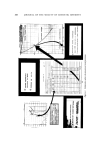
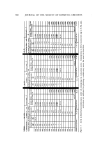
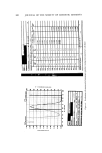
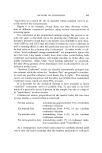
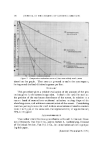
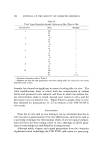
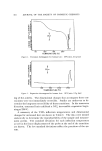
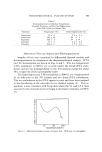
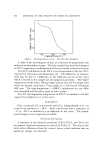
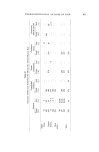
368 JOURNAL OF THE SOCIETY OF COSMETIC CHEMISTS Formaldehyde is highly reactive with many of the functional groups on the peptide backbone and is able to react with groups containing ac- tive hydrogens on separate polypeptide chains such that methylene bridges (crosslinks) are formed between the chains (8). The 20øC shift upscale in the transition temperatures in all three thermal analysis sys- tems is indicative of the structural role these crosslinks play in hair. The TG analysis indicates a 9% increase in the weight loss due to loosely bound formaldehyde which correlates well with the 12% increase re- ported by Reddie and Nicholls (9) for wool. The process of supercontraction causes a longitudinal shortening ot5 the sample (10-30%) and is apparently due to a further folding of the polypeptide chains into a shorter configuration. The supercontracted samples behaved somewhat like the crosslinked samples in that some of the thermal transitions were shifted upscale indicating a further stabi- lized structure. The increase in the first longitudinal contraction from 0.6 to 3% was a significant difference from control. The supercontracted hair showed no X-ray diffraction pattern, low birefrigence, and an in- crease in diameter of 100%. These alterations, including those observed in the thermal analysis, were reversible following 24 hours' soaking in water. Hair which had undergone supercontraction did not have the prop- erties of the original a-keratin or that of a completely fi-structured system (e.g., silk), since silk has a distinct X-ray pattern and significantly different thermal properties (6). Oxidation with hydrogen peroxide results in an increase in the tran- sition temperature similar to those effected by supercontraction. An in- crease in transition temperature following bleaching was observed by Deem and Rieger (10) from stress-strain analysis. The authors report a 10øC increase in a second-order phase transition in hair after bleaching. In the TMA, the H202oxidized hair exhibited a greater degree of softening in the lower temperature range (60ø C) and a reduced expansion at 276øC. The use of performic acid further emphasized the effects ob- served with H202. The transition temperatures were shifted 40øC and the expansion was reduced to 3%. Felix et al. (11) report for wool that after 50 min in performic acid, the 220-230øC endotherm is absent. The data from the present study could also be interpreted in that way. The first being absent, the second is slightly shifted upscale (14øC) and a new endotherm at 297øC is de- veloped.

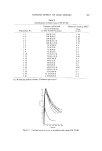
THERMOMECHANICAL ANALYSIS OF HAIR 369 Reduction with 0.1M thioglycolic acid followed by alkylation with iodoacetic acid was the only treatment that reduced the temperature of the 242øC softening and increased the 256øC expansion 59%. The low- ering of the transition temperature and the increased dimensional change is consistent with the idea that the disulfide crosslinks are converted to thiol groups by such reducing agents as thioglycolic acid, thus resulting in a structure which is less stable. Samples that were not reacted with iodo- acetic acid to block reoxidation did not differ from the control. Reduc- t:on with benzyl mercaptan gave results similar to those reported for thio- glycolic acid. Felix et al. (11) observed a lowering of the high-temperature DTA meltings after reduction with 0.3M thioglycolic acid at 50øC for 2 hours. The present study indicates that a less severe treatment (0.1M thioglycolic acid, 25øC) is distinguishable by TMA before it is reflected in the DTA. Solvent Effects There appear to be several mechanisms by which solvents can alter the physical properties of hair. First, they can extract materials which play some structural role, or they can interact with the macromolecular com- ponents to induce conformation changes to a more stable energetic form. Both cases would be expected to produce macromolecular species of dif- ferent stability and hence influence the thermal properties of the system. The solvents studied include: diethyl ether, hexane, methanol, ethanol, and chloroform. In the solvent-exposed materials, no differences were observed in the DTA or TG while the TMA did reflect alterations. In general, the sol- vents reduced the temperature of the first transverse penetration 15øC indicating the sensitivity of this technique relative to DTA and TG. Di-• ethyl ether was the only solvent that increased the 256øC expansion from 54% to 102%. A DTA analysis of the ether extract yielded two sharp, endotherms (36 and 142øC). Since neither of the two transitions in the. ether extra,ct corresponds to any observed in the TMA, the viscoelastic transitions observed are not simply due to melting crystalline lipid com- ponents. One might speculate that the ether has altered the protein structure directly or indirectly by removal of lipids. Commercially pur- chased "virgin hair" exhibited viscoelastic behavior similar to the ether- extracted samples.
Purchased for the exclusive use of nofirst nolast (unknown)
From: SCC Media Library & Resource Center (library.scconline.org)