J. Soc. Cosmet. Chem. 23 383-391 (1972) ¸ 1972 Society of Cosmetic Chemists of Great Britain The importance of the vehicle in formulating sunscreen and tanning preparations E. R. KRAFT,* S. G. HOCH*, R. A. QUISNO* AND E. A. NEWCOMB* Presented on 6th October 1970 in London at the Symposium on 'New developments in lanolin and its derivatives', organized by the Society of Cosmetic Chemists and the Society of Cosmetic Chemists of Great Britain. Synopsis--This study was undertaken to determine the functional significance of the VEHICLE in SUNTAN PREPARATIONS. Three o/w vehicles, three oil-based vehicles and two controls were tested on HUMAN subjects under both natural SUNLIGHT and ARTIFICIAL LIGHT (a xenon-mercury lamp developed by one of the authors). The same screening agent was used in each vehicle. In general, the oil-based vehicles gave superior protection against sunburn. The o/w EMULSIONS were superior in promoting tanning although one oil-based vehicle gave good results in protection against burn and in promoting tanning. Previous work in the field of sunscreen studies has placed a great deal of emphasis on the importance of the sunscreen used, and correlations have been made between the efficacy of a sunscreen and the protection given by a finished product (1). In addition to the active sunscreen ingredient, the vehicle may play a far more important role than formerly thought. We believe the following factors should be considered: (1) The concentration of sunscreen in the original product versus con- centration on the skin after water evaporation. (2) The emulsion remaining on the skin after water evaporation, and the washability and the susceptibility to re-emulsification when exposed to perspiration and bathing. * Maimstrom Chemical Corporation, Linden, N.J. 07036, U.S.A. ? Hill Top Research Inc, Miamiville, Ohio, U.S.A. 383

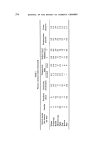
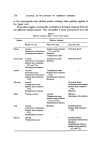
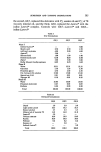
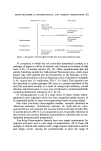
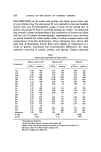
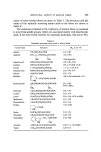
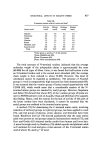
384 JOURNAL OF THE SOCIETY OF COSMETIC CHEMISTS (3) The function of a vehicle in increasing product penetration and/or substantivity to the skin. (4) The function of a sunscreen vehicle to augment and replace skin lipids, essential in returning erythematous skin to normal. The vehicle thus may not only influence the total concentration of sun- screen on the skin surface, but also its skin penetration, substantivity to skin, washability, and the rate and extent to which the treated skin is damaged and returns to normal. Early pilot studies (2) compared the sunscreen effect of oil-based products containing sunscreens, and o/w emulsions containing no screening agents versus untreated skin. These studies indicated that some sun protec- tion was given by the o/w emulsions. The most dramatic effects were in promoting normal skin recovery with less peeling. It may be significant to note that two effective emulsions contained a known moisturizing lipid. However, the inclusion of this lipid in the oil-based products did not seem to give the same result. This study indicated the importance of using a lipid moisturizer in conjunction with water in sunscreen and after-sun treatment products. A private report by Klauder (3) also emphasized post-treatment im- provement using two o/w emulsions. A uniformly greater improvement was shown with the product containing a lipid moisturizing agent (4). Moisturizing is not the complete answer to the problem of treating dry and sunburnt skin. Skin undergoing erythematous changes has a demand for oil as well as water. Skin lipids play a major role in maintaining a normal condition in the stratum corneum, (1) as a partially occlusive barrier to excessive moisture loss, (2) as binding agents to hold the cornified epithelial cells in place, and (3) as lubricants for the laminae to give a feeling of softness and pliability to the whole stratum corneum (5). In order to further evaluate vehicle importance in sunscreen preparations, a clinical study was initiated (8), six vehicles being used with the same sun- screen. The sunscreen was Dipsal (di-propylene glycol salicylate) and it was used at 35/0 concentration in all six formulations. Three formulations were o/w emulsions: GS/1, G8/2 and G8/3 (Table I). One of these formulations contained 55/0 Lantrol © (the liquid de-waxed fraction of lanolin), another a control with 55/0 isopropyl myristate replacing the Lantrol % and a third containing 55/0 of an iodine Lantrol © complex. The other three were oil-based formulations derived from the formula- tions in Military Specification 11262C. The first, G8/4, contained Lantrol •,
Purchased for the exclusive use of nofirst nolast (unknown)
From: SCC Media Library & Resource Center (library.scconline.org)