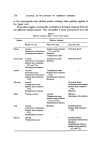
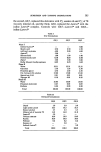
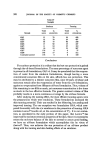
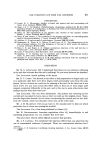
SUNSCREEN AND TANNING PREPARATIONS 385 the second, G8/5, replaced this derivative with 2•o sesame oil and 3•o of 70 viscosity mineral oil, and the third, G8/6, replaced the Lantrol © with the iodine Lantrol © complex. Controls were G8/7--Lantrol © and G8/8-- iodine Lantrol © Table I O/w formulations G8/1 G8/2 G8/3 Phase I Iodized Lantrol© • m 5.00 Stearic acid 2.50 2.50 2.50 isoPropyl myristate 4.00 9.00 4.00 oeantrol © 5.00 -- • Silicone fluid 1.00 1.00 1.00 Dehydroacetic acid 0.10 0.10 0.10 Dipsal 3.00 3.00 3.00 Halby dilauryl thiodipropionate 0.05 0.05 0.05 Phase II Water 52.31 52.31 52.31 Glycerine 1.50 1.50 1.50 Propylene glycol 4.50 4.50 4.50 3 % Carbopo1934 solution 15.00 15.00 15.00 Sequestrene N•14 0.01 0.01 0.01 Tegosept M 0.18 0.18 0.18 Phase III Water 10.00 10.00 10.00 Potassium hydroxide 0.65 0.65 0.65 Perfume 0.20 0.20 0.20 Total 100.00 100.00 100.00 Table II Oil-based formulations G8/4 G8/5 GS/6 Dipsal 3.0 3.0 3.0 Light amber petrol 36.5 36.5 36.5 Stearyl alcohol 3.5 3.5 3.5 Mineral oil of viscosity 70 11.8 14.8 11.8 Lantrol © 5.0 • • Calcium stearate 10.0 10.0 10.0 Kaolin 30.0 30.0 30.0 Perfume 0.2 0.2 0.2 Sesame oil -- 2.0 -- Iodized Lantrol © • -- 5.0 Total 100.0 100.0 100.0

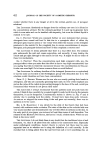
386 JOURNAL OF THE SOCIETY OF COSMETIC CHEMISTS All K values were run on a standard Beckmann D U spectrophotometer. The o/w emulsions were run according to standard methods (6) and all had similar Kvalues at max. (absorption wave length). For the oil-based formula- tions, the method outlined in the military specifications was extremely difficult to use, since it stipulated a film thickness of 0.001 mm. Commercial cells of this light path length are designed for liquids, not for creams or semi-solids. Since the formulations contained kaolin it was difficult to lay down a thin film and obtain an accurate reading. We discussed this problem with the Military Laboratory in Natick, Mass., which set up this procedure. It was stated that the present method had many drawbacks, especially the fact that at certain temperatures the product becomes opaque on cooling and gives an absorbance reading even with no sunscreen present. The military transmittance specification is in the process of being revised by the U.S. Army Natick Laboratory. It therefore seemed appropriate to take up the formulation G8/5 (containing sesame oil and mineral oil) in isopropanol in the standard manner. The kaolin was allowed to settle and the reading was taken on the remainder of the solution. The K value was the same as the o/w emulsions. Human studies on these formulations were run in both natural sunlight and artificial light. Harry (7) quotes Stambovsky to point out the deficiency of sunscreen testing with artificial light, since it is lacking in ir energy which increases sensitivity of the skin to uv radiation. Since the age-old conflict of artificial light versus sunlight in sunscreen evaluations has not been resolved, it was decided to utilize sunlight in the following study and then compare the results with an artificial light source study (9). ]•ATURAL SUNLIGHT STUDY Procedure The six formulations and two controls mentioned earlier were tested in a Florida sunlight study. Eleven adult female subjects were enrolled in this study. These subjects had not been previously exposed to the sun and the skin of each was free from erythema and tanning. The temperature was approx. 26.6øC and the sun shone approx. 95•o of the time. When the sun was not out, there was a bright hazy condition still conducive to sun burning. The wind varied from 3.1 to 6.2 km h -x. Reflected light readings were taken using a Weston Master Hlight meter.
Purchased for the exclusive use of nofirst nolast (unknown)
From: SCC Media Library & Resource Center (library.scconline.org)