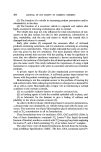
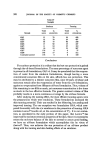
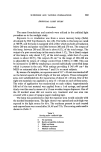
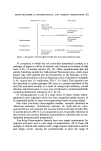
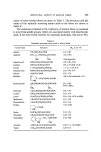
SUNSCREEN AND TANNING PREPARATIONS 389 ARTIFICIAL LIGHT STUDY Procedure The same formulations and controls were utilized in the artificial light procedure as in the sunlight study. Exposure to uv irradiation was from a xenon mercury lamp (XeM, developed by Hill Top Research, Inc.) (9). The bulbs in this lamp are rated at 700 W, and the lamp is equipped with a filter which excludes all radiation below 260 nm and passes very little between 260 and 270 nm. The output of this lamp, between 280 and 320 nm is about 6.5• of the total energy. The output of a pure xenon lamp in this area is about 1.5•o. The ir (heat) output of this lamp is only about 5.2•o of the total energy, while that of a pure xenon is about 38.5•o. The output •W cm -2 in the range of 280-320 nm is adjustable by means of voltage control from 6 500 to I 1 000. This can be increased to 22 000 by employing a second individually controlled lamp which is present in the unit. With settings providing 8 345 •W cm -•' the MED on untanned skin is between 7 and 1/5 s on most subjects. By means of a template, an exposure area of I 17 x 43 mm was marked off on the lateral aspects of both thighs of the test subjects. These rectangular areas were subdivided into five equal areas of about 23 x 43 mm. One of the eight test materials was applied to a strip 15 x 43 mm on each of these areas. The order of application was randomized on each subject. Approximately 0.05 ml of the test material was applied from a I ml syringe, and spread thinly over this area by means of a 15 mm wooden tongue depressor. One ooe the l0 marked areas did not receive any treatment and one area was covered with a piece of opaque paper masking tape. The lamp was positioned so that the exposure area would coincide with the marked treatment area. The light shutter was opened and each thigh was exposed to the light source for 60 s. The erythema present in each treated and exposed area was scored after 24, 48 and 72 h. The scoring scale used is shown in Table V. Table V Scoring scale--artificial light 0 No erytherna 0.5 Barely perceptible erythema 1 Slight erytherna 2 Moderate erythema 3 Marked erythema

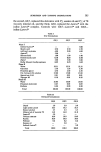
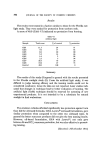
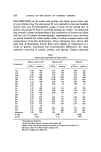
390 JOURNAL OF THE SOCIETY OF COSMETIC CHEMISTS Results The results were treated in a fashion similar to those for the Florida sun- light study. They were ranked for protection from sunburn only. A score of 40.0 (Table VI) indicated no protection from burning. Table VI Artificial light Sample Total score 5/o of control 5/o protection G8/1 11.5 29 71 G8/2 7.0 17 83 G8/3 8.0 2O 80 G8/4 5.5 14 86 G8/5 1.0 2 98 G8/6 2.5 6 94 G8/7 30.5 76 24 G8/8 19.0 47 53 Control 40.0 100 0 Summary The results of this study (9) agreed in general with the results presented in the Florida sunlight study (8). From the artificial light study, it was difficult to judge tanning efficacy and the tanning results could not be considered conclusive hence the data are not reported. Later studies indi- cated that changes in technique lead to better evaluation of tanning. The artificial light (XeM) technique should be reserved for screening of new experimental products. It is not intended to be a substitute for natural sunlight in final evaluations. CONCLUSIONS The emulsion vehicles afforded significantly less protection against burn than did the oil-based formulas. G8/4, Lantrol © oil-based formulation, gave similar protection when compared to the other two oil-based types. In general the better sunscreen products did not give the best tanning results. However, oil-based formulation, G8/4 with Lantrol ©, not only gave between 86 and 92•o sunscreen protection, but was also effective in promot- ing tanning. (Received: 18th October 1971)
Purchased for the exclusive use of nofirst nolast (unknown)
From: SCC Media Library & Resource Center (library.scconline.org)